What are Linking Verbs?
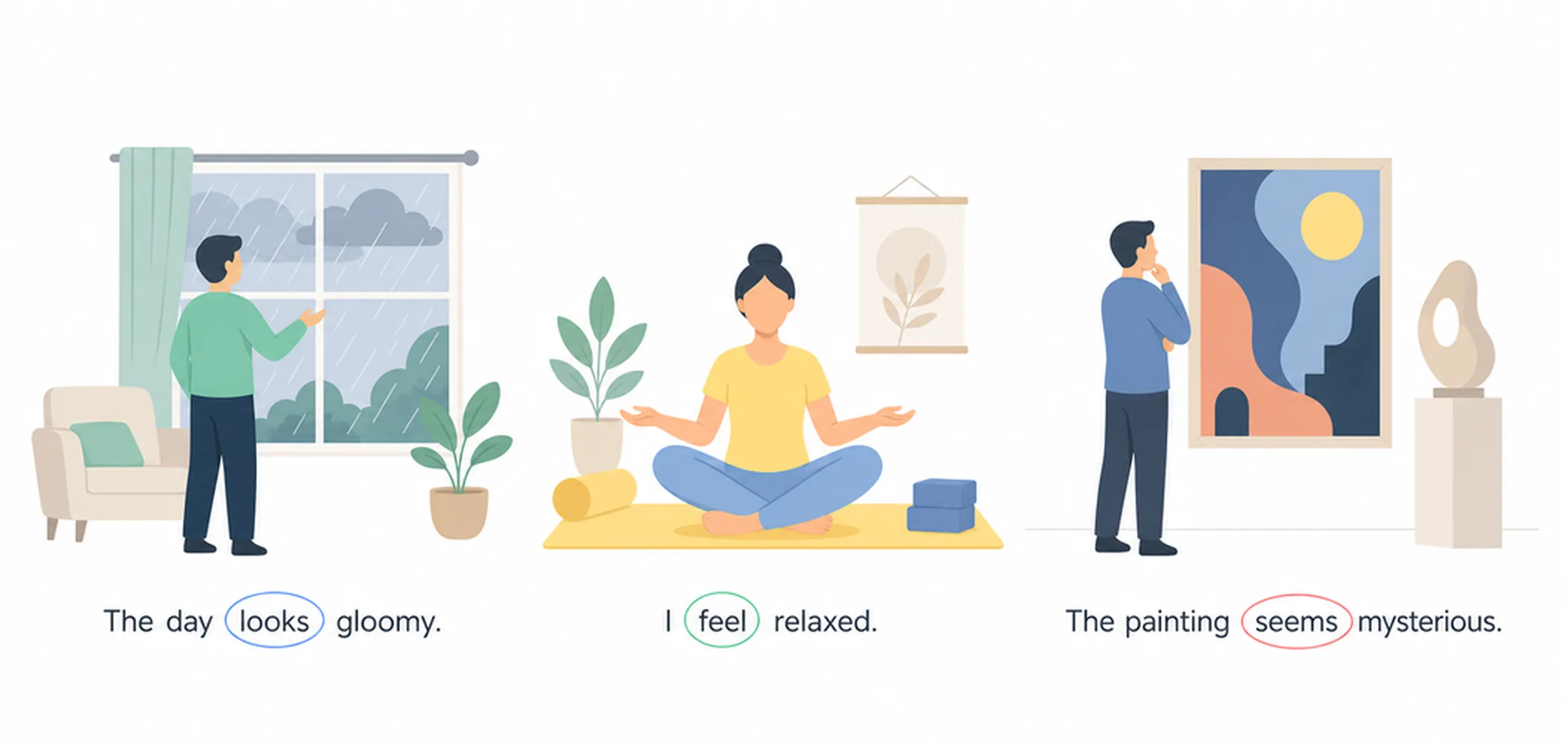
Linking verbs connect the subject of a sentence to a word that describes or identifies it. They do not show action. Common linking verbs include: be, look, feel, seem, taste, smell, sound, appear, and become. Unlike action verbs, linking verbs do not describe what the subject does—they describe what the subject is or how it appears.
Use Adjectives, Not Adverbs, After Linking Verbs
After a linking verb, always use an adjective to describe the subject. Do NOT use an adverb. This is a common mistake because in English, adverbs often end in -ly and seem like they should describe verbs. However, linking verbs are special—they need adjectives because they are describing the subject, not the action of the verb. The adjective modifies the subject, not the verb itself.
Why This Matters
Understanding this rule helps you sound natural and avoid grammatical errors. For example, saying 'She looks beautiful' (correct) is different from 'She looks beautifully' (incorrect). The first describes how she appears; the second incorrectly suggests the way she performs the action of looking, which doesn't make logical sense.
Linking Verbs vs. Action Verbs: Adjective or Adverb?
The fundamental difference: When verbs like look, feel, taste, smell, and sound function as linking verbs, they connect the subject to a describing word (adjective). The adjective tells us about the subject's state or quality, not about the verb itself. When these same verbs function as action verbs, they describe a physical or deliberate action and require an adverb to describe how the action is performed.
| Aspect | Linking Verb + Adjective | Action Verb + Adverb |
|---|---|---|
| Form | Subject + linking verb (look, feel, seem, taste, smell, sound, appear, become) + adjective The adjective describes the subject, not the verb. |
Subject + action verb (look, feel, taste, smell, sound) + adverb The adverb describes how the action is performed. |
| When to use | Use when the verb connects the subject to a quality or state. You can replace the verb with "is/am/are" and the sentence still makes sense. Example: She looks tired. → She is tired. ✔ |
Use when the verb describes a physical or deliberate action. Replacing the verb with "is/am/are" does NOT make sense. Example: She looked carefully. → She is carefully. ✘ |
| Positive examples |
The soup tastes delicious. He feels nervous before the exam. The music sounds beautiful. She seems happy today. The flowers smell wonderful. |
The chef tasted the soup carefully. He felt gently for the light switch. She looked nervously around the room. The dog smelled the ground eagerly. He appeared suddenly at the door. |
| Incorrect examples |
The soup tastes deliciously. (adverb cannot follow linking verb) He feels nervously. (adjective needed to describe subject's state) She seems happily. (adjective required after linking verb) |
The chef tasted the soup careful. (adjective cannot modify action verb) She looked nervous around the room. (adverb required in action context) He felt gentle for the switch. (adverb needed to describe action) |
| Question examples |
How does the coffee taste? — It tastes bitter. How does she feel? — She feels wonderful. How does the plan seem? — It seems reasonable. |
How did the inspector look at the evidence? — He looked at it thoroughly. How did she feel the fabric? — She felt it gently. How did you taste the wine? — I tasted it slowly. |
Common linking verbs in this pattern: look, feel, seem, taste, smell, sound, appear, become, get, grow, turn, remain, stay.
Common adjectives used: good, bad, tired, happy, sad, nervous, strange, cold, warm, fresh, sweet, bitter, loud, soft.
Common adverbs used: carefully, slowly, gently, eagerly, nervously, quickly, thoroughly, suddenly, deliberately.
Examples





What to Remember
- Linking verbs (be, look, feel, seem, taste, smell, sound, appear, become) describe what the subject is.
- After a linking verb, use an adjective to describe the subject, not an adverb.
- Do not use -ly adverbs after linking verbs, even though -ly words seem like natural descriptions.
- Example: "She feels happy" (correct) not "She feels happily" (incorrect).
- Linking verbs do not show action; they connect subjects to descriptive words.