
The Key Difference
Adjectives and adverbs are both descriptive words, but they describe different things. An adjective describes or modifies a noun (a person, place, or thing). An adverb describes or modifies a verb (an action), an adjective, or another adverb. Many adverbs are formed by adding -ly to an adjective, but not all adverbs follow this pattern, and not all words ending in -ly are adverbs.
Adjectives vs Adverbs: Side by Side
Adjectives answer the question 'What kind?' or 'Which one?' and come before or after a noun. Adverbs answer questions like 'How?', 'When?', 'Where?', or 'To what extent?' and usually modify verbs. For example, 'quick' is an adjective (a quick car), while 'quickly' is an adverb (he drove quickly).
Common Adjective vs Adverb Confusions: Side-by-Side
| Category | Good (Adjective) | Well (Adverb) | Hard (Adjective / Adverb) | Hardly (Adverb) | Late (Adjective / Adverb) | Lately (Adverb) | Near (Adjective / Adverb / Preposition) | Nearly (Adverb) | Fast (Adjective) | Fast (Adverb) |
|---|---|---|---|---|---|---|---|---|---|---|
| Form | Adjective — describes a noun or pronoun | Adverb — modifies a verb, adjective, or another adverb (also used for health) | Adjective or adverb — means "with great effort" or "solid/firm" | Adverb — means "scarcely" or "almost not at all" | Adjective or adverb — refers to arriving/being after the expected time | Adverb — means "recently" (used in perfect tenses) | Adjective, adverb, or preposition — refers to physical proximity | Adverb — means "almost" or "very close to" | Adjective — describes a noun (speed-related) | Adverb — modifies a verb; no separate "-ly" form exists |
| When to use | After linking verbs (be, seem, look, feel, taste, smell) or before nouns | To describe how an action is performed; to describe someone's health or condition | When describing effort, difficulty, or firmness (as adj. or adv.) | When meaning "barely" or "with great difficulty"; often has a negative connotation | When describing tardiness relative to a schedule or deadline | When referring to events or situations that happened in the recent past | When referring to short physical distance or closeness in space or time | When meaning "almost" or "approximately" — does NOT imply physical closeness | Before a noun to describe its speed quality (e.g., a fast car) | After a verb to describe how an action is done; "fastly" does NOT exist in standard English |
| Positive example | "She is a good teacher." / "The soup tastes good." | "He speaks English well." / "I feel well today." | "She studied hard for the exam." / "It is a hard problem." | "I could hardly hear the music." (I barely heard it) | "The train arrived late." / "She is always late." | "I haven't seen him lately." (not recently) | "The store is near the park." / "The deadline is near." | "She has nearly finished the report." (almost done) | "He drives a fast car." | "She runs fast every morning." |
| Negative example | ✗ "She sings good." (incorrect — should be well) | ✗ "That cake smells well." (incorrect — use good after sensory verbs) | ✗ "She worked hardly on the project." (changes the meaning to "barely") | ✗ "She tried hardly to succeed." (incorrect — use hard for effort) | ✗ "He arrived lately to the meeting." (incorrect — use late) | ✗ "She came home lately last night." (incorrect — use late for time) | ✗ "I nearly live by the office." (incorrect — use near for location) | ✗ "The hospital is nearly here." (incorrect for proximity — use near) | ✗ "She is a fastly runner." (incorrect — fastly is not a word) | ✗ "He drives fastly." (incorrect — fastly does not exist; use fast) |
| Question example | "Is the food good at that restaurant?" | "Does he perform well under pressure?" | "Did you work hard on this assignment?" | "Can you hardly sleep at night?" (Do you barely sleep?) | "Did the guests arrive late?" | "Have you been to the cinema lately?" | "Is the bus stop near?" | "Has she nearly finished the exam?" | "Is that a fast internet connection?" | "How fast does the train travel?" |
| Key signal words | After: be, look, seem, feel, taste, smell, appear, sound | After action verbs; used with: perform, speak, write, sing, do, feel (health) | work hard, try hard, think hard, hard task, hard surface | barely, scarcely, almost not; hardly any, hardly ever, hardly at all | arrive late, stay late, work late, a late train, a late night | recently, in recent weeks/months; used with present perfect tense | nearby, close, proximity; near the (place), draw near, near future | almost, approximately, just about; nearly finished, nearly there | a fast car/train/runner; fast lane, fast food | run fast, drive fast, move fast, think fast; how fast? |
Key Differences Summary
- Good vs. Well: Use good after linking/sensory verbs to describe a noun; use well after action verbs to describe how something is done, or to refer to health.
- Hard vs. Hardly: Hard means "with great effort" or describes a firm quality; hardly means "scarcely" or "barely" — they are near-opposites in meaning.
- Late vs. Lately: Late refers to being after a scheduled time; lately means "recently" and typically pairs with perfect tenses.
- Near vs. Nearly: Near expresses physical proximity (place or time); nearly means "almost" and is about degree, not physical distance.
- Fast (adj.) vs. Fast (adv.): Unlike most adjectives, fast serves as both adjective and adverb without any change in form — "fastly" is never correct in standard English.
Examples

He painted a beautiful mural on the wall of his studio.
Adjective · describes the noun 'dress'
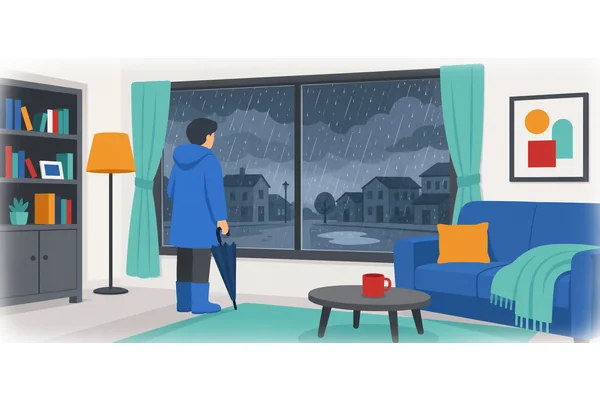
The weather is terrible today.
Adjective · describes the noun 'weather'

He gave an honest answer.
Adjective · describes the noun 'answer'

He played the piano beautifully during the concert.
Adverb · describes the verb 'spoke' (how she spoke)
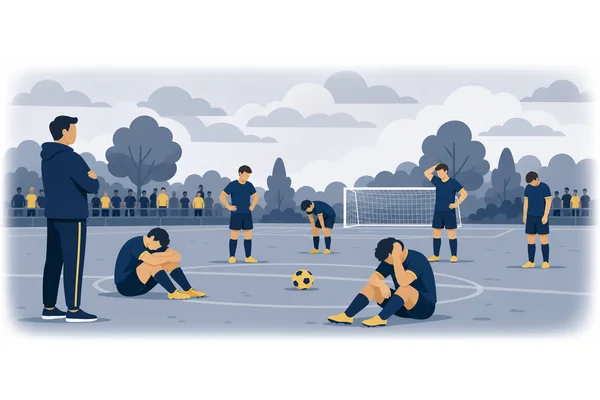
The team played terribly in the second half.
Adverb · describes the verb 'played' (how they played)

He answered honestly about his mistakes.
Adverb · describes the verb 'answered' (how he answered)
When to use it
Describing Nouns
Use adjectives when you want to describe a person, place, or thing. Adjectives tell us what kind, how many, or which one.
"The old building has interesting architecture."
Describing Actions
Use adverbs when you want to describe how, when, or where an action happens. Adverbs modify verbs and show the manner of the action.
"She ran quickly down the stairs."
Intensifying Adjectives
Use adverbs to intensify or strengthen adjectives and other adverbs. Common intensifiers include 'very', 'really', 'quite', and 'extremely'.
"The movie was extremely interesting and very engaging."
Signal words
How?
When?
Where?
To what extent?
What kind?
Which one?
-ly ending
describes a noun
describes a verb
Common Mistakes
✕
Wrong
She sang very good at the concert.
✓
Correct
She sang very well at the concert.
After a verb, use an adverb (well), not an adjective (good). 'Well' describes how she sang.
✕
Wrong
He works hardly on his projects.
✓
Correct
He works hard on his projects.
'Hard' is an adjective-adverb that doesn't add -ly. 'Hardly' means 'almost not' and changes the meaning completely.
✕
Wrong
The solution was very simple and worked perfect.
✓
Correct
The solution was very simple and worked perfectly.
After a verb (worked), use an adverb (perfectly), not an adjective (perfect).
KEY TAKEAWAYS
What to Remember
- Adjectives describe nouns; adverbs describe verbs, adjectives, or other adverbs.
- Many adverbs are formed by adding -ly to an adjective, but not all.
- Not all words ending in -ly are adverbs; some are adjectives.
- Use the adjective form after linking verbs like "be," "seem," and "feel."
- Use the adverb form to modify verbs and describe how an action happens.