Grammar C1 Mixed Conditionals

Mixed conditional — present condition, past result

Mixed conditional — present condition, past result

Understanding Mixed Conditionals: Present Condition, Past Result

Mixed conditionals combine elements from different conditional types to express complex hypothetical situations. The present condition, past result variant describes an imaginary present situation whose consequence would have affected something in the past. Unlike pure conditionals, this form links a hypothetical now with an actual then, creating a logical bridge between timelines. This structure is particularly valuable for expressing regret, explanation, or counterfactual reasoning about how present circumstances would have changed historical outcomes.

Formula and Structure

The structure combines a second conditional (present) with a third conditional (past). The if-clause uses the past simple to express an imaginary present state, while the main clause uses would have + past participle to express a hypothetical past result. This asymmetrical construction reflects the temporal mismatch between the condition (now) and the consequence (then).

Contextual Application and Nuance

This mixed conditional is essential for expressing cause-and-effect relationships across time. It allows speakers to propose an alternative present reality and explore how it would have altered past events. Common contexts include professional discussions about strategic decisions, personal reflections on life choices, historical analysis, and explanations of why something didn't happen. The form demands precision in thought, as listeners must trace the logical chain: 'If X were true now, then Y wouldn't have happened then.'

How the Two Timelines Connect

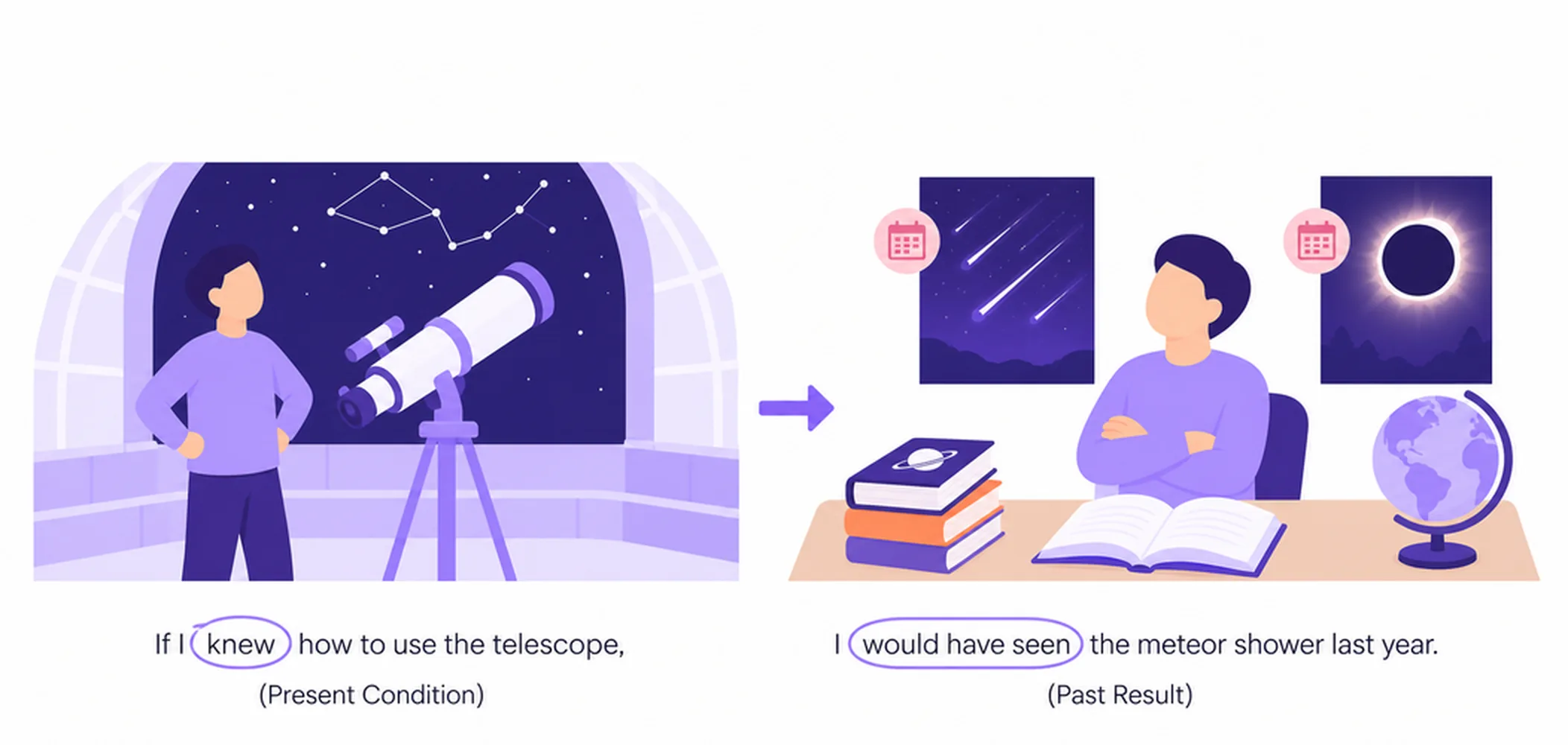
The mixed conditional creates a logical bridge between two different time periods. The if-clause describes a present, imaginary situation, while the main clause describes the counterfactual result that would have occurred in the past. This structure allows speakers to express "what might have been if things were different now."

The key to understanding mixed conditionals is recognizing that the condition is projected backward in time. We imagine a present-moment alternative reality and then trace its consequences back into the past.

If-Clause (Present, Unreal)
Form: If + subject + were / simple past
Time: Now (general present state)
Reality: The opposite is true now
Main Clause (Past, Counterfactual)
Form: would have + past participle
Time: Before now (completed past)
Reality: The event did not happen
Timeline Example
Time Period Clause Type What We Say What Is Actually True
Present (Now) If-Clause "If I were a doctor…" I am not a doctor now
Past (Yesterday) Main Clause "…I would have diagnosed you yesterday." I did not diagnose you
How the Connection Works

If I were a doctor, I would have diagnosed you yesterday.

Interpretation: Imagine that right now, in the present, I were a doctor (I'm not, but imagine it). If that were true, then going back in time to yesterday, I would have had the knowledge and ability to diagnose you correctly. But since I am not a doctor now, that past diagnosis never happened.

If she were fluent in Spanish, she would have understood the conversation last week.

Interpretation: She is not fluent in Spanish (present reality). If she possessed that skill now, then she would have been able to understand what was said in the past. Because she lacks that ability now, her past understanding was impossible.

If you knew how to swim, you would have saved yourself in the pool yesterday.

Interpretation: You do not know how to swim (present fact). If you had that skill now, you would have possessed it in the past and could have rescued yourself. Your inability now explains why that past rescue never occurred.
Key Point: Backward Projection

Mixed conditionals work by taking a present, imaginary condition and projecting it backward to affect a past result. The condition is not about the past—it is about the present state of the speaker or subject. The counterfactual outcome appears in the past because we are asking, "If this were true now, what would have been different then?"

Formula
✔ Positive
If + subject + were/was + (+ adjective/noun) + , + subject + would have + + past participle
If I were fluent in Mandarin, I would have accepted that job in Shanghai.
✖ Negative
If + subject + weren't/wasn't + (+ adjective/noun) + , + subject + would have + + past participle
If you weren't so stubborn, you would have listened to their advice back then.
? Question
Would + subject + have + past participle + if + subject + were/was + ...?
Would you have pursued medicine if you were naturally gifted at science?

Examples

If the company were more innovative today, we would have captured that market share five years ago.
Business analysis · Speculation about past outcomes
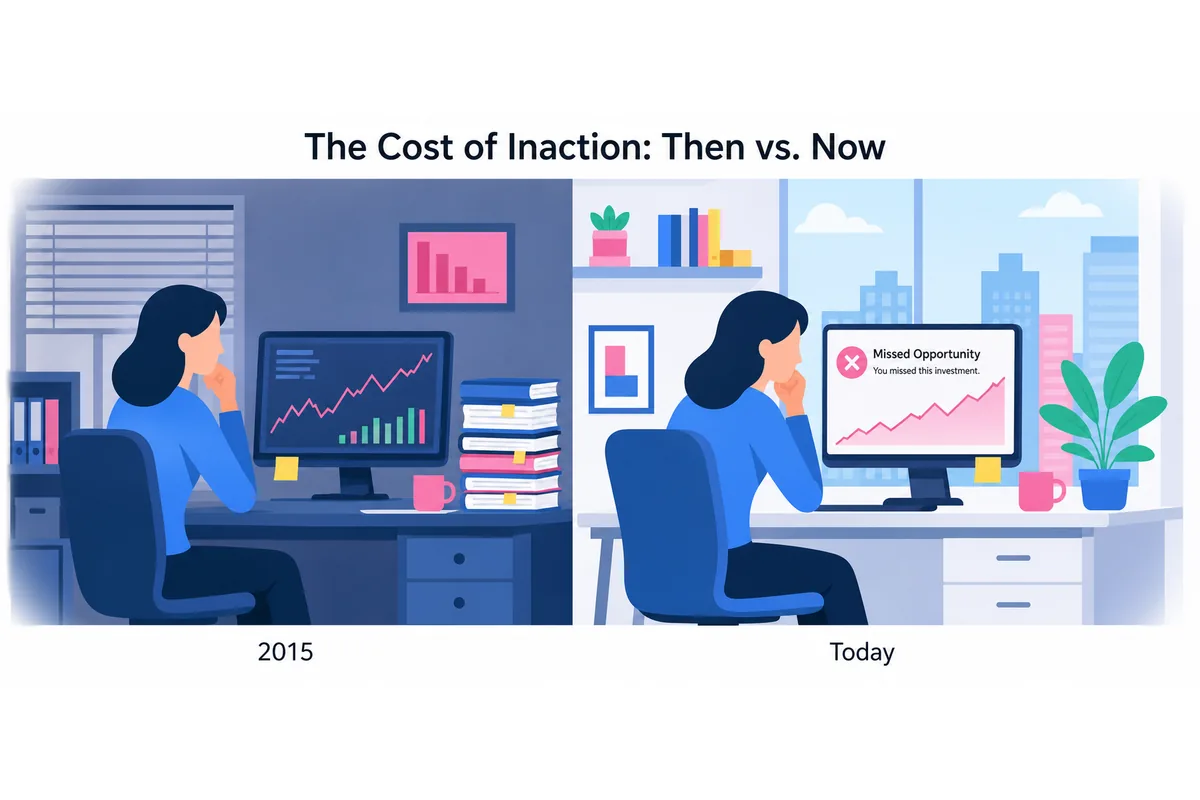
If she weren't so risk-averse now, she wouldn't have missed that investment opportunity in 2015.
Personal reflection · Regret/counterfactual reasoning
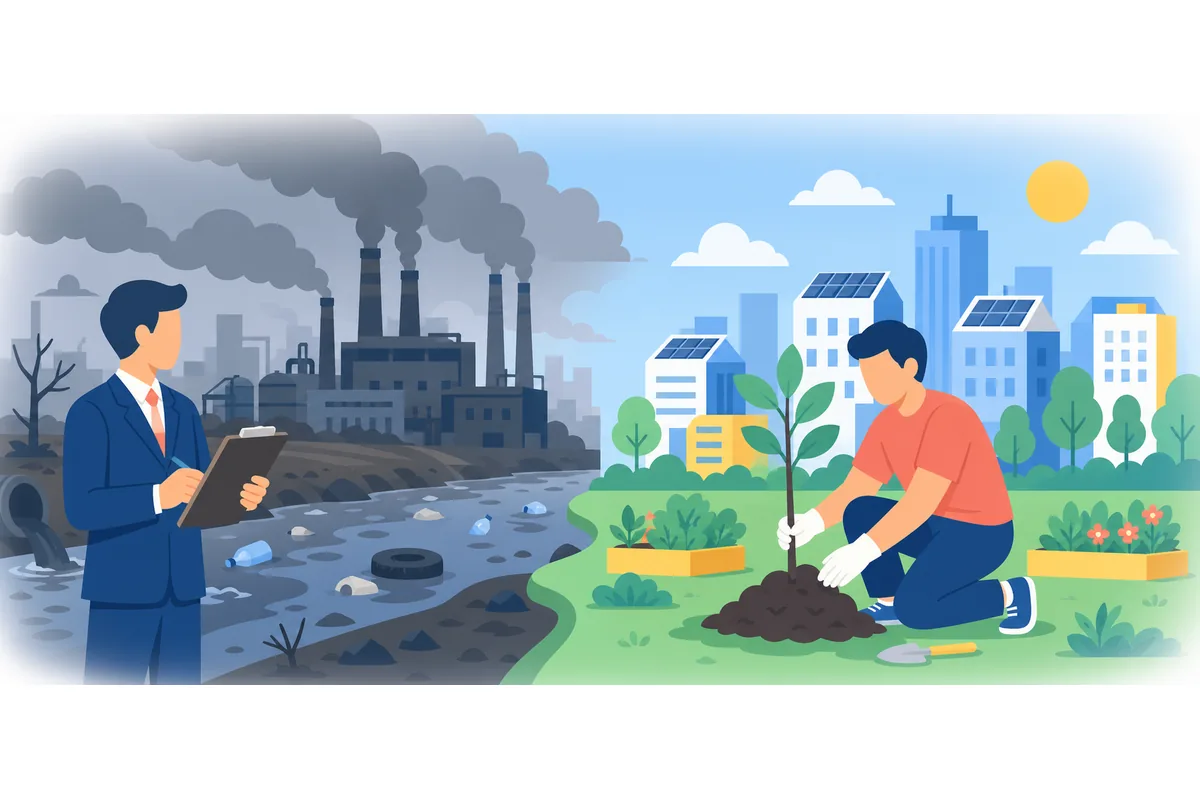
If climate policies were stricter today, we would have avoided much of the environmental damage from the 1990s onward.
Academic/political discourse · Hypothetical causation
Would they have succeeded in their merger if they were more collaborative now?
Question form · Corporate strategy
If digital literacy were prioritized in schools currently, we wouldn't have such a significant tech skills gap in the workforce today.
Policy discussion · Negative consequence
If he were genuinely committed to the relationship now, he would have made that effort years ago.
Interpersonal · Implied criticism/doubt
When to use it
Professional Analysis
Explore how hypothetical present circumstances would have changed past business outcomes or decisions. Useful in strategic reviews and case studies.
"If our infrastructure were scalable today, we would have handled that 2019 traffic surge without downtime."
Personal Reflection
Express regret or explanations about why past events occurred, linked to imagined present conditions. Common in conversations about life choices.
"If I were confident enough now, I would have spoken up in that meeting last month."
Historical/Academic Debate
Propose alternative historical or academic scenarios to analyze cause-and-effect relationships across time periods.
"If modern technology existed then, historians would have interpreted those primary sources very differently."
Conditional Explanation
Clarify why something didn't happen by proposing a contrasting present reality, implying causation.
"If they were transparent now, they wouldn't have lost credibility in that 2018 scandal."
Signal words
if would have were weren't but now today currently then back then in the past previously formerly
Common Mistakes
Wrong
If I was rich, I would have bought that house last year.
Correct
If I were rich, I would have bought that house last year.
Use 'were' in mixed conditionals for hypothetical situations, even with 'I'. Formal register requires subjunctive.
Wrong
If she was more organized, she wouldn't miss her deadlines.
Correct
If she were more organized, she wouldn't miss her deadlines. / If she were more organized, she wouldn't have missed her deadlines in the past.
Mixing timelines incorrectly. Match past result to would have + past participle; present behaviour to would + present.
Wrong
If you would be more careful now, you wouldn't have broken it yesterday.
Correct
If you were more careful now, you wouldn't have broken it yesterday.
The if-clause never uses 'would'. Use past simple (were) for the condition, reserve 'would have' for the result clause.
Wrong
If they are more transparent, they would have kept their reputation.
Correct
If they were more transparent, they would have kept their reputation.
Present hypothetical situations in if-clauses require past simple subjunctive, not present indicative.
Wrong
If I had been aware, I would fix it now.
Correct
If I were aware now, I would have fixed it earlier. / If I had been aware then, I would have fixed it.
Don't mix past perfect with present hypothetical. Clarify which timeline is imaginary: present or past?
KEY TAKEAWAYS

What to Remember

  • Use present tense in the if-clause to describe an imaginary current situation or state.
  • Use past perfect in the main clause to show consequences that would have happened earlier.
  • This form connects a hypothetical present condition with a counterfactual past result across timelines.
  • Common mistake: don't mix present simple with simple past; maintain the structural pattern correctly.
  • Use this form to express regret about past consequences of imaginary present circumstances.
← Previous
Mixed conditional — past condition, present result
Next →
Mixed conditionals — examples