Grammar B1 Second Conditional

Second conditional — examples (unreal present/future)

Second conditional — examples (unreal present/future)

What is the Second Conditional?

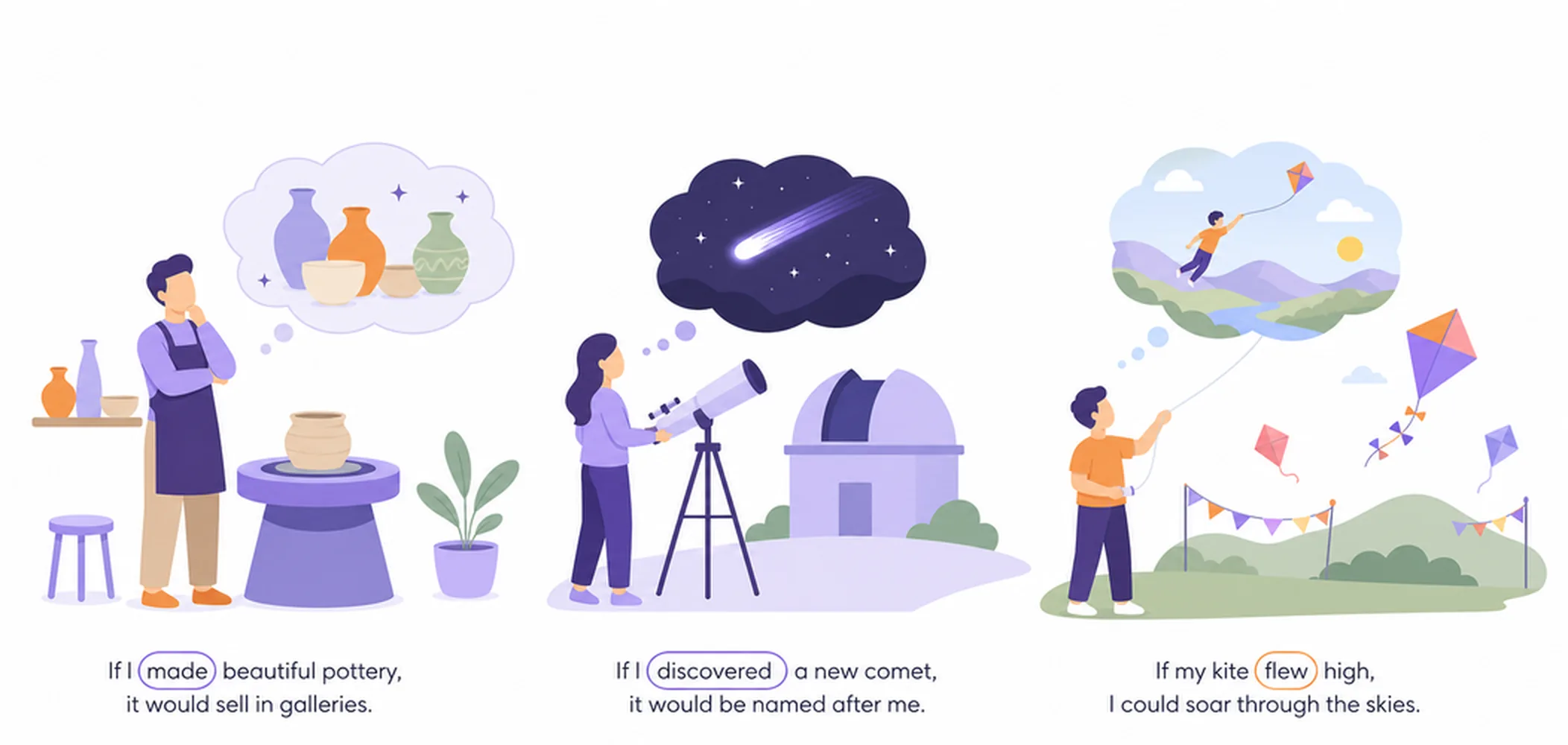
The second conditional describes imaginary or unlikely situations in the present or future. We use it to talk about things that are not real or probably won't happen. The structure is: if + past tense + would + base verb. For example: "If I won the lottery, I would travel around the world." This is imaginary because you probably won't win the lottery. The second conditional helps us imagine different possibilities and discuss what we would do in unusual situations.

When Do We Use the Second Conditional?

We use the second conditional in three main situations. First, for unlikely events: situations that probably won't happen in the future ("If you studied harder, you would pass the exam"). Second, for hypothetical situations: imaginary scenarios that aren't real ("If I were a teacher, I would make lessons more fun"). Third, for giving advice indirectly: suggesting what someone should do by presenting an imaginary consequence ("If you left home earlier, you wouldn't be late"). Notice that we use "were" instead of "was" with "I" and "he/she/it" in formal English.

Structure and Form

The second conditional has two parts: the if-clause and the main clause. In the if-clause, use the past tense (even though you're talking about the present or future). In the main clause, use would + base verb. The if-clause can come first or second: "If I had more time, I would learn Spanish" or "I would learn Spanish if I had more time." Both orders mean the same thing. You can also use could or might instead of would for different meanings: "If you studied harder, you could pass" or "If I were rich, I might buy a house."

Second Conditional Examples

Second Conditional — Example Sentences

The second conditional describes unreal or hypothetical situations in the present or future — things that are unlikely, impossible, or simply not true right now. Study the highlighted structures in each example below.

Structure reminder: If + subject + past simple … , subject + would / could / might + base verb
1 · Imagining a Different Personal Reality

If I had more free time, I would learn to play the piano.

The speaker does not have much free time right now. "Had" (past simple) signals the hypothetical; "would learn" is the imagined result.

She would travel around the world if she didn't have so many responsibilities.

The result clause can come first. She does have many responsibilities in reality — the condition is unreal, so past simple "didn't have" is used.

If he were taller, he might try out for the basketball team.

"Were" (not "was") is the traditionally correct second conditional form for all subjects. "Might" instead of "would" softens the certainty of the result.
2 · Unlikely or Improbable Future Scenarios

If it snowed in July here, we would be completely unprepared.

Snow in July is highly unlikely. Past simple "snowed" marks this as imaginary; the consequence is described with "would be."

They could build a new library if the council approved the funding.

Approval is uncertain or considered unlikely. "Could" expresses possibility rather than certainty in the result clause.

If I won the lottery, I would donate half of the money to charity.

A classic second conditional example. Winning the lottery is unlikely but not impossible — it is treated as hypothetical.
3 · Giving Advice with "If I Were You"

If I were you, I would apologise straight away.

"If I were you" is a fixed second conditional phrase used to give advice. The speaker is clearly not the other person — the condition is impossible, making it unreal.

If I were in your position, I wouldn't accept that offer.

Another advice structure. "Wouldn't" (negative) is used equally naturally in the result clause to advise against doing something.
4 · Wishes and Desires About the Present

If we lived closer to the coast, we would go swimming every weekend.

They live far from the coast — this is the current reality. The second conditional expresses a wish that their present situation were different.

If the office weren't so noisy, I could concentrate much better.

The office is noisy now. "Could concentrate" (ability result) shows that the second conditional also works with "could" to talk about ability in an imagined scenario.
5 · Hypothetical Decisions and Choices

What would you do if you found a wallet full of cash on the street?

A question in the second conditional. The situation is hypothetical — the speaker is asking the listener to imagine an unreal scenario and describe their imagined behaviour.

If you could live anywhere in the world, where would you choose to settle?

"Could" appears in the if clause here to add a sense of ability or permission in the hypothetical. This is a common variation of the standard form.

If the company offered me the job, I might seriously consider moving abroad.

"Might seriously consider" shows uncertainty in the result — the speaker is not fully committed even in the imagined world. This mirrors real-life decision complexity.
Formula
✔ Positive
If + subject + past tense verb + , + subject + would + base verb
If I lived in London, I would visit the museums every week.
✖ Negative
If + subject + did not / didn't + base verb + , + subject + would not + base verb
If I didn't have work tomorrow, I would go out tonight.
? Question
What / Where / How + would + subject + base verb + if + subject + past tense verb
Where would you live if you could choose anywhere?

Examples

If I had a million pounds, I would buy a house near the sea.
Unlikely future situation · Financial fantasy
If she spoke better English, she would get a better job.
Hypothetical present situation · Indirect advice
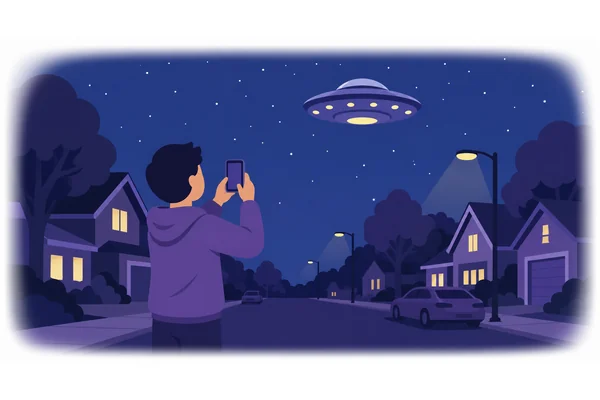
What would you do if you saw a UFO?
Imaginary question · Conversation starter
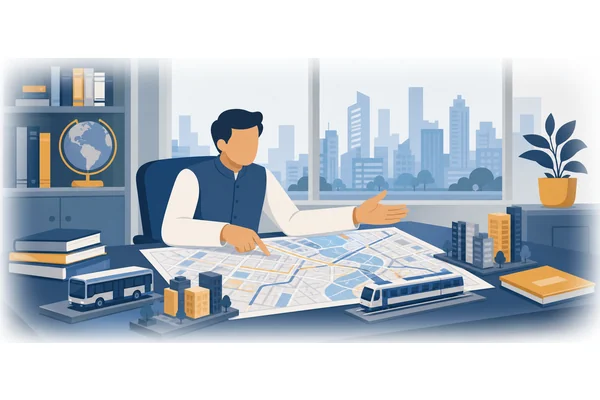
If I were the Prime Minister, I would improve public transport.
Formal usage with 'were' · Power/authority scenario
If you didn't eat so much sugar, you would feel healthier.
Negative advice · Health and habits
If my friend moved abroad, I would miss them very much.
Emotional consequence · Personal relationships
When to use it
Imagining Scenarios
Use second conditional to imagine 'what if' situations that are not real or unlikely.
"If I could speak five languages, I would work as a translator."
Giving Advice Politely
Suggest what someone should do indirectly by describing an imaginary consequence.
"If you practiced more, you would play better."
Playing Games & Stories
Use it in role-play, games, or storytelling to discuss imaginary situations.
"If you were a superhero, what powers would you have?"
Problem-Solving
Discuss solutions to current problems by imagining different conditions.
"If the bus were cheaper, more people would use public transport."
Personal Fantasies
Talk about dreams and fantasies that probably won't happen.
"If I didn't need to work, I would spend all my time painting."
Signal words
if unless imagine suppose what if in case
Common Mistakes
Wrong
If I would win the lottery, I would travel the world.
Correct
If I won the lottery, I would travel the world.
Use past tense in if-clause, not would. Would appears only in the main clause.
Wrong
If she was a teacher, she would help more students.
Correct
If she were a teacher, she would help more students.
Use 'were' with all subjects in formal second conditional, especially with 'I' and 'he/she/it'.
Wrong
If you studied, you could passed the exam.
Correct
If you studied, you could pass the exam.
After would/could, use base verb form, not past participle.
Wrong
If I have time, I would help you.
Correct
If I had time, I would help you.
In second conditional, use past tense in if-clause, not present tense.
KEY TAKEAWAYS

What to Remember

  • The second conditional describes imaginary or unlikely situations in the present or future time.
  • Use if + past tense in the condition clause, even for non-real situations.
  • Use would + base verb (infinitive without "to") in the main clause after if.
  • Remember the comma after the if clause when it comes first in the sentence.
  • Don't use would in the if clause; use simple past tense instead.
← Previous
How to form the second conditional
Next →
Second conditional with wish