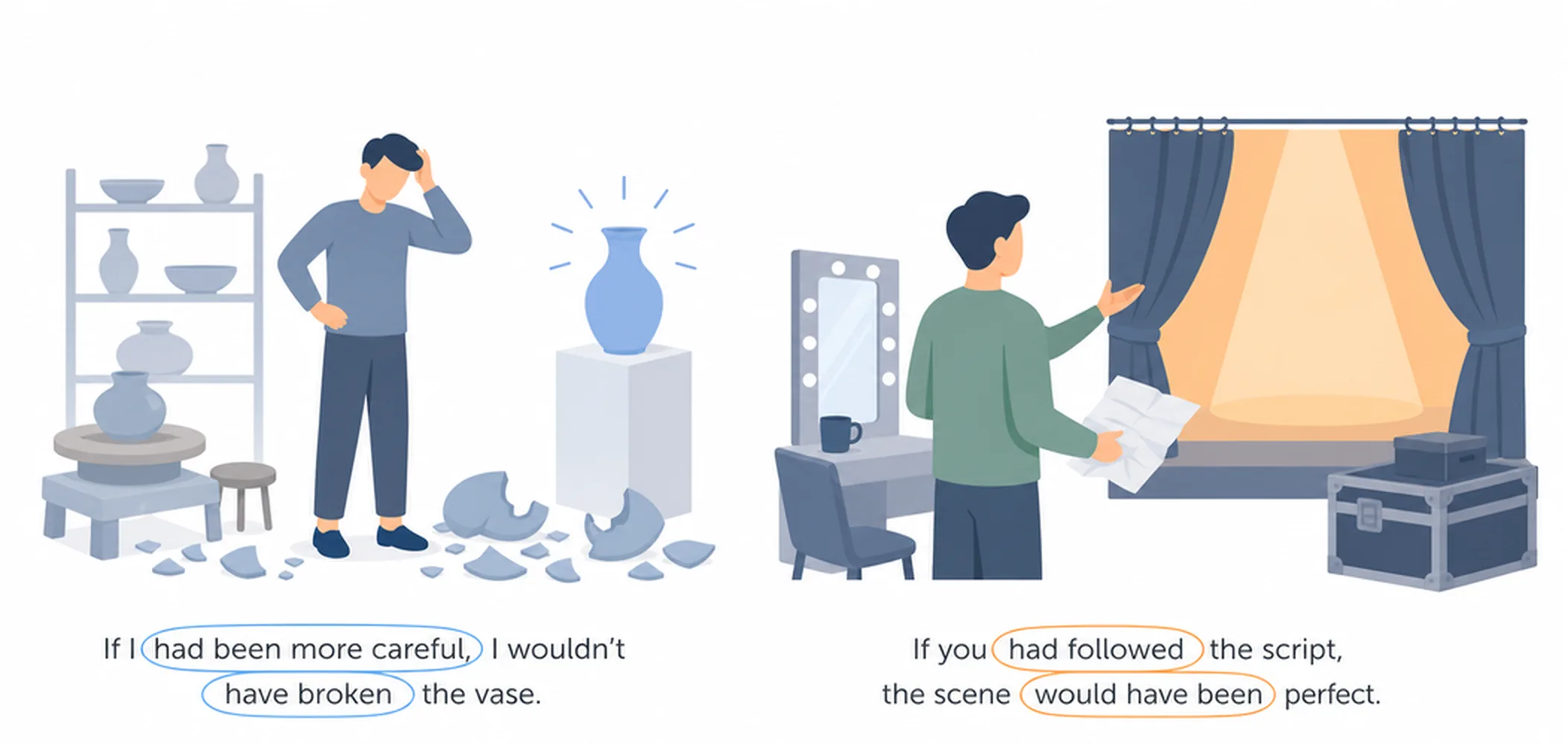
What is the Third Conditional?
The third conditional is used to talk about imaginary situations in the past. It describes what would have happened if a different past event had occurred. Since we cannot change the past, the third conditional always expresses hypothetical or impossible situations. We use it most commonly to express regret, criticism, or to imagine alternative outcomes of historical events.
Expressing Regret and Criticism
The third conditional is perfect for expressing regret about decisions we made or didn't make. When we regret an action, we imagine what would have been different: If I had known the truth, I would have acted differently. For criticism, the third conditional allows us to point out mistakes without being too direct. Instead of saying "You made a mistake," we can say "If you had listened to advice, you wouldn't have lost money." This structure is softer and more diplomatic while still making the point clear.
Structure of the Third Conditional
The third conditional has a fixed structure. It uses the past perfect (had + past participle) in the if-clause and would have + past participle in the main clause. This structure applies to all subjects (I, you, he, she, it, we, they) without variation.
| Form | If-Clause | Main Clause | Example |
|---|---|---|---|
| Positive | if + subject + had + past participle | subject + would have + past participle | If she had studied harder, she would have passed the exam. |
| Negative | if + subject + had not + past participle | subject + would not have + past participle | If he had not missed the bus, he would not have been late. |
| Question | if + subject + had + past participle | would + subject + have + past participle | Would you have come if I had invited you? |
The third conditional always requires the past perfect in the if-clause (had + past participle) and the structure would have + past participle in the main clause, regardless of whether the sentence is affirmative, negative, or interrogative.
If I had known about the party, I would have gone. (But I didn't know, and I didn't go — a regret about the past.)
Examples






What to Remember
- Use the third conditional to describe imaginary past situations with different outcomes.
- Form: if + past perfect + would have + past participle in both clauses.
- The third conditional expresses regret, criticism, or hypothetical alternative outcomes of past events.
- Cannot change the past, so third conditional always describes impossible or hypothetical situations.
- Don't mix conditionals: use past perfect in if-clause, would have in main clause.