Understanding Three Similar Quantifiers
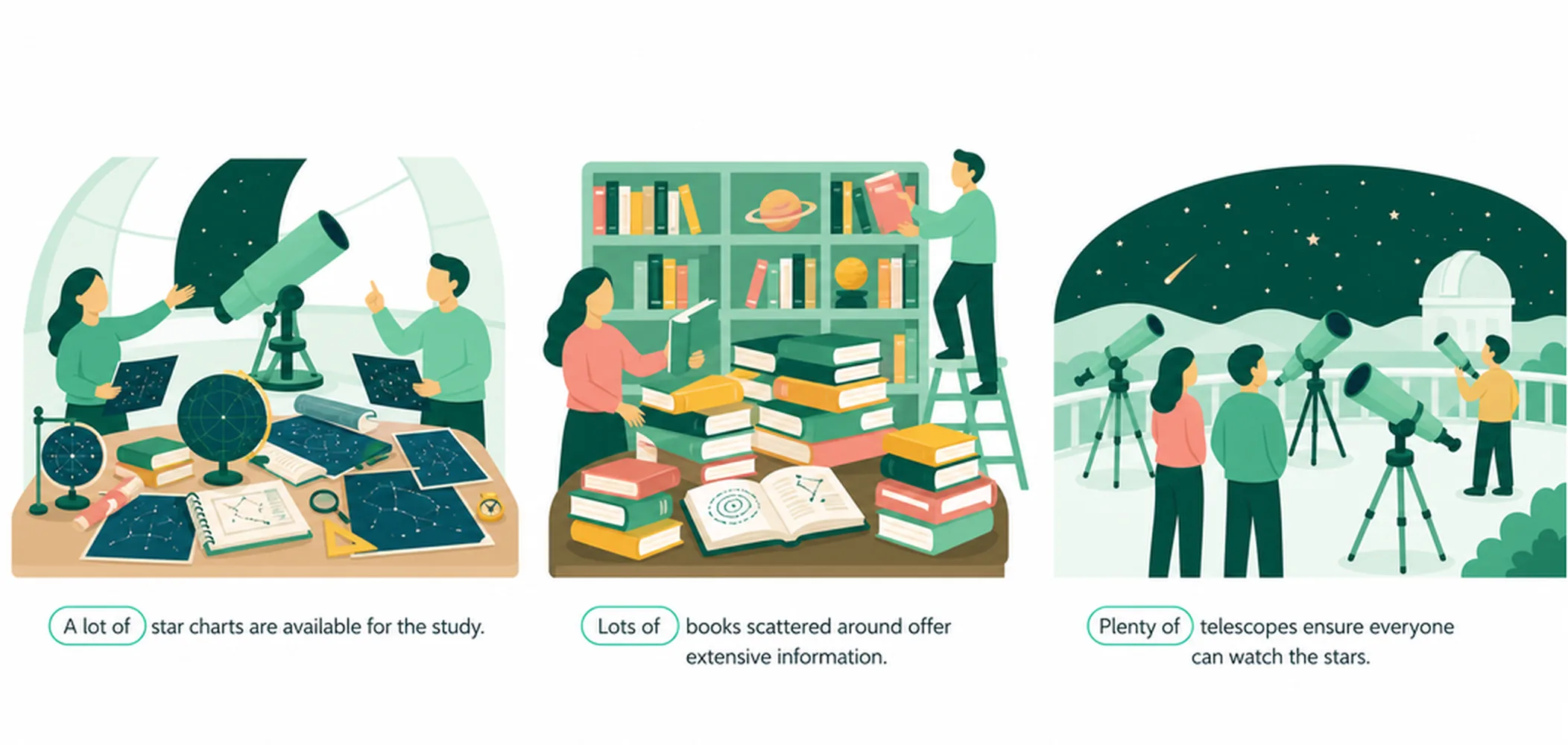
The phrases 'a lot of', 'lots of', and 'plenty of' all express large quantities, but they have important differences in formality and usage. 'A lot of' is neutral and works in most situations. 'Lots of' is more casual and common in spoken English. 'Plenty of' suggests not just a large amount, but enough to satisfy a need. Understanding these distinctions will help you choose the right expression for formal writing, casual conversation, and specific contexts.
Key Differences
All three quantifiers can be used with both countable and uncountable nouns. However, 'a lot of' is the most versatile and formal option, suitable for essays and professional writing. 'Lots of' sounds more informal and is preferred in everyday speech and informal writing. 'Plenty of' often carries the meaning of 'enough' or 'more than enough', and is slightly more formal than 'lots of' but less formal than 'a lot of'.
A Lot Of vs Lots Of vs Plenty Of: Side-by-Side Comparison
| Dimension | A lot of | Lots of | Plenty of |
|---|---|---|---|
| Form | a lot of + noun (three words) | lots of + noun (two words) | plenty of + noun (two words) |
| Formality Level | Neutral to slightly informal; acceptable in both spoken and written English | Informal; more common in casual spoken English and informal writing | Neutral to slightly formal; common in both spoken and written contexts |
| Use with Countable Nouns | ✅ Yes — a lot of friends | ✅ Yes — lots of friends | ✅ Yes — plenty of friends |
| Use with Uncountable Nouns | ✅ Yes — a lot of water | ✅ Yes — lots of water | ✅ Yes — plenty of water |
| Meaning Nuance | Simply indicates a large quantity or amount; neutral in tone | Same meaning as a lot of but carries a slightly more emphatic, casual feel | Implies a sufficient or more-than-enough quantity; carries a reassuring or satisfied tone |
| Typical Context | Everyday conversation, informal essays, emails; versatile across contexts | Casual conversation, text messages, informal speech; avoid in formal writing | When emphasising sufficiency or abundance; advice, reassurance, descriptions of resources |
| Positive Example | She has a lot of experience in marketing. | We had lots of fun at the party! | There is plenty of food for everyone. |
| Negative Example | We don't have a lot of time left. | There aren't lots of seats available. (less common in negatives) | There isn't plenty of room. (rare; sounds unnatural — avoid in negatives) |
| Question Example | Did you get a lot of responses? | Were there lots of people there? | Is there plenty of parking nearby? |
| Use in Negatives & Questions | ✅ Common and natural in negatives and questions | ⚠️ Possible but less common; mainly used in positive sentences | ⚠️ Unusual in negatives; more natural in positive statements and questions |
| Key Signal Words / Synonyms | many, much, a great deal of, a large number of | heaps of, loads of, tons of, a ton of | enough and more, ample, an abundance of, more than enough |
| 🔑 Key Difference: All three express a large quantity, but they differ in register and nuance. Lots of is the most informal and is best reserved for casual speech. A lot of is the most versatile, working across both informal and semi-formal contexts. Plenty of is unique because it carries the specific meaning of enough or more than enough — it signals sufficiency and is often used in a reassuring tone. Additionally, a lot of is the safest choice in negatives and questions, while plenty of sounds most natural in positive affirmative statements. | |||
Examples









What to Remember
- Use 'a lot of' as the neutral choice that works in both formal and informal contexts.
- 'Lots of' is more casual and conversational, commonly used in spoken English and informal writing.
- 'Plenty of' means not just large quantities, but enough to meet a specific need or requirement.
- All three phrases work with both countable and uncountable nouns without any grammatical changes.
- Avoid 'lots of' in formal academic or professional writing; use 'a lot of' or 'plenty of' instead.