What Are Dependent Prepositions with Adjectives?
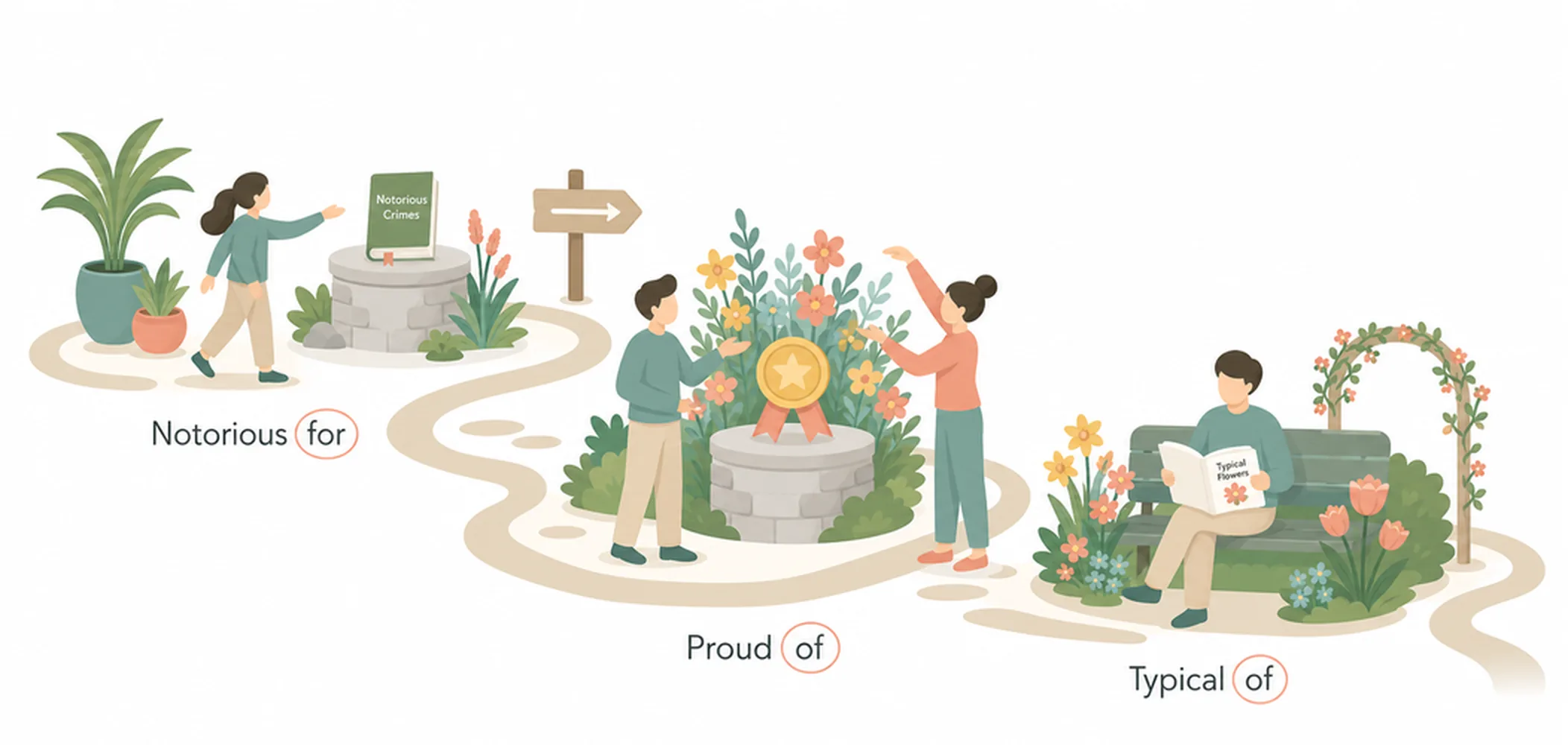
Some adjectives need a specific preposition after them. We call these dependent prepositions. The preposition depends on the adjective. You cannot change it or leave it out. For example, we say 'proud of' not 'proud about' or just 'proud.' Learning which preposition goes with which adjective is important for speaking and writing correctly at A2 level.
Common Adjectives N–Z with Their Prepositions
The preposition is part of the adjective phrase, so you must learn them together. Pay attention to the preposition that follows each adjective—it is essential for correct English usage.
| Adjective | Dependent Preposition | Example |
|---|---|---|
| nervous | about | He is nervous about the exam. |
| nice | to | She was nice to everyone at the party. |
| noticeable | in | The change is noticeable in his behaviour. |
| opposed | to | They are opposed to the new policy. |
| proud | of | She is proud of her achievements. |
| popular | with | That band is popular with teenagers. |
| polite | to | It is polite to knock before entering. |
| puzzled | by | I was puzzled by his strange comment. |
| responsible | for | He is responsible for the project. |
| rich | in | This region is rich in natural resources. |
| relevant | to | This information is relevant to your research. |
| related | to | His question is related to the topic. |
| rude | to | It was rude to interrupt her speech. |
| right | about | You are right about the answer. |
| reluctant | to | He is reluctant to admit his mistake. |
| similar | to | This design is similar to the previous one. |
| sick | of | She is sick of waiting in traffic. |
| suitable | for | This job is suitable for experienced workers. |
| sure | of/about | I am sure of his loyalty. |
| shocked | by/at | We were shocked by the sudden news. |
| satisfied | with | Are you satisfied with the results? |
| short | of | We are short of time to finish this. |
| sorry | for/about | I am sorry for my late arrival. |
| suspicious | of | He was suspicious of their intentions. |
| tired | of | I am tired of this routine. |
| true | of | That is true of many students. |
| typical | of | This behaviour is typical of teenagers. |
| useful | for | This tool is useful for gardening. |
| unkind | to | It was unkind to laugh at him. |
| wrong | about | You are wrong about the date. |
| worried | about | She is worried about her exam results. |
Why This Matters
Dependent prepositions are fixed. You cannot guess them. Native speakers learn them slowly, word by word. The best way to learn is to see the adjective and preposition together many times. When you read or listen, notice which preposition comes after each adjective. Write the whole phrase in your notebook: 'proud of', 'worried about', 'similar to'. This helps your brain remember the correct combination.
Adjectives N–Z with Dependent Prepositions
| Adjective | Preposition + Example Phrase |
|---|---|
| necessary | for — necessary for success |
| nervous | about — nervous about the exam |
| new | to — new to the job |
| nice | to — nice to everyone |
| notorious | for — notorious for being late |
| oblivious | to / of — oblivious to the danger |
| obsessed | with — obsessed with fitness |
| opposed | to — opposed to the plan |
| optimistic | about — optimistic about the future |
| originate | from — originate from a tradition |
| patient | with — patient with children |
| pessimistic | about — pessimistic about the outcome |
| pleased | with / about — pleased with the result |
| polite | to — polite to strangers |
| popular | with / among — popular with students |
| prepared | for — prepared for the worst |
| proud | of — proud of her achievement |
| qualified | for — qualified for the role |
| ready | for — ready for anything |
| related | to — related to the problem |
| relevant | to — relevant to the discussion |
| responsible | for — responsible for the team |
| rude | to — rude to the waiter |
| sad | about — sad about the news |
| satisfied | with — satisfied with the service |
| scared | of — scared of spiders |
| sensitive | to / about — sensitive to criticism |
| shocked | by / at — shocked by the news |
| similar | to — similar to mine |
| skilled | at / in — skilled at negotiating |
| sorry | about / for — sorry about the delay |
| stressed | about — stressed about deadlines |
| suitable | for — suitable for all ages |
Examples





What to Remember
- Dependent prepositions are fixed phrases — you cannot change or remove the preposition after an adjective.
- Each adjective has one correct preposition that must follow it; memorize them as fixed pairs.
- Common A2 adjectives like proud, worried, and similar words each require a specific dependent preposition.
- The same adjective never takes different prepositions; for example, only 'proud of' is correct, never 'proud about'.
- Learning dependent prepositions by heart is essential for accurate English speaking and writing at A2 level.