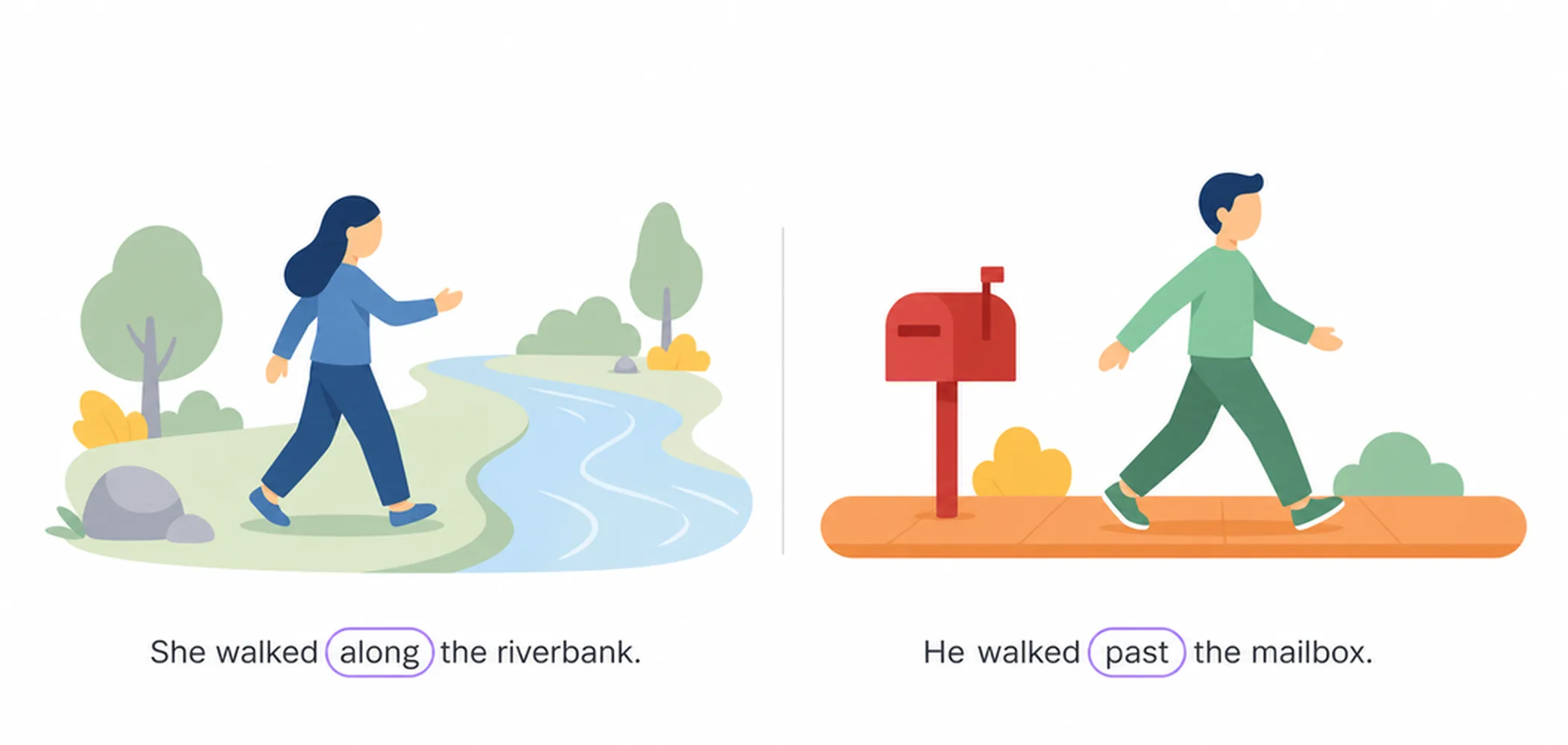
Along vs Past: Key Difference
Both 'along' and 'past' are prepositions of movement, but they show different directions. Use 'along' when you move beside something, next to it, or following its length. Use 'past' when you move by something and go beyond it. Think: along = staying beside, past = going beyond.
Examples with 'Along'
Use 'along' to show movement beside or next to something for a distance.
Along vs Past: Side-by-Side Comparison
| Dimension | Along | Past |
|---|---|---|
| Form | Preposition of movement used with a path, route, or linear surface (e.g., a road, river, corridor). | Preposition of movement used to indicate going beyond a fixed point or object and continuing on the other side of it. |
| Core Meaning | Movement following the length of something — the traveller stays on or beside the path throughout the journey. | Movement that goes by and beyond a specific point — the traveller reaches, passes, and leaves that point behind. |
| Direction of Movement | Horizontal / parallel — movement runs beside or within the path continuously from one end toward another. | Transitory — movement approaches a landmark, passes in front of or beside it, then continues beyond it. |
| Reference Object | A long, extended surface or route: a road, path, river, wall, beach, corridor, coastline. | A fixed, discrete point or object: a house, shop, school, person, corner, traffic light. |
| Typical Context | Describing a journey that follows a route; strolling, walking, driving, or sailing while staying parallel to a feature. | Giving directions; describing someone or something moving in front of a landmark or noticing something while passing it. |
| Positive Example | "We walked along the river bank until we reached the bridge." "She jogged along the seafront every morning." |
"We walked past the old library without stopping." "She jogged past the bus stop just as the bus arrived." |
| Negative Example | "They did not walk along the motorway because it was too dangerous." "I never cycle along that narrow path." |
"He did not drive past the school; he turned left before it." "I never walk past that bakery without buying something." |
| Question Example | "Did you walk along the canal path to get here?" "How far did you run along the beach?" |
"Did the car drive past the bank before stopping?" "Did you walk past my house this morning?" |
| Key Signal Words / Phrases | Walk, stroll, run, drive, sail + along + the road / path / river / coast / corridor / wall | Walk, run, drive, fly + past + the shop / house / person / corner / school / sign |
| Visualisation | Imagine an arrow travelling parallel to a long line — the line is the path being followed throughout. | Imagine an arrow approaching a single dot, moving beside it, then continuing beyond it — the dot is left behind. |
| Common Mistake | ❌ "I walked along the post office." — Incorrect because a post office is a fixed point, not a linear path. | ❌ "I walked past the river." — Incorrect if you mean you followed the river; use along for extended paths. |
| 🔑 Key Difference: Use along when movement follows the full length of an extended path or route (e.g., a road, river, or beach) — the reference object acts as a guide running beside or beneath the traveller. Use past when movement goes by a specific, fixed point or landmark and continues on the other side — the focus is on reaching and then leaving that single reference point behind. In short: along = following a line; past = passing a point. | ||
Examples
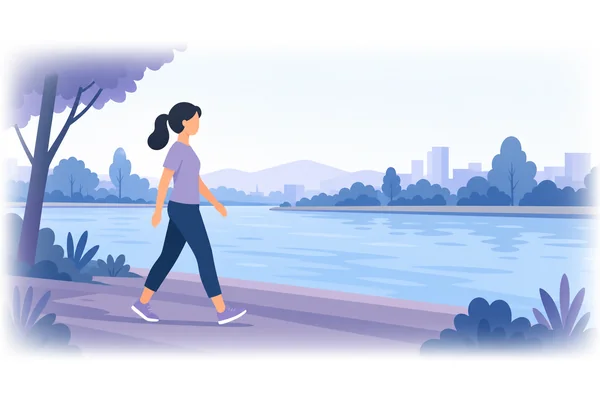
She walked along the river every morning.
Movement beside · Everyday usage
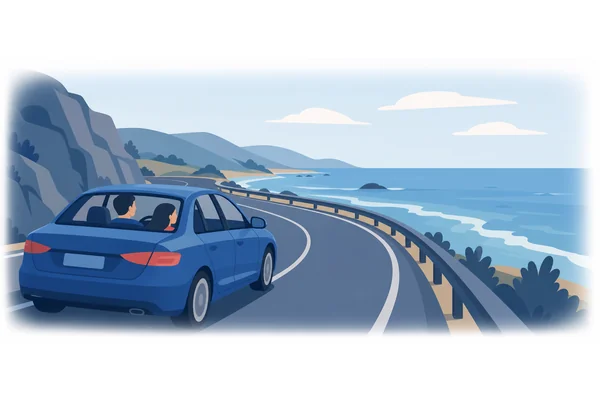
We drove along the coast and saw beautiful views.
Following the length of something · Travel
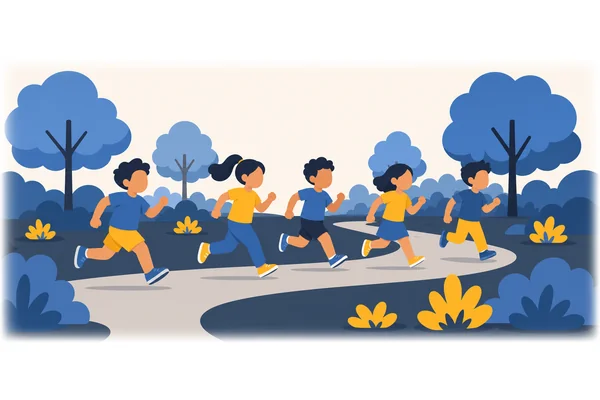
The children ran along the path in the park.
Moving beside a line · Action

He walked past the shop without stopping.
Movement beyond something · Direction
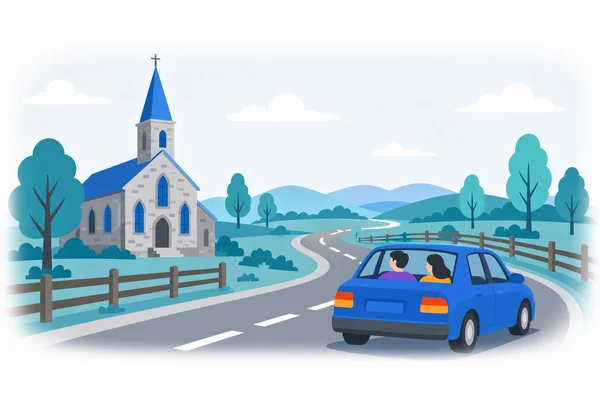
We drove past the old church on the way home.
Going by and beyond · Travel
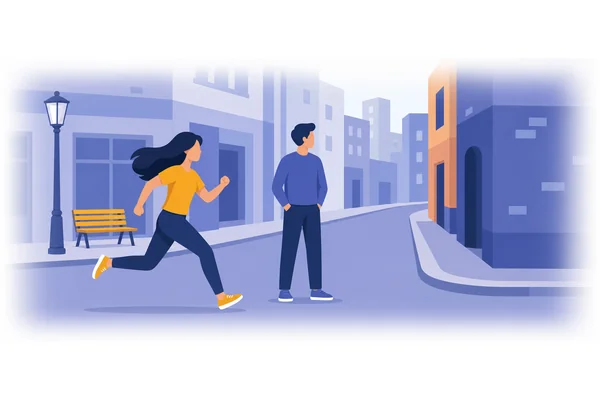
She ran past me and disappeared around the corner.
Moving beyond a person · Action
When to use it
Describing Paths
Use 'along' when showing movement beside a path, road, or route you follow for distance.
"We walked along the hiking trail for two hours."
Passing by Places
Use 'past' when you move by a place and continue beyond it without stopping.
"I ran past the supermarket on my way to school."
Travel and Routes
Use 'along' for journeys that follow beside something; use 'past' for quick passages by something.
"We drove along the coast, but we passed a small village quickly."
Signal words
beside
next to
following
alongside
by
beyond
through
Common Mistakes
✕
Wrong
I walked past the river for one hour.
✓
Correct
I walked along the river for one hour.
Walking beside a river means 'along', not 'past'. 'Past' means you go beyond it quickly.
✕
Wrong
The road runs along the city every day.
✓
Correct
The road runs along the city for many kilometers.
'Along' describes the direction of a road next to a place, not time. Remove 'every day'.
✕
Wrong
She walked past the beach slowly.
✓
Correct
She walked along the beach slowly.
If someone walks slowly beside a beach, use 'along'. 'Past' suggests quick movement beyond.
KEY TAKEAWAYS
What to Remember
- Use 'along' when moving beside something, following its length or direction.
- Use 'past' when moving by something and continuing beyond it.
- 'Along' means staying next to; 'past' means going further away.
- Common mistake: don't use 'along' when you mean to go beyond something.
- Both are prepositions of movement, but they show opposite directional meanings.