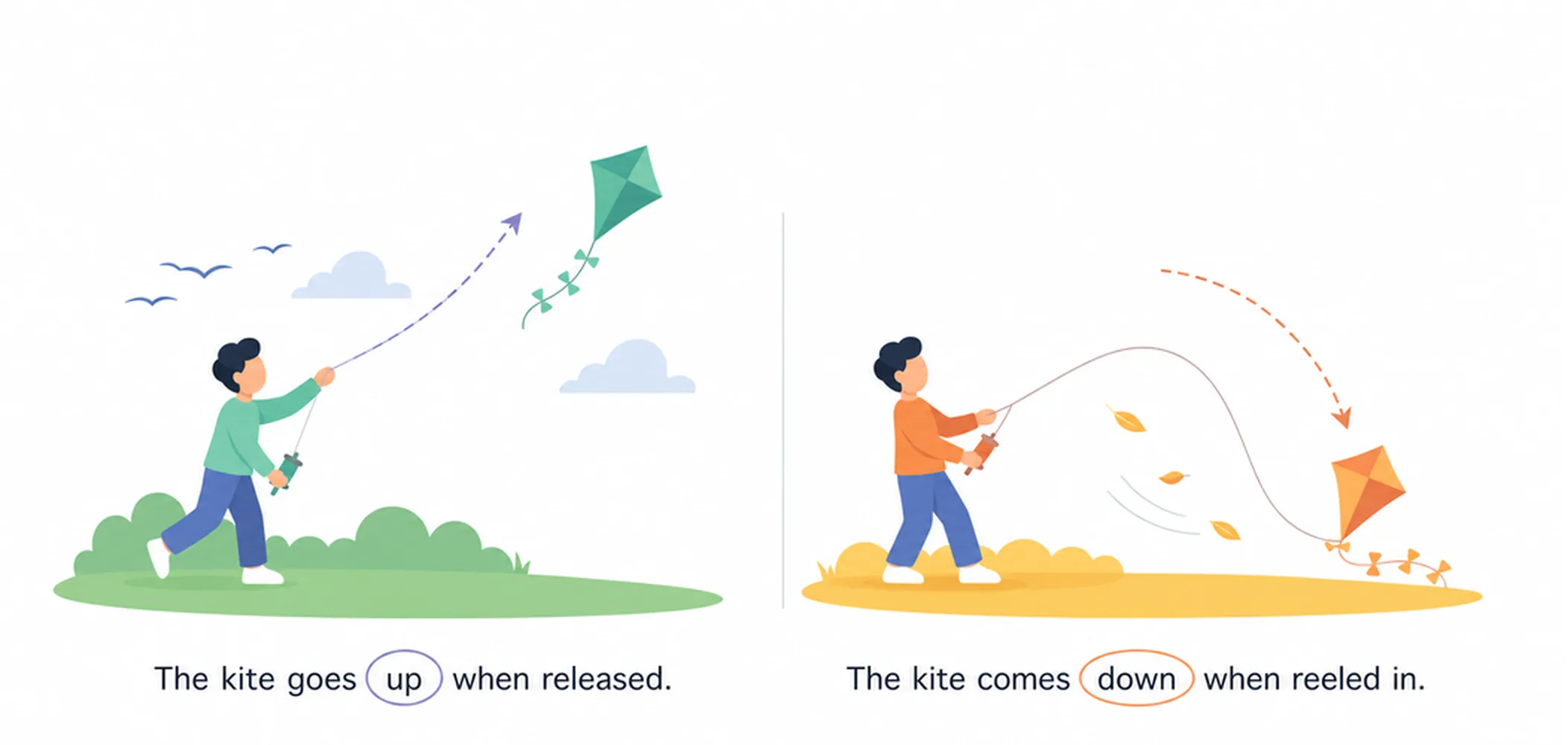
UP vs DOWN: The Key Difference
UP and DOWN are prepositions of movement that describe direction. UP means moving to a higher place or position. DOWN means moving to a lower place or position. Both prepositions show vertical movement—they answer the question "which direction?"
Side-by-Side Comparison
Use UP when someone or something moves higher: the person goes up the stairs, the balloon goes up to the sky. Use DOWN when someone or something moves lower: the person goes down the stairs, the water goes down the drain. Remember: UP = higher, DOWN = lower.
UP vs DOWN: Quick Comparison
| Aspect | ⬆️ UP | ⬇️ DOWN |
|---|---|---|
| Direction | Movement toward a higher position or level; away from the ground or a lower point. | Movement toward a lower position or level; toward the ground or a lower point. |
| Core Meaning | Rising, ascending, increasing, or moving to a superior position. | Falling, descending, decreasing, or moving to a lower or inferior position. |
| When to Use | Use up when something or someone moves from a lower place to a higher place, or when a quantity or level increases. | Use down when something or someone moves from a higher place to a lower place, or when a quantity or level decreases. |
| Positive Example | "She walked up the stairs to the third floor." "The balloon floated up into the sky." |
"He walked down the stairs to the lobby." "The leaf drifted down from the tree." |
| Negative Example | "The elevator did not go up; it stayed on the ground floor." | "The price did not come down; it remained the same all week." |
| Question Example | "Did you climb up the mountain by yourself?" "Is the temperature going up?" |
"Did you slide down the hill on a sled?" "Is the river flowing down toward the valley?" |
| Key Signal Words / Phrases | climb up, go up, rise up, move up, walk up, fly up, jump up, look up, stand up, grow up, pick up, lift up | fall down, come down, drop down, walk down, slide down, sit down, look down, lie down, bring down, go down, knock down |
| Physical Reference Point | Away from the ground; toward the sky, ceiling, or a higher surface. | Toward the ground; away from the sky, ceiling, or a higher surface. |
| Figurative / Extended Use | Often implies progress, improvement, or increase: "Prices went up." / "She moved up in her career." | Often implies decline, reduction, or a negative change: "Sales went down." / "He felt down after the loss." |
| Common Collocations | run up, speed up, set up, show up, wake up, turn up, end up | break down, calm down, slow down, shut down, write down, turn down, cut down |
| Visual Image | Arrow pointing ⬆️ — think of a rocket launching, a bird flying, or someone climbing a ladder. | Arrow pointing ⬇️ — think of a raindrop falling, a person sliding, or a sunset going below the horizon. |
| 🔑 Key Difference: UP always indicates movement or change toward a higher point — physically or figuratively — while DOWN always indicates movement or change toward a lower point. Think of UP as going against gravity and DOWN as going with gravity. When the direction is vertical and raises the position, level, or value → use UP. When it lowers the position, level, or value → use DOWN. | ||
Examples

She climbed up the mountain on Saturday.
Everyday usage · Movement to higher place
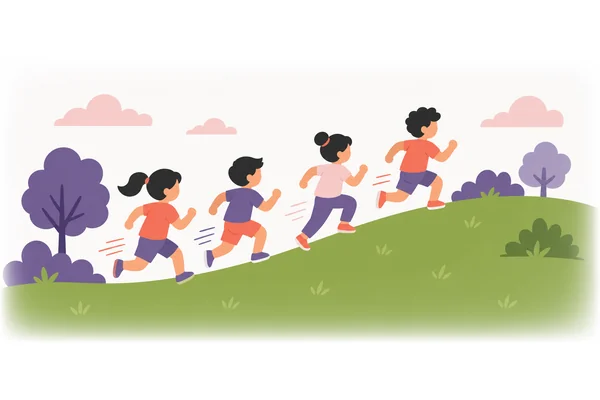
The children ran up the hill very quickly.
Everyday usage · Vertical movement

Please look up at the sky and see the stars.
Everyday usage · Direction to higher position

He walked down the street to the shop.
Everyday usage · Movement to lower place
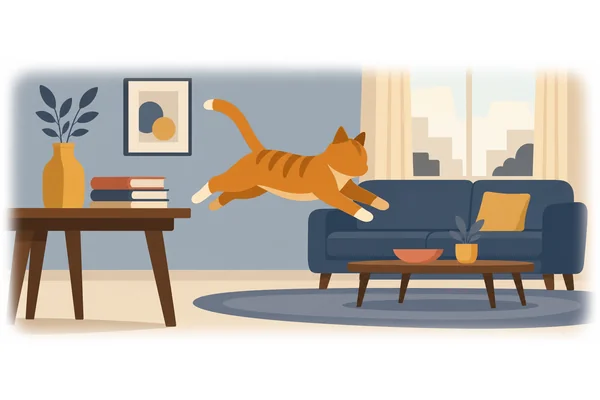
The cat jumped down from the table.
Everyday usage · Vertical descent
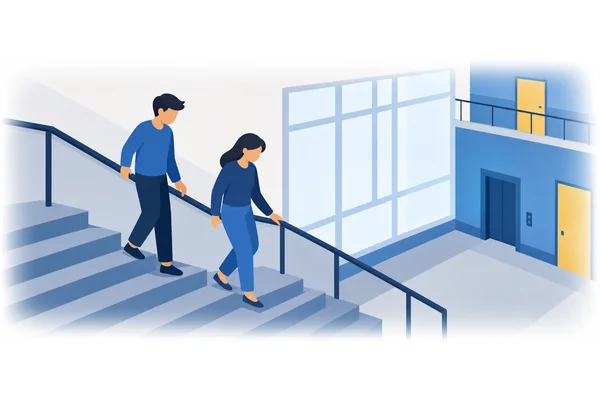
We went down the stairs slowly and carefully.
Everyday usage · Movement to lower level
When to use it
Climbing Mountains
Use UP to describe climbing higher. Use DOWN to describe coming back down.
"We climbed up the mountain in the morning and walked down in the afternoon."
Stairs and Levels
Use UP for higher floors or levels. Use DOWN for lower floors or levels.
"Take the elevator up to the fifth floor."
Sky and Earth
Use UP for the sky and higher places. Use DOWN for the ground and lower places.
"Look down at the city from the airplane window."
Signal words
climb
jump
run
walk
fly
go
come
move
fall
look
Common Mistakes
✕
Wrong
She goes down the stairs to the second floor.
✓
Correct
She goes up the stairs to the second floor.
Going to a higher floor means UP, not DOWN. DOWN is for lower floors.
✕
Wrong
The bird flew up to the ground.
✓
Correct
The bird flew down to the ground.
The ground is lower, so use DOWN. UP is for higher positions.
✕
Wrong
Jump down the table, please.
✓
Correct
Jump down from the table, please.
Use "down FROM" the table, or simply "jump down." DOWN alone works, but FROM is more common.
KEY TAKEAWAYS
What to Remember
- Use UP when describing movement toward a higher place or position.
- Use DOWN when describing movement toward a lower place or position.
- Both UP and DOWN are prepositions of movement that show direction vertically.
- UP and DOWN answer the question "which direction?" in a sentence.
- Remember that UP and DOWN describe opposite vertical directions of movement.