The Key Difference
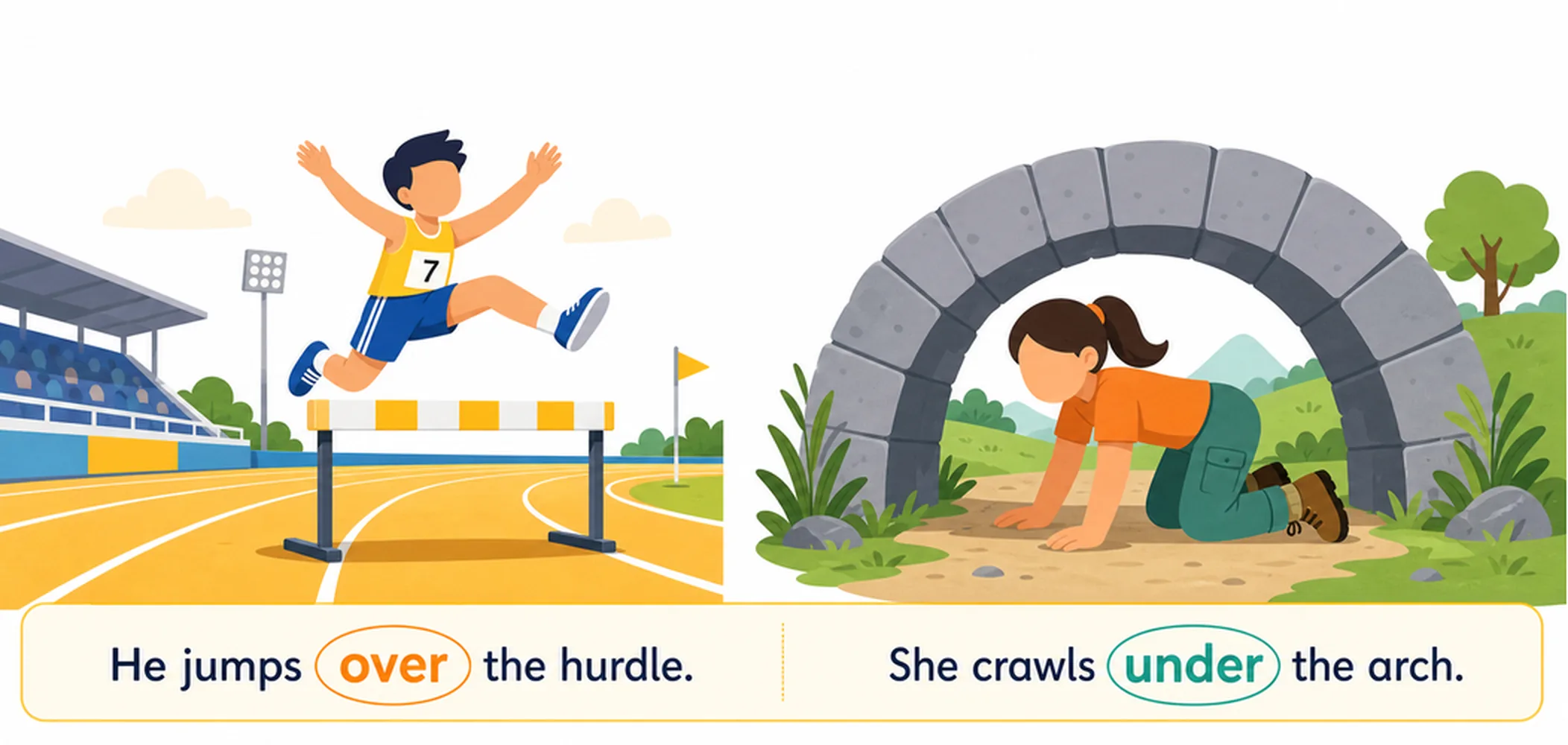
Over and under are prepositions of movement that describe direction. Use over when something moves above or across something else. Use under when something moves below something else. Both prepositions help us describe the path an object or person takes.
Over vs Under
Over means moving above, across, or on top of something. Under means moving below or beneath something. Think about height: over is higher, under is lower.
Over vs Under: Side-by-Side Comparison
| Aspect | Over | Under |
|---|---|---|
| Form | Preposition of movement: over + noun phrase | Preposition of movement: under + noun phrase |
| Direction | Upward arc — moving from one side to the other by going above something; implies crossing a higher plane | Downward path — moving from one side to the other by going below something; implies passing beneath a surface or object |
| When to use | Use over when the moving person or thing travels across the top of an obstacle, barrier, or surface — often clearing it or arching above it | Use under when the moving person or thing travels below an obstacle, structure, or surface — passing through a lower space |
| Positive example | The horse jumped over the fence with ease. | The child crawled under the fence to reach the other side. |
| Negative example | The cat did not jump over the wall; it went around it instead. | The boat could not sail under the bridge because the water level was too low. |
| Question example | Did the runner leap over the hurdle successfully? | Can the submarine travel under the ice sheet safely? |
| Key signal words / contexts | jump, fly, climb, leap, pass, walk — combined with obstacles like a wall, fence, bridge, mountain, or river | crawl, slide, swim, pass, go, tunnel — combined with structures like a bridge, table, arch, fence, or tunnel |
| Visual image | Picture an arc or rainbow shape going above the obstacle ↑ | Picture a tunnel or gap going beneath the obstacle ↓ |
| Key Difference: Both over and under describe movement from one side of an obstacle to the other, but they differ in the path taken. Over means the subject moves above the obstacle — clearing its top surface — while under means the subject moves below the obstacle — passing through the space beneath it. The choice depends entirely on the physical direction of travel relative to the object being passed. | ||
Examples
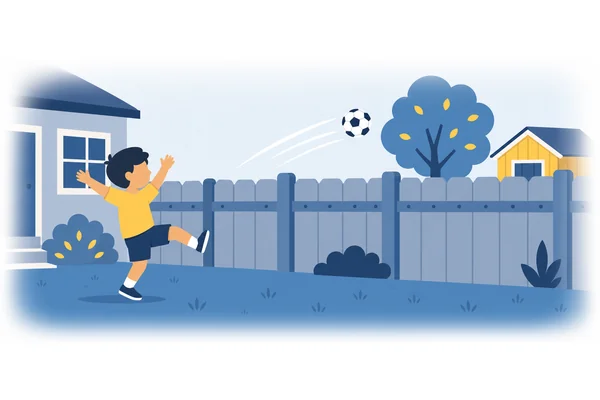
The ball flew over the fence.
Movement across and above · Preposition of movement

She jumped over the puddle.
Movement across · Everyday action
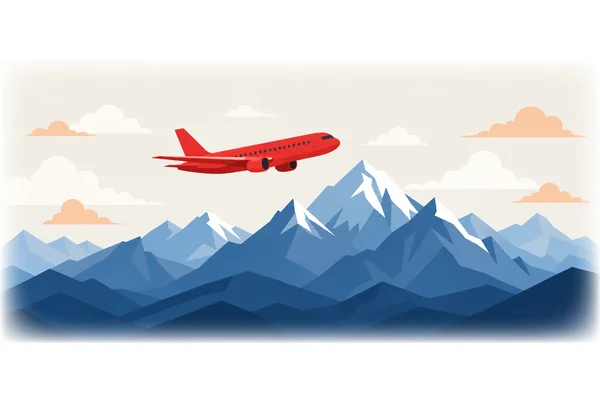
The airplane flew over the mountains.
Movement across high objects · Travel

The dog crawled under the table.
Movement below · Everyday action

We walked under the bridge.
Movement below · Directional
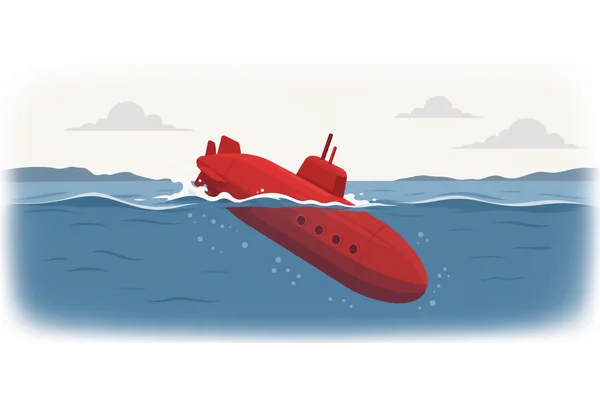
The submarine went under the water.
Movement below the surface · Travel
When to use it
Jumping and running
Use 'over' when jumping across or above obstacles. Use 'under' when crawling or moving through something.
"The athlete jumped over the hurdle. The child crawled under the table."
Travel and transportation
Use 'over' for movement across land or above. Use 'under' for movement below bridges or through tunnels.
"The plane flew over the city. The train went under the mountain."
Sports and games
Use 'over' for throwing or kicking the ball above something. Use 'under' for moving beneath or through.
"He kicked the ball over the net. She rolled the ball under the fence."
Signal words
above
across
on top of
below
beneath
underneath
Common Mistakes
✕
Wrong
The bird flew under the clouds.
✓
Correct
The bird flew over the clouds.
Clouds are high in the sky, so use 'over' to show movement above them.
✕
Wrong
He jumped over the hole in the ground.
✓
Correct
He jumped across the hole in the ground.
Use 'across' for movement over a horizontal distance or space; 'over' describes movement above something.
✕
Wrong
The car drove under the tall building.
✓
Correct
The car drove under the bridge.
Use 'under' only when moving below something. Use 'by' or 'past' for moving beside a building.
KEY TAKEAWAYS
What to Remember
- Use "over" when something moves above or across another thing.
- Use "under" when something moves below another thing.
- Both prepositions describe the direction or path of movement.
- "Over" can mean movement across a surface or barrier.
- "Under" always indicates movement in a lower position or beneath.