What Are Prepositions of Place?
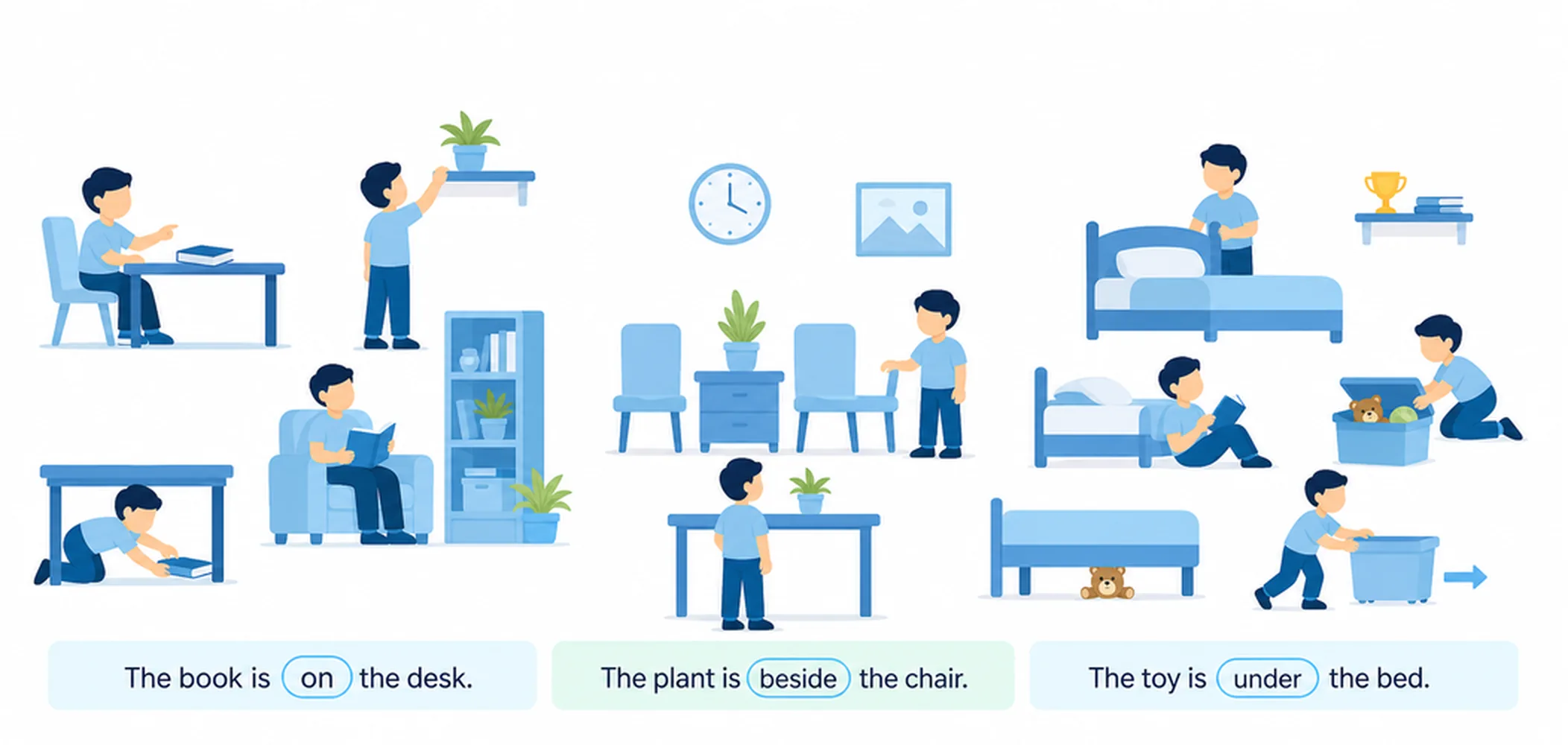
Prepositions of place tell us WHERE something is located. They show the position of a person, animal, or object in space. We use them every day to describe rooms, buildings, and outdoor areas. Learning these prepositions helps you understand directions and describe your environment clearly.
Common Prepositions of Place
The most useful prepositions of place are: IN (inside a space), ON (touching a surface), UNDER (below something), BETWEEN (in the middle of two things), NEXT TO (beside), IN FRONT OF (facing), BEHIND (at the back), ABOVE (higher than), BELOW (lower than), and NEAR (close to). These words help you describe exactly where things are in a room or building.
Using Prepositions in a Room Scene
Imagine a living room: a sofa is AGAINST the wall, a lamp is ON the table, books are UNDER the chair, and a picture is ABOVE the sofa. A cushion is BETWEEN two pillows, and a plant is NEXT TO the window. By using these prepositions together, you can paint a complete picture of any space. This vocabulary is essential for home descriptions, giving directions, and everyday conversation.
All 20 Prepositions of Place — Quick Reference
| # | Preposition | Core Meaning | Room-Scene Example | Note |
|---|---|---|---|---|
| 1 | in | Inside an enclosed space | The cat is in the box. | Used for rooms, containers, and areas |
| 2 | on | On a surface | The book is on the table. | Also used for floors, walls, and shelves |
| 3 | at | A specific point or position | She is sitting at the desk. | Focuses on a location as a point, not an area |
| 4 | under | Directly below something | The shoes are under the bed. | Often implies contact or close proximity below |
| 5 | above | Higher than, but not touching | The clock is above the fireplace. | No direct contact; compare with over |
| 6 | over | Directly above, covering or arching | A lamp hangs over the dining table. | Can suggest covering; also used for movement |
| 7 | below | Lower than, but not touching | The vent is below the window. | Opposite of above; general lower position |
| 8 | next to | Immediately beside something | The lamp is next to the sofa. | Interchangeable with beside in most contexts |
| 9 | beside | At the side of something | The chair stands beside the window. | Slightly more formal than next to |
| 10 | between | In the middle of two things | The plant is between the two windows. | Used with exactly two reference points |
| 11 | among | Surrounded by three or more things | The remote is hidden among the cushions. | Used with groups, not just two items |
| 12 | in front of | Facing the front side of something | The rug is in front of the sofa. | Opposite of behind |
| 13 | behind | At the back of something | The door is behind the curtain. | Opposite of in front of |
| 14 | opposite | Directly across from something | The mirror hangs opposite the entrance. | Suggests facing each other across a space |
| 15 | near | Close to but not immediately touching | The bookcase is near the corner. | Less precise than next to; indicates proximity |
| 16 | against | Touching or leaning on a surface | The sofa is against the wall. | Implies physical contact or support |
| 17 | along | Following the length or edge of something | Pictures hang along the corridor. | Used for movement or arrangement in a line |
| 18 | around | Encircling or on all sides of something | Chairs are arranged around the table. | Suggests a circular or surrounding position |
| 19 | through | Passing within or across something | Light shines through the window. | Often indicates movement or visibility across an opening |
| 20 | across | From one side to the other | The rug stretches across the floor. | Can indicate position spanning or movement covering distance |
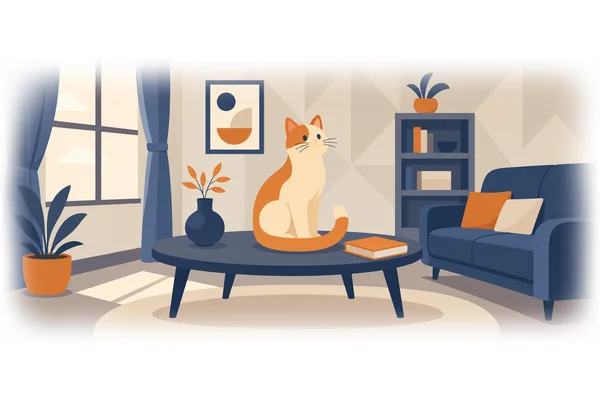
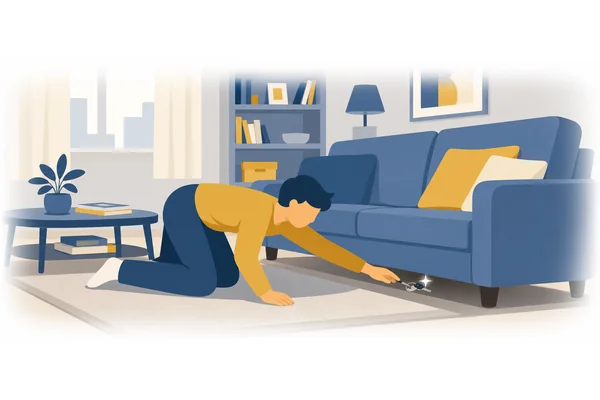
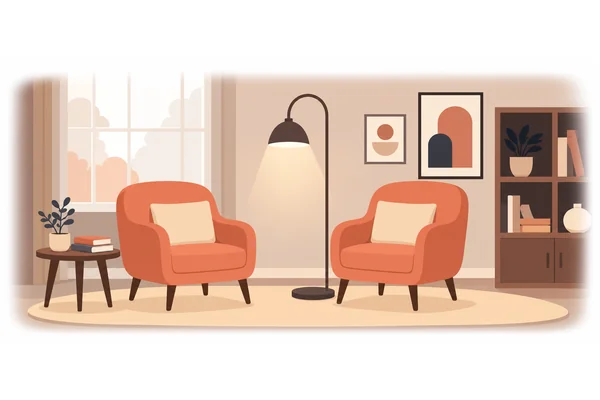
Examples
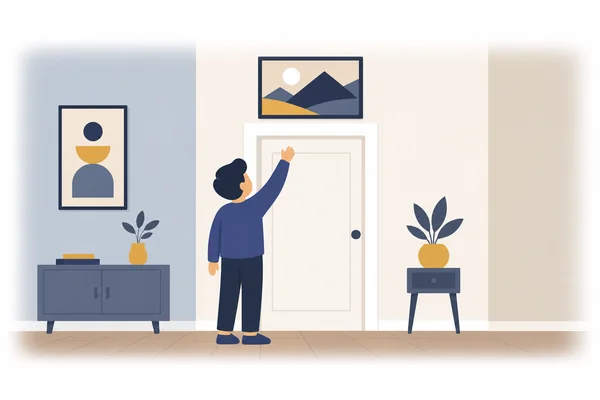
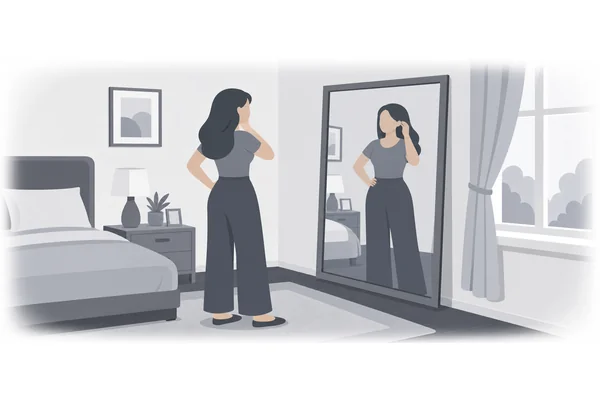
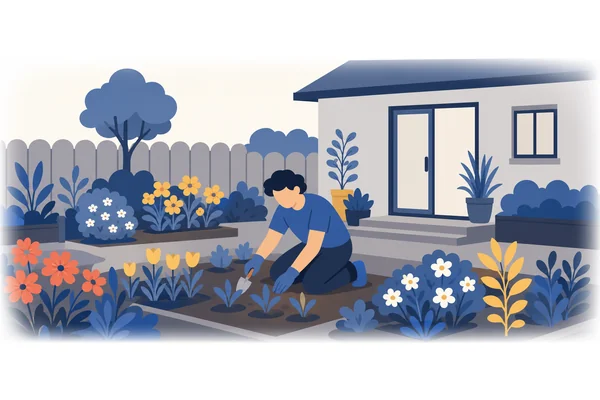
What to Remember
- Prepositions of place describe WHERE something is located in space (in, on, under, between, next to).
- Use IN for spaces inside something and ON for objects touching a surface.
- Use UNDER for below, BETWEEN for middle of two things, and NEXT TO for beside.
- Use IN FRONT OF for facing and BEHIND for at the back of something.
- Practice with room descriptions to master these 20 prepositions and use them naturally.