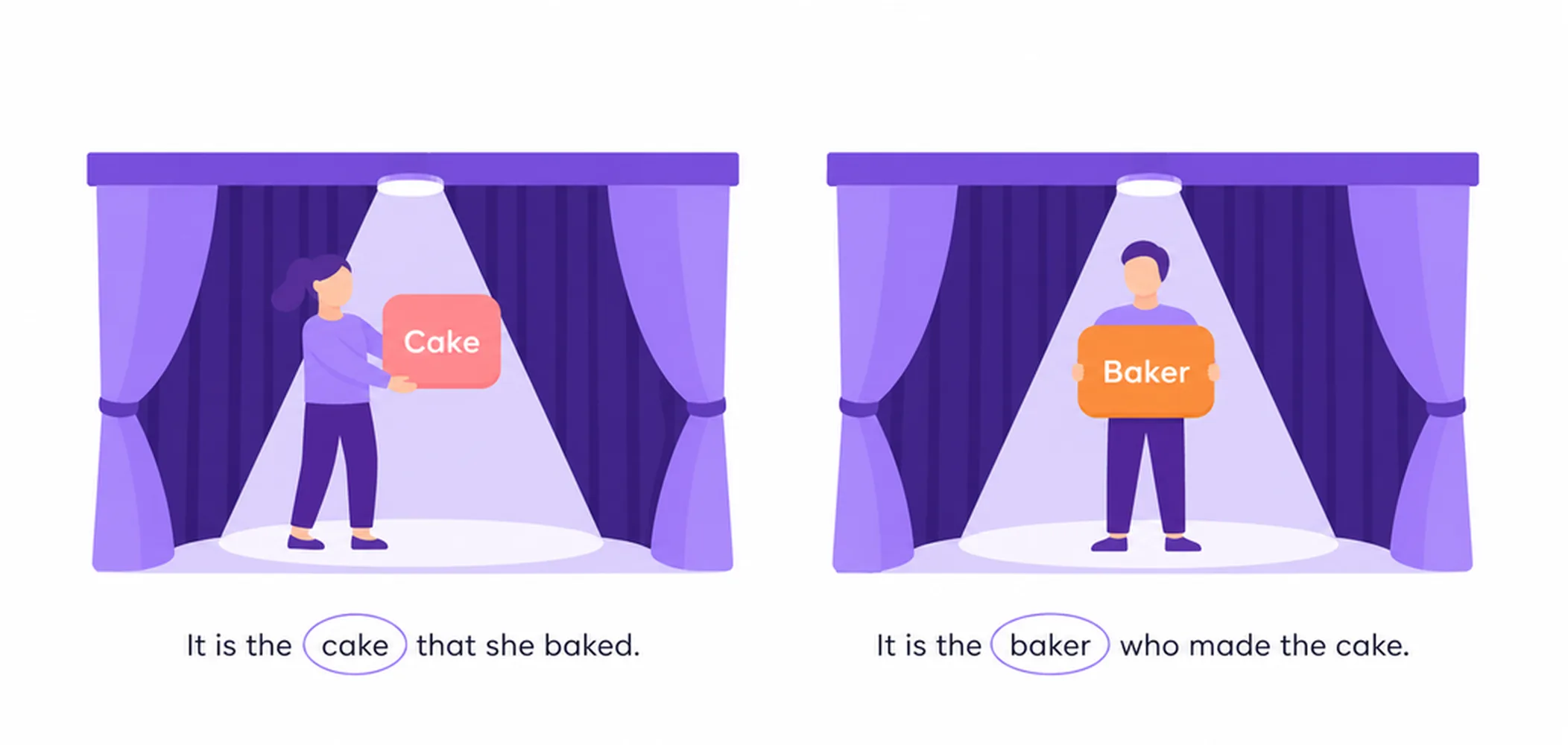
What are It-Cleft Sentences?
An it-cleft sentence is a special grammatical structure that emphasises one part of a sentence by placing it after "It is" or "It was." The basic pattern is: It + be (is/was/are/were) + highlighted information + that/who + remaining clause. It-cleft sentences help you draw attention to the most important part of your message. Instead of saying "I met Sarah yesterday," you can say "It was Sarah that I met yesterday" to emphasise who you met, not when.
When and Why Use It-Cleft Sentences
Use it-cleft sentences when you want to emphasise a specific detail. This structure is common in both spoken and written English, especially when you want to correct someone, answer a question with focus, or highlight new information. The emphasis changes depending on what comes after "It is/was." For example: "It was the noise that woke me up" emphasises the noise, not the time or other details. This makes your communication more dynamic and interesting.
Choosing "That" or "Who"
Use "who" when the highlighted information is a person: It was my teacher who helped me. Use "that" for everything else: It was the price that surprised me. Some speakers use "that" for people too, but "who" is more formal and correct.
It-Cleft vs Standard Sentences: Side-by-Side Comparison
| Category | Standard Sentence | It-Cleft Equivalent |
|---|---|---|
| Form | Subject + verb + object/complement Standard declarative word order |
It + is/was + [focused element] + that/who + [rest of clause] The focused element is extracted and placed after "It is/was" |
| When to Use (Person) | Use a normal sentence when no special emphasis is needed on who performed the action. Sarah called the police. |
Use an it-cleft with who (or that) to highlight which person is responsible, correcting a misconception or answering an implicit question. It was Sarah who called the police. |
| When to Use (Thing) | Use a normal sentence when no particular object or idea needs to be singled out. The loud noise startled the dog. |
Use an it-cleft with that to emphasise what caused the effect, distinguishing it from other possible causes. It was the loud noise that startled the dog. |
| When to Use (Time) | Use a normal sentence when the time of an event is background information. They signed the contract on Friday. |
Use an it-cleft with that to emphasise when something happened, often correcting an assumed time. It was on Friday that they signed the contract. |
| When to Use (Place) | Use a normal sentence when location is not the point of contrast. We first met in Rome. |
Use an it-cleft with that to foreground where an event occurred. It was in Rome that we first met. |
| Positive Example | My brother won the competition. She bought a red car. They arrived at midnight. |
It was my brother who won the competition. It was a red car that she bought. It was at midnight that they arrived. |
| Negative Example | Tom didn't break the window. She didn't leave on Monday. We didn't find it in the garden. |
It was not Tom who broke the window. It was not on Monday that she left. It was not in the garden that we found it. |
| Question Example | Who called the ambulance? What upset her? Where did you see him? |
Was it John who called the ambulance? Was it the email that upset her? Was it at the station that you saw him? |
| Key Signal Words | No special markers; information is spread evenly across the sentence with no element singled out by structure. | It is / It was (present or past tense to match context) who — used for people that — used for things, times, places, or people (more formal/neutral) which — occasionally used for things in formal writing |
| Key Difference: A standard sentence presents information neutrally, leaving the listener or reader to decide what is most important. An it-cleft sentence restructures that same information so that one specific element — a person, thing, time, or place — is extracted, spotlighted between It is/was and that/who, and presented as the most significant part of the message. The rest of the clause, which is already known or assumed, follows in a subordinate position. This makes it-clefts especially powerful for correcting misunderstandings, contrasting alternatives, and adding dramatic or rhetorical emphasis without changing the factual content of the sentence. | ||
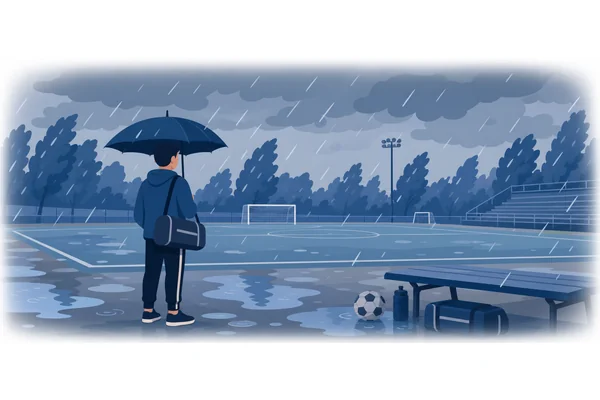
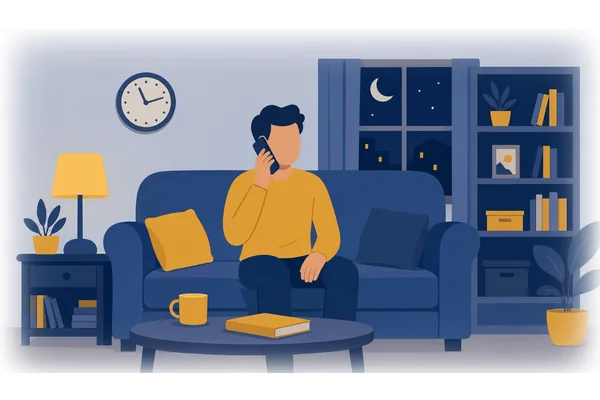
Examples




What to Remember
- Use "It is/was" + highlighted information + "that/who" to emphasise one part of a sentence.
- Use "who" for people and "that" for things, times, places, or reasons in it-cleft sentences.
- It-cleft sentences move the important information after the verb to draw attention to it.
- The remaining clause after "that/who" contains the rest of the original sentence's information.
- Remember that it-cleft sentences are formal and emphatic, so use them to highlight key details.