What is a Wh-cleft Sentence?
A wh-cleft sentence is a special structure that emphasizes or highlights a particular part of your message. It starts with a wh-word (what, where, who, when, why, how) followed by a verb, then the thing you want to emphasize. The most common type uses 'what' to focus on actions or things. For example, instead of saying 'She studied hard for the exam,' you can say 'What she did was study hard for the exam.' This structure makes your message stronger and more dramatic.
Wh-cleft with Actions and Things
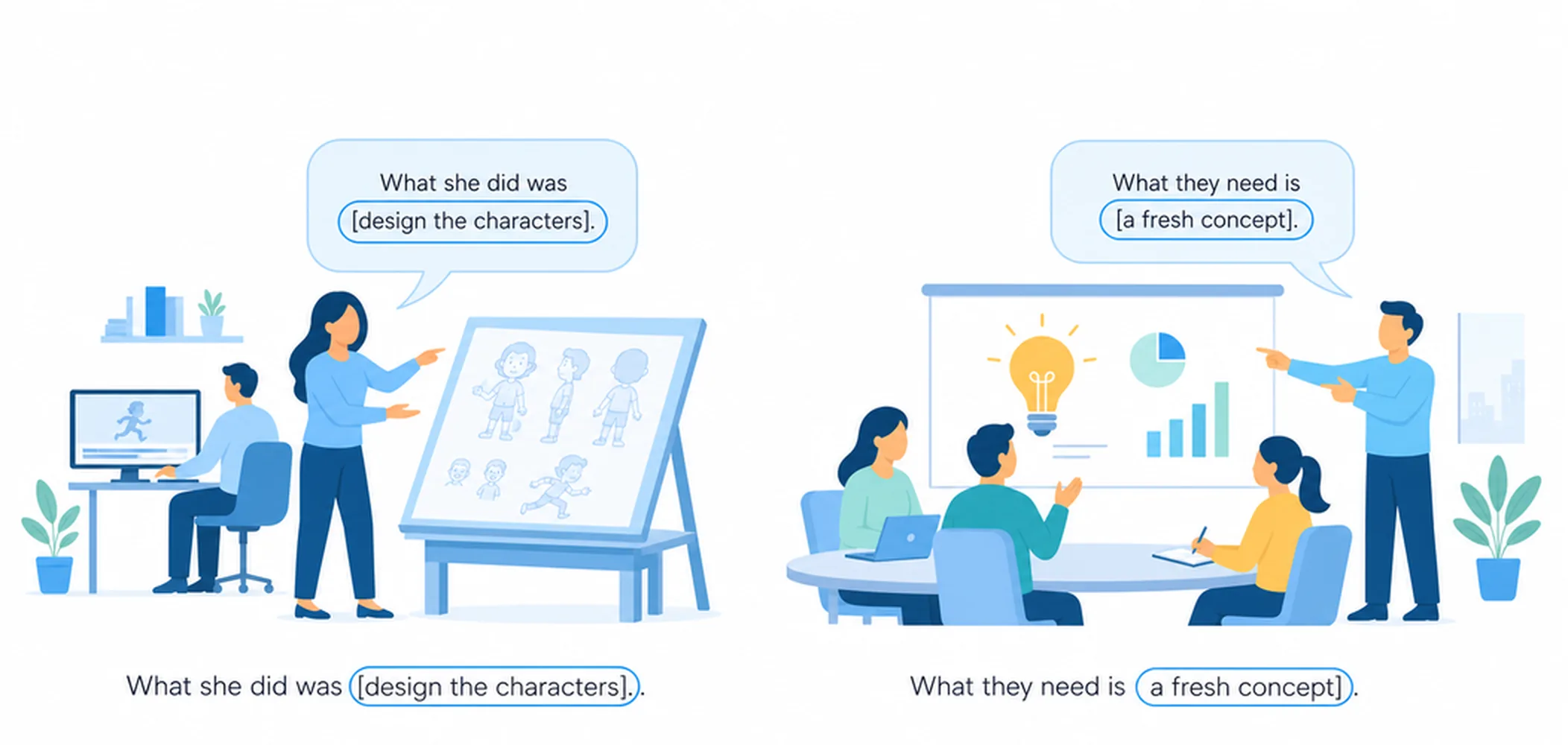
You can use wh-cleft sentences to emphasize both actions (verbs) and things (nouns). When you focus on an action, use the structure 'What + subject + verb (base form) + is/was + main clause.' For things, the structure is similar: 'What + subject + need/want/like + is/was + the thing.' These sentences are useful when you want to make something stand out or surprise your listener. They are common in storytelling, explanations, and emphatic statements.
Why Use Wh-cleft Sentences?
Wh-cleft sentences add emphasis and interest to your communication. They help you organize your ideas clearly by separating what is happening from what the result or focus is. In writing and speaking, they make your message more memorable and dramatic. Use them when you want listeners or readers to pay special attention to a particular point or when you want to clarify something important.
Wh-cleft with Actions vs. Things: Side-by-Side Comparison
| Category | Wh-Cleft Emphasising Actions | Wh-Cleft Emphasising Things |
|---|---|---|
| Form |
What + subject + do/does/did + is/was + infinitive (bare) e.g. What she did was (to) call the manager. |
What + subject + verb + is/was + noun phrase e.g. What she needed was a strong coffee. |
| When to Use | Use when you want to highlight a specific action or activity that someone performs or performed. The focus is on the doing. | Use when you want to highlight a specific object, concept, idea, or entity that someone has, needs, wants, or experiences. The focus is on the thing itself. |
| Typical Verbs Used |
do, did, does — the auxiliary verb do is the key marker in the wh-clause. e.g. What he did, What they do, What she does |
want, need, like, love, have, get, find, prefer, enjoy, know, mean e.g. What she wanted, What they needed, What he got |
| Positive Example |
What John did was resign from his job. What they did was apologise immediately. |
What John needed was a long holiday. What they wanted was an honest explanation. |
| Negative Example |
What she did not do was inform her team. What he didn't do was check the report. |
What she didn't want was more pressure. What he didn't need was another excuse. |
| Question Example |
Is what she did really quit without notice? Was what he did really ignore the warning? |
Is what she needs really more time? Was what they wanted really a refund? |
| Key Signal Words |
do / did / does in the wh-clause signals an action cleft. The complement after is/was is always a bare infinitive (sometimes preceded by to). |
A stative or transitive verb (want, need, like) in the wh-clause signals a things cleft. The complement after is/was is always a noun phrase. |
| Key Difference: The central distinction lies in what follows "What + subject" in the wh-clause and what appears after is/was. When the wh-clause contains the auxiliary do/did/does, the structure emphasises an action, and the focused element is a bare infinitive verb phrase (e.g. What she did was leave early). When the wh-clause contains a content verb such as want, need, or like, the structure emphasises a thing, and the focused element is a noun phrase (e.g. What she needed was a break). In both cases the cleft construction moves the most important information to the end of the sentence for emphasis. | ||
Examples






What to Remember
- A wh-cleft sentence starts with a wh-word (what, where, who, when, why, how) followed by a verb.
- The structure emphasizes one part of your message: wh-word + verb + focus word + rest of sentence.
- Use 'what' most commonly to highlight actions or things in your message.
- The emphasized part comes after the main verb, creating a dramatic effect in your writing.
- Remember that wh-cleft sentences are more formal and emphatic than regular sentences.