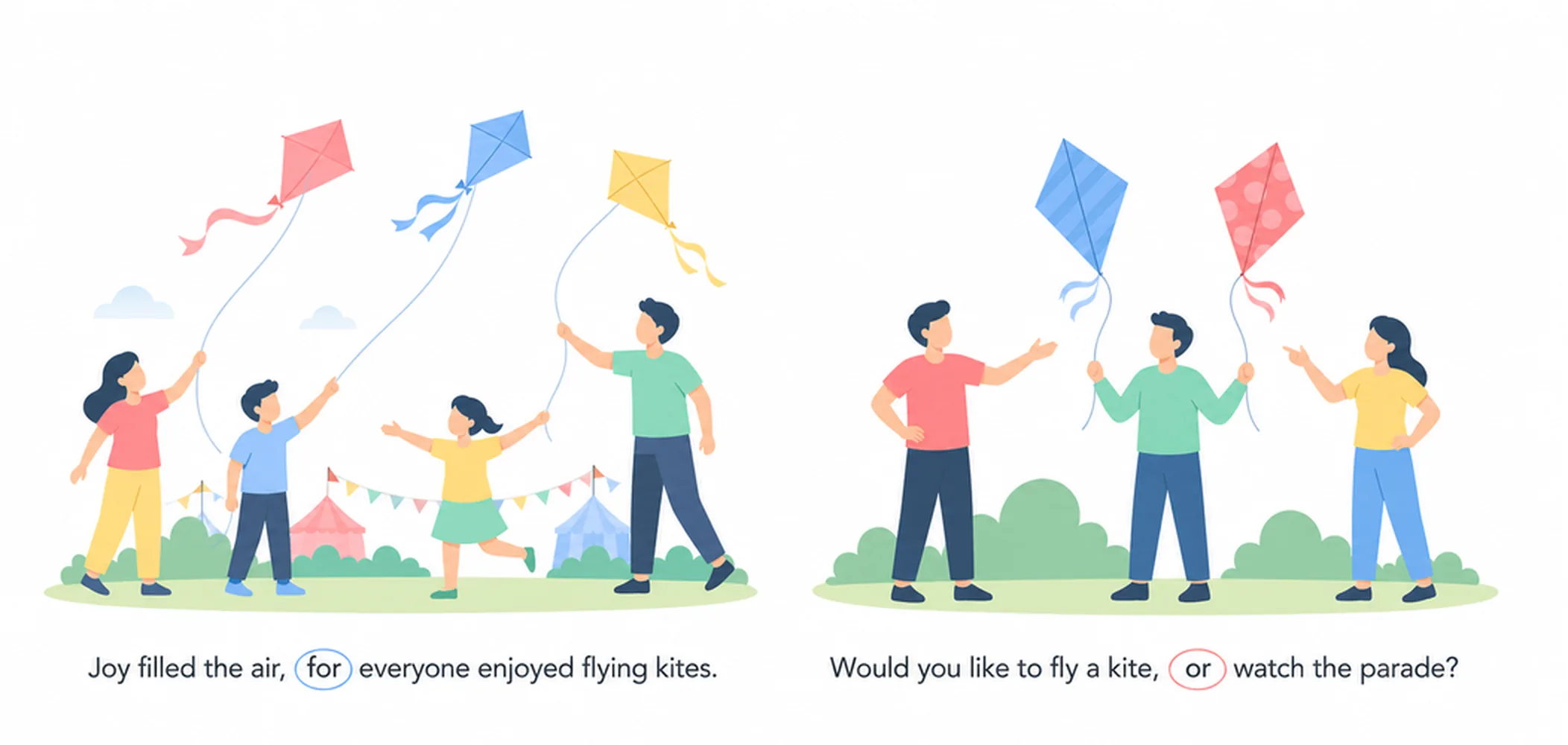
What are FANBOYS?
FANBOYS is an acronym that helps you remember the seven coordinating conjunctions in English: For, And, Nor, But, Or, Yet, and So. These small words connect two independent clauses (complete sentences) together. An independent clause has a subject and a verb and can stand alone as a complete sentence. When you join two independent clauses with a coordinating conjunction, you create a compound sentence.
How to Use FANBOYS
The rule is simple: place a comma before the coordinating conjunction when it connects two independent clauses. This comma is very important—it prevents a common mistake called a comma splice. Each FANBOYS word has a different meaning and use. For example, 'and' adds information, 'but' shows contrast, and 'so' shows a result. Understanding the difference helps you choose the right conjunction for your sentence.
Why FANBOYS Matters
Coordinating conjunctions are essential for clear, professional writing. They help you avoid writing only simple, short sentences. By using FANBOYS correctly, you can show relationships between ideas and make your writing more interesting and sophisticated. This skill is important for B1 level English learners who want to write longer, more complex sentences.
FANBOYS Quick Reference
| Letter | Conjunction | Meaning / Purpose | Example | Note |
|---|---|---|---|---|
| F | for | Gives a reason; means "because" | She rested, for she was tired. | Formal/literary; rarely used in everyday speech |
| A | and | Adds information; joins similar ideas | I like coffee and tea. | Most common coordinating conjunction |
| N | nor | Joins two negative alternatives | He doesn't eat meat, nor does he eat fish. | Often paired with "neither"; inverts subject-verb order in the second clause |
| B | but | Shows contrast or exception | It rained, but we still went hiking. | Signals an unexpected or opposing idea |
| O | or | Presents alternatives or choices | Do you want soup or salad? | Can also imply a warning or consequence |
| Y | yet | Shows contrast; similar to "but" with a sense of surprise | She works hard, yet she never complains. | Slightly more emphatic than "but" |
| S | so | Shows result or effect; means "therefore" | It was cold, so I wore a jacket. | The second clause is the outcome of the first |
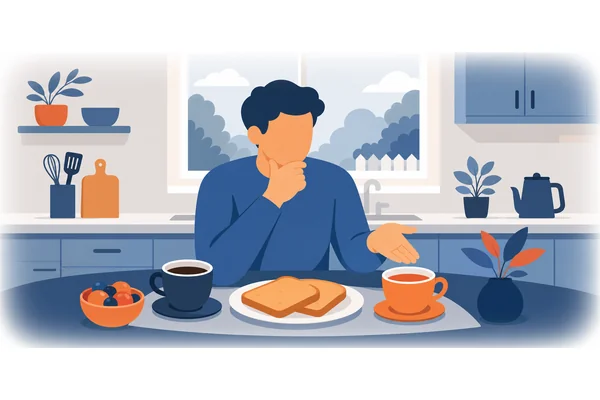
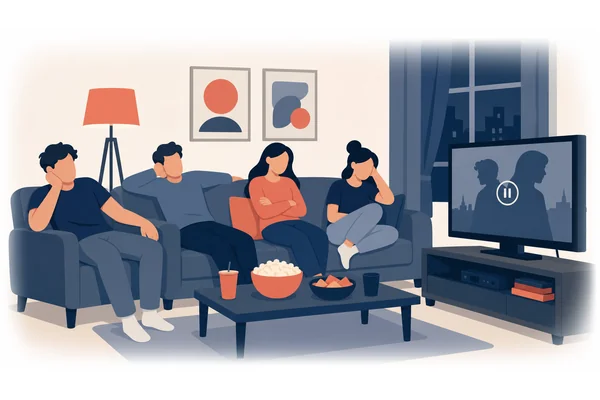
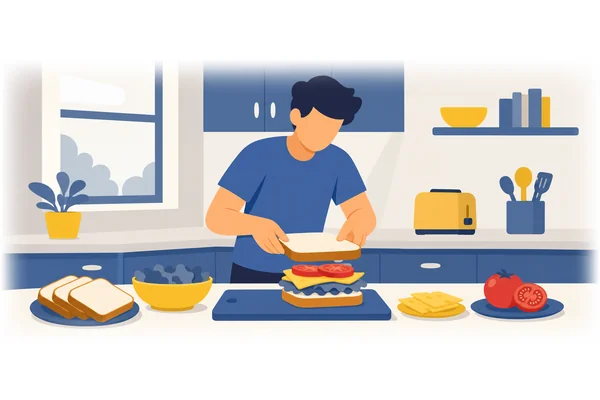
Examples



What to Remember
- FANBOYS is an acronym for seven coordinating conjunctions: for, and, nor, but, or, yet, so.
- Coordinating conjunctions connect two independent clauses to create a compound sentence.
- Always place a comma before the coordinating conjunction when it joins independent clauses.
- Do not use a coordinating conjunction to connect a dependent clause to an independent clause.
- Each clause joined by a coordinating conjunction must have both a subject and a verb.