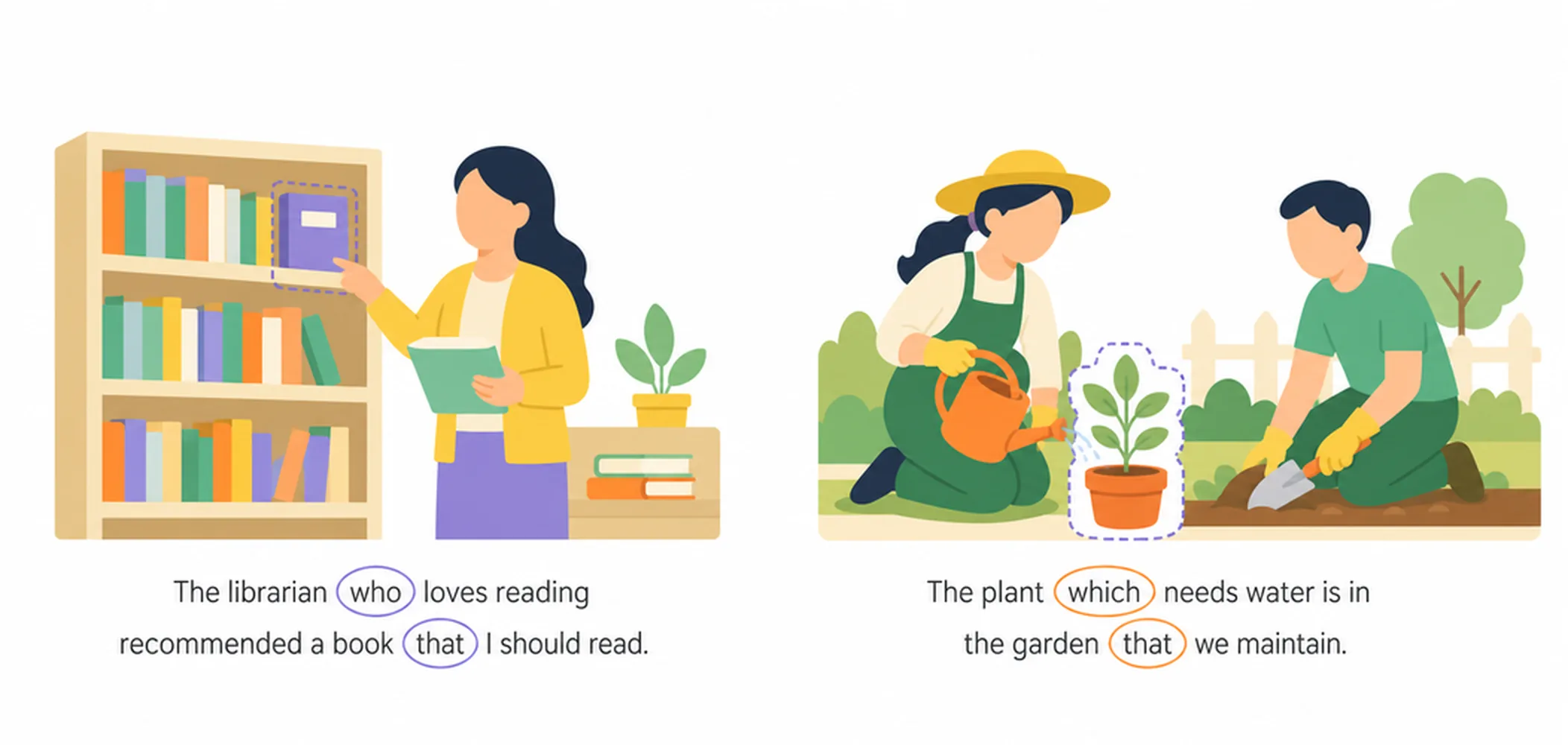
Understanding Relative Pronouns
Relative pronouns introduce relative clauses, which give extra information about a noun. The three most common relative pronouns are who, which, and that. Each one has a specific use depending on what noun you are talking about. Learning to use them correctly will make your writing clearer and more natural.
Who vs. Which vs. That
Use who for people. Use which for things, animals, or ideas. Use that for both people and things, but it is more common with things. In everyday English, that is very popular and often replaces who or which. However, which is preferred after commas when you add extra (non-essential) information about a noun.
Defining vs. Non-Defining Clauses
A defining relative clause gives essential information. You do not use commas. You can use that in these clauses. A non-defining relative clause gives extra information and uses commas. You cannot use that with non-defining clauses. Use who for people and which for things. For example: The woman who lives next door is a doctor (defining). My sister, who lives in Paris, is a doctor (non-defining).
How to Choose: Who, Which, or That?
Choosing between who, which, and that depends on what you are referring to and what type of information you are adding to your sentence. Here is a practical guide:
| Pronoun | Use For | Example |
|---|---|---|
| Who | People only. Use in both essential and non-essential clauses. | The teacher who assigned the project is strict. / Ms. Chen, who assigned the project, is strict. |
| Which | Things, animals, or groups. Use mainly in non-essential clauses (set off by commas). | The book, which arrived yesterday, is excellent. / The committee, which meets monthly, approves the budget. |
| That | Things, animals, people (informal), or groups. Use in essential clauses (no commas) to define or identify. | The book that arrived yesterday is excellent. / The policy that we discussed is effective. |
Quick tip: If you can remove the clause without changing the core meaning of the sentence, use which with commas. If the clause is essential to identify what you are talking about, use that without commas.
Examples






What to Remember
- Use who when referring to people in relative clauses.
- Use which for things, animals, or ideas in relative clauses.
- Use that for both people and things, though it's more common with things.
- That is very popular in everyday English and often replaces who or which.
- Relative pronouns introduce clauses that provide extra information about a noun.