What is the Future Continuous?
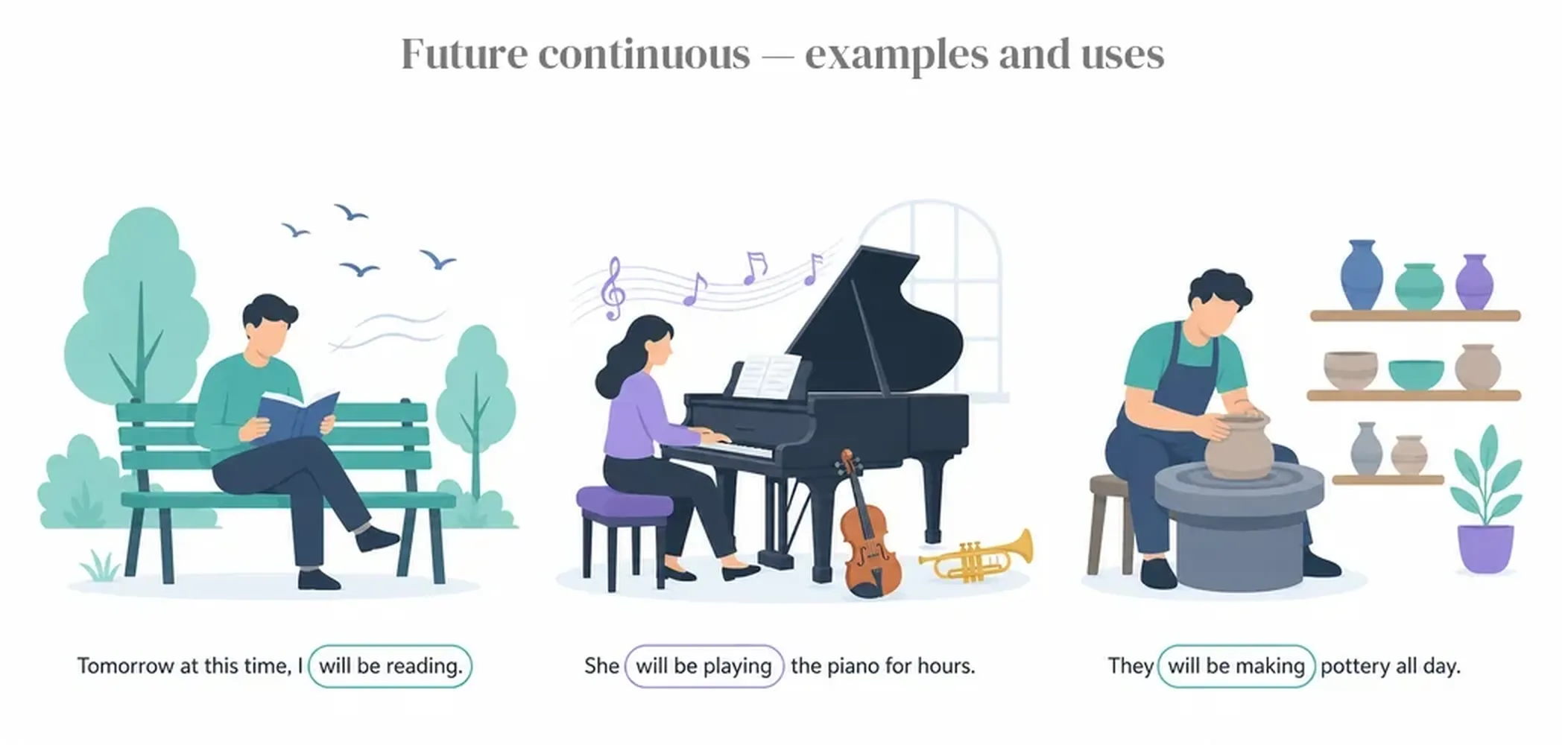
The future continuous (also called future progressive) describes an action that will be in progress at a specific moment in the future. It emphasizes the duration or the ongoing nature of the action, rather than its completion. You form it with will + be + the present participle (-ing form). For example: 'At 8 PM tomorrow, I will be working in my office.' The action of working will have started and will continue at that moment.

When to Use Future Continuous
Use the future continuous in three main situations. First, when you want to describe an action in progress at a definite future time: 'She will be studying all afternoon.' Second, when describing parallel actions happening at the same time: 'While you are sleeping, I will be coding.' Third, when making polite enquiries about someone's future plans or when they will be available: 'Will you be attending the conference next week?' This softer tone is more tactful than simple future.
Future Continuous vs. Simple Future
| Use Simple Future For... | Use Future Continuous For... |
|---|---|
| Decisions, promises, and predictions of completed actions. Example: "I will finish my report by 5 PM." (emphasizes completion of a single event) | Ongoing processes and to set the scene at a particular moment. Example: "I will be finishing my report at 5 PM." (emphasizes the action in progress within a time period) |
Both forms are grammatically correct, but they convey different meanings about the nature of the action. The simple future (will + base verb) focuses on the result or endpoint, while the future continuous highlights what will be happening at a specific point in time.
Future Continuous Conjugation
| Pronoun | Positive | Negative | Question |
|---|---|---|---|
| I | I will be working | I will not be working / I won't be working | Will I be working? |
| you (singular) | you will be working | you will not be working / you won't be working | Will you be working? |
| he / she / it | he / she / it will be working | he / she / it will not be working / won't be working | Will he / she / it be working? |
| we | we will be working | we will not be working / we won't be working | Will we be working? |
| you (plural) | you will be working | you will not be working / you won't be working | Will you be working? |
| they | they will be working | they will not be working / they won't be working | Will they be working? |
- Structure: subject + will + be + verb-ing — will and be never change form regardless of subject.
- Irregular verb: The verb be is irregular; its present participle being is not used here — the base form be follows will.
- Contractions: will not → won't; subject contractions are also common: I'll be working, she'll be working, etc.
- Stative verbs: Stative verbs such as know, believe, and own are not normally used in continuous forms.
- Alternative form: Future continuous with going to — I am going to be working — is used to emphasise a planned or predicted ongoing action.
Examples





What to Remember
- The future continuous is formed with will + be + present participle (-ing form).
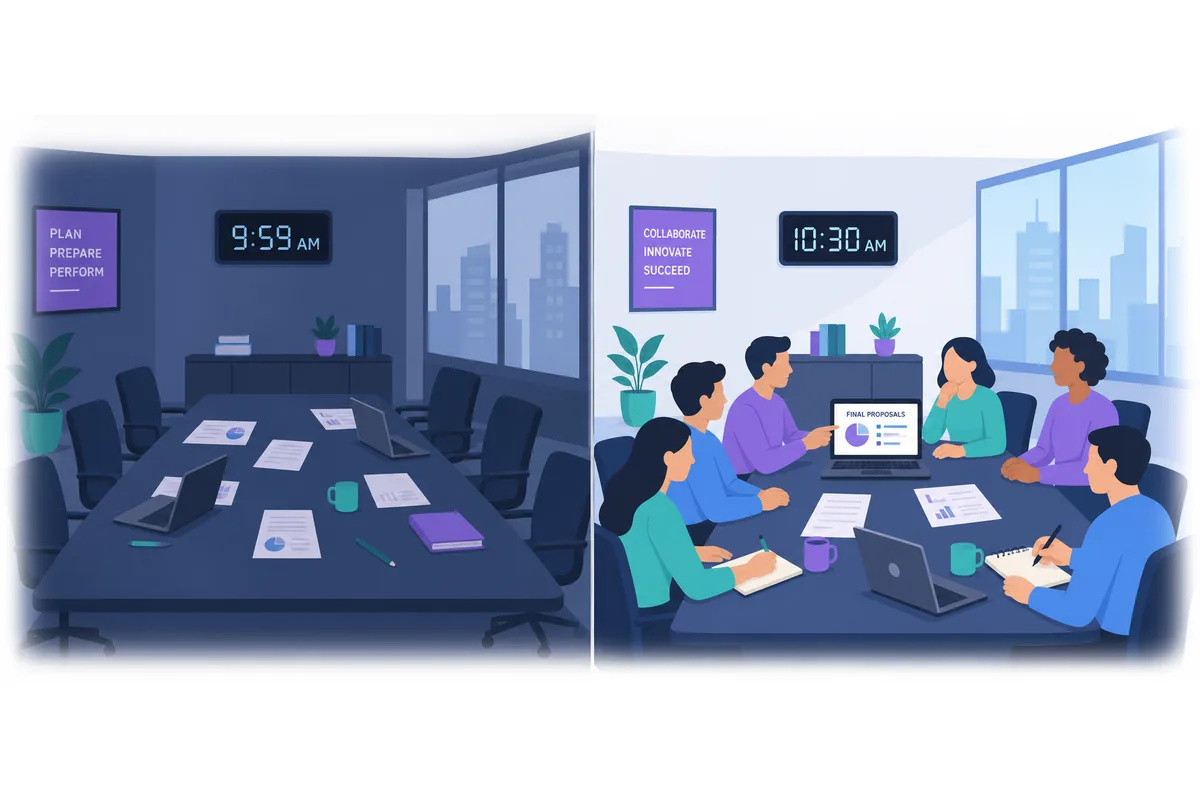
- Use it to describe an action in progress at a specific future moment.
- It emphasizes duration and ongoing nature, not completion of the action.
- The future continuous shows what will be happening at an exact time tomorrow.
- Don't confuse it with simple future; use continuous for actions in progress, not completed.