Grammar C1 Future Perfect Continuous

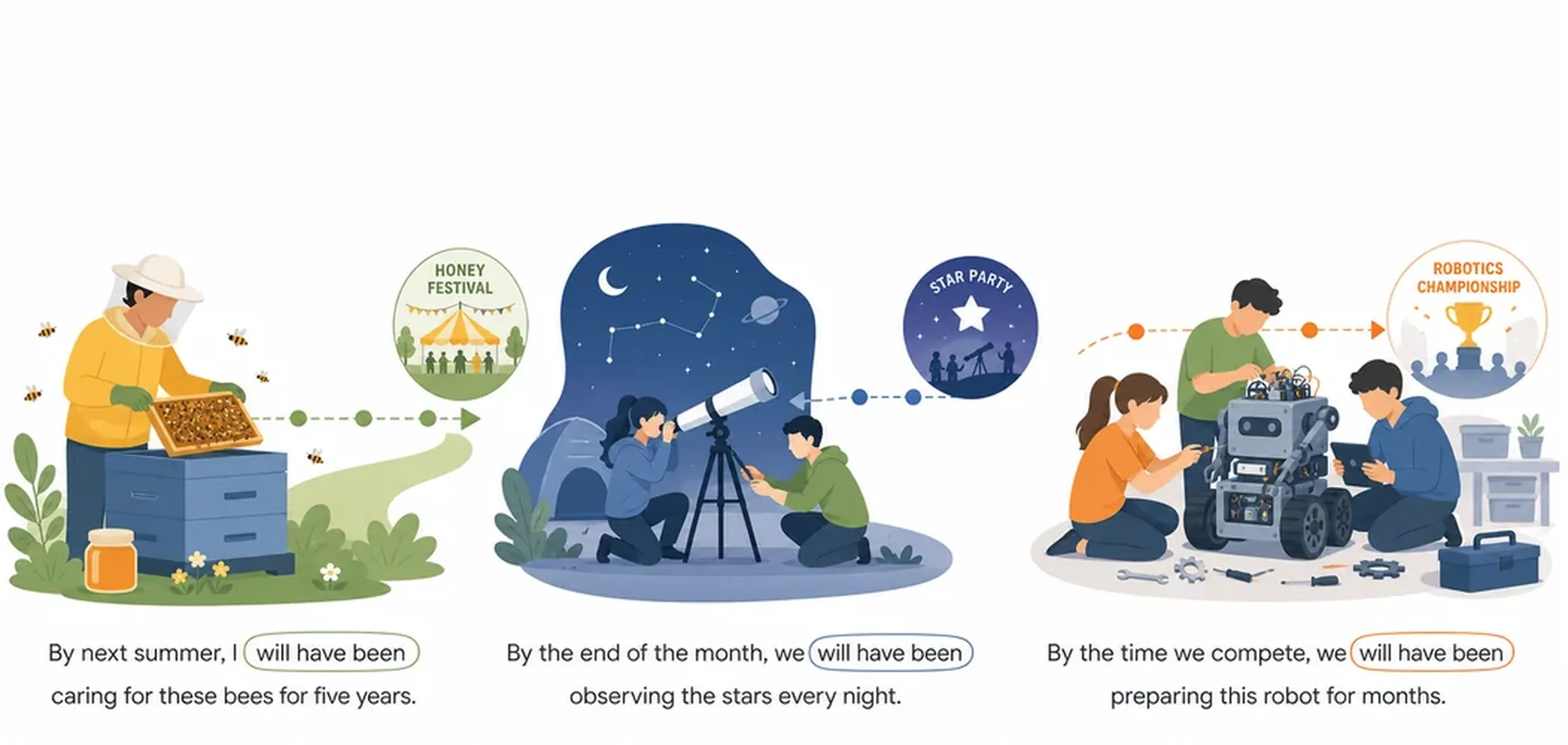
Future perfect continuous — uses

Future perfect continuous — uses

What is the Future Perfect Continuous?

The future perfect continuous tense describes an action that will have been ongoing up to a specific moment in the future. It combines the future perfect aspect (completion by a future point) with the continuous aspect (duration and process). This tense emphasises how long an action will have been happening, rather than simply that it will be finished. For C1 learners, this tense is essential for sophisticated temporal reasoning and narrative precision, particularly in professional, academic, and formal contexts where exact timing and duration matter.

Where the Future Perfect Continuous sits on the English tense timeline

Where the Future Perfect Continuous sits on the English tense timeline

Core Uses and Functions

The future perfect continuous serves three primary functions. First, it expresses duration leading up to a future deadline: what will have been happening continuously until that point. Second, it indicates consequence or result of prolonged future action, often paired with time expressions. Third, it allows speakers to project themselves into the future and reflect backwards on ongoing activity—a technique common in professional forecasting, planning, and storytelling. The tense is frequently triggered by time clauses beginning with 'by', 'by the time', 'until', or 'when' combined with a future-oriented context.

Nuance and Register

At C1 level, understanding register is critical. The future perfect continuous is more formal and deliberate than simple future structures; it signals analytical precision and forward-planning awareness. It appears prominently in business reports, academic projections, and formal speech. However, overuse can sound unnecessarily complex in casual conversation. Native speakers reserve this tense for moments when duration and specificity genuinely add meaning—when the 'how long' dimension is as important as the completion itself. Mastering this balance distinguishes advanced learners from intermediate ones.

Future Perfect Continuous vs Future Perfect Simple

Aspect Future Perfect Continuous Future Perfect Simple
Form will + have + been + verb(-ing)
e.g. will have been working
will + have + past participle
e.g. will have worked
Focus Emphasises the duration or ongoing nature of an action up to a point in the future. Highlights how long something has been happening. Emphasises the completion of an action before a point in the future. Focuses on the result or the fact that something will be finished.
When to Use Use when you want to stress:
• How long an activity will have been in progress by a future deadline
• A continuous or repeated action leading up to a future moment
• The process rather than the end result
Use when you want to stress:
• That an action will be fully completed before a future point
• The achievement or result of an action
• A quantity or number of things accomplished
Positive Example By next year, she will have been teaching at this school for a decade. By next year, she will have taught over 500 students at this school.
Negative Example By Friday, they will not have been working on the project long enough to submit it. By Friday, they will not have finished the project in time to submit it.
Question Example Will he have been running for two hours by the time we reach the finish line? Will he have run the full marathon by the time we reach the finish line?
Key Signal Words for (duration), by (deadline), by the time, how long, all day / all year, phrases expressing length of time (e.g. for three hours, for twenty years) by (deadline), by the time, before, already, yet, phrases expressing a quantity or completion (e.g. ten times, three reports)
Key Difference: The core distinction lies in duration vs. completion. The Future Perfect Continuous asks "How long will something have been happening?" — it keeps the action ongoing and highlights the passage of time. The Future Perfect Simple asks "Will something be done?" — it treats the action as a finished, countable achievement. If you can naturally insert a duration phrase like "for five years", the continuous form is usually more appropriate. If the sentence focuses on a result, a quantity, or a definitive end point, the simple form is the better choice.
Formula
✔ Positive
Subject + will have been + -ing verb + (+ time marker)
By next summer, she will have been working at the firm for five years.
✖ Negative
Subject + will not have been + -ing verb + (+ time marker)
By the time you arrive, they will not have been waiting for long.
? Question
Will + subject + have been + -ing verb + (+ time marker)?
Will you have been studying for the exam by next week?

Examples

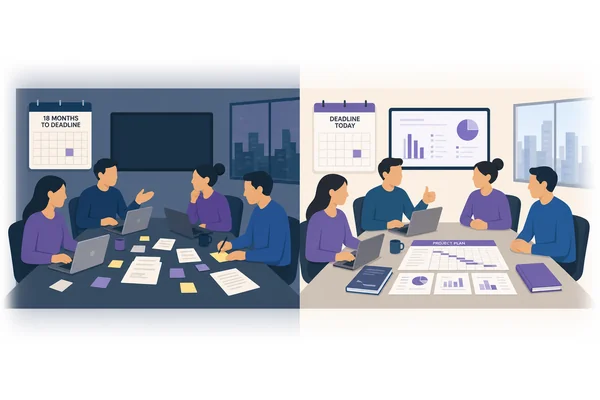
By the time the project deadline arrives, we will have been collaborating on this initiative for eighteen months.
Professional context · Duration emphasis
collaborating on initiative for eighteen months project deadline arrives
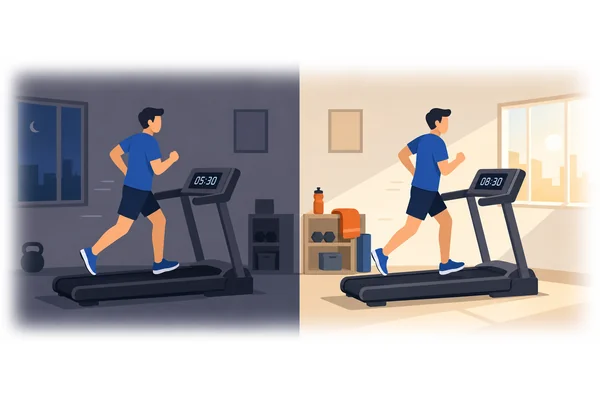
When you wake up tomorrow morning, I will have been running on the treadmill for an hour already.
Personal routine · Future moment of reference
running on treadmill for one hour when you wake up tomorrow morning
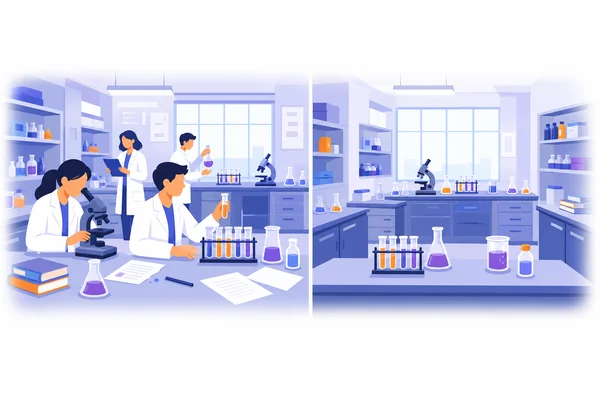
The research team will not have been conducting experiments in this lab by the time funding runs out.
Academic context · Negative form
research team conducting experiments in this lab funding runs out
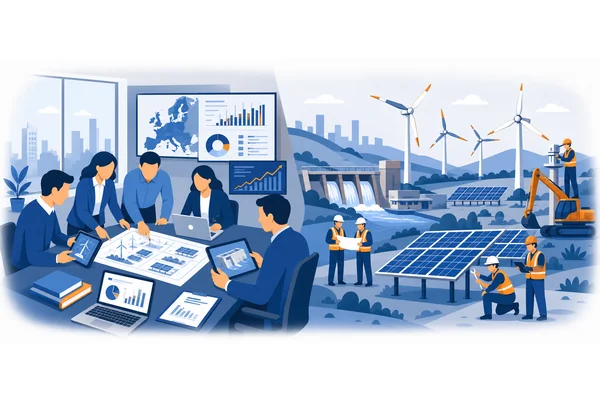
By 2030, renewable energy companies will have been investing billions into infrastructure development across Europe.
Forecasting · Sustained action
renewable energy companies investing billions into infrastructure by 2030
How long will you have been living in that city by the time your contract ends?
Question form · Duration inquiry
you start living in that city your contract ends
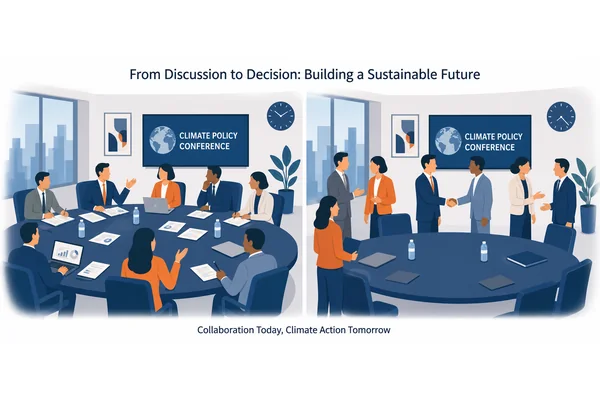
By the time the conference concludes next Friday, delegates will have been discussing climate policy for three full days.
Formal event · Extended timeframe
delegates discussing climate policy for three full days conference concludes next Friday
When to use it
Business Forecasting
Use this tense in strategic reports and presentations to project how long a process or initiative will have been underway by a specified future date.
"By Q4, our marketing team will have been executing this campaign for nine months, allowing us to assess its full impact."
Academic Projection
In thesis work and research proposals, describe the anticipated duration of ongoing studies or experiments by a future completion date.
"By the time this longitudinal study concludes, researchers will have been collecting data for over a decade."
Employment and Tenure
Discuss work duration and career progression by referencing a specific future moment (anniversary, retirement, contract end).
"By next January, she will have been managing the branch for three years."
Geopolitical and Social Analysis
In news commentary and analytical writing, reflect on how long conflicts, trends, or historical processes will have been ongoing.
"By 2025, the region will have been experiencing economic instability for five consecutive years."
Personal Planning and Narrative
In reflective speech or writing, project yourself into the future and contemplate what will have been happening in your life or circumstances.
"By the time I turn thirty, I will have been pursuing this dream for a full decade."
Signal words
by by the time by then until by next week/month/year by 2025 when before in X years for X months/years
Common Mistakes
Wrong
By next year, I will be working here for five years.
Correct
By next year, I will have been working here for five years.
Simple future + duration requires the perfect continuous, not simple continuous.
Wrong
When you arrive, they will have waited for two hours.
Correct
When you arrive, they will have been waiting for two hours.
Duration (for two hours) requires continuous aspect; perfect alone omits the ongoing nature.
Wrong
By the time the project finishes, we will have collaborated for months.
Correct
By the time the project finishes, we will have been collaborating for months.
Time expressions indicating duration demand the continuous; perfect alone is incomplete.
Wrong
She will have been worked on this report by Friday.
Correct
She will have been working on this report by Friday.
The continuous form requires -ing, not past participle; 'worked' is incorrect.
Wrong
How long will they have lived there by next summer?
Correct
How long will they have been living there by next summer?
Questions about duration require the continuous form for accuracy and natural phrasing.
KEY TAKEAWAYS

What to Remember

  • Use will have been + -ing to express an ongoing action up to a specific future moment.
  • The tense emphasises duration and process, not just completion, distinguishing it from future perfect simple.
  • Common mistake: confusing it with future perfect simple, which focuses on completion rather than length.
  • Use temporal markers like by, by the time, and for to clarify the endpoint.
  • This tense is essential for precise academic and professional communication about future processes.
← Previous
Future perfect continuous vs future perfect
Next →
Future perfect continuous — negative and questions