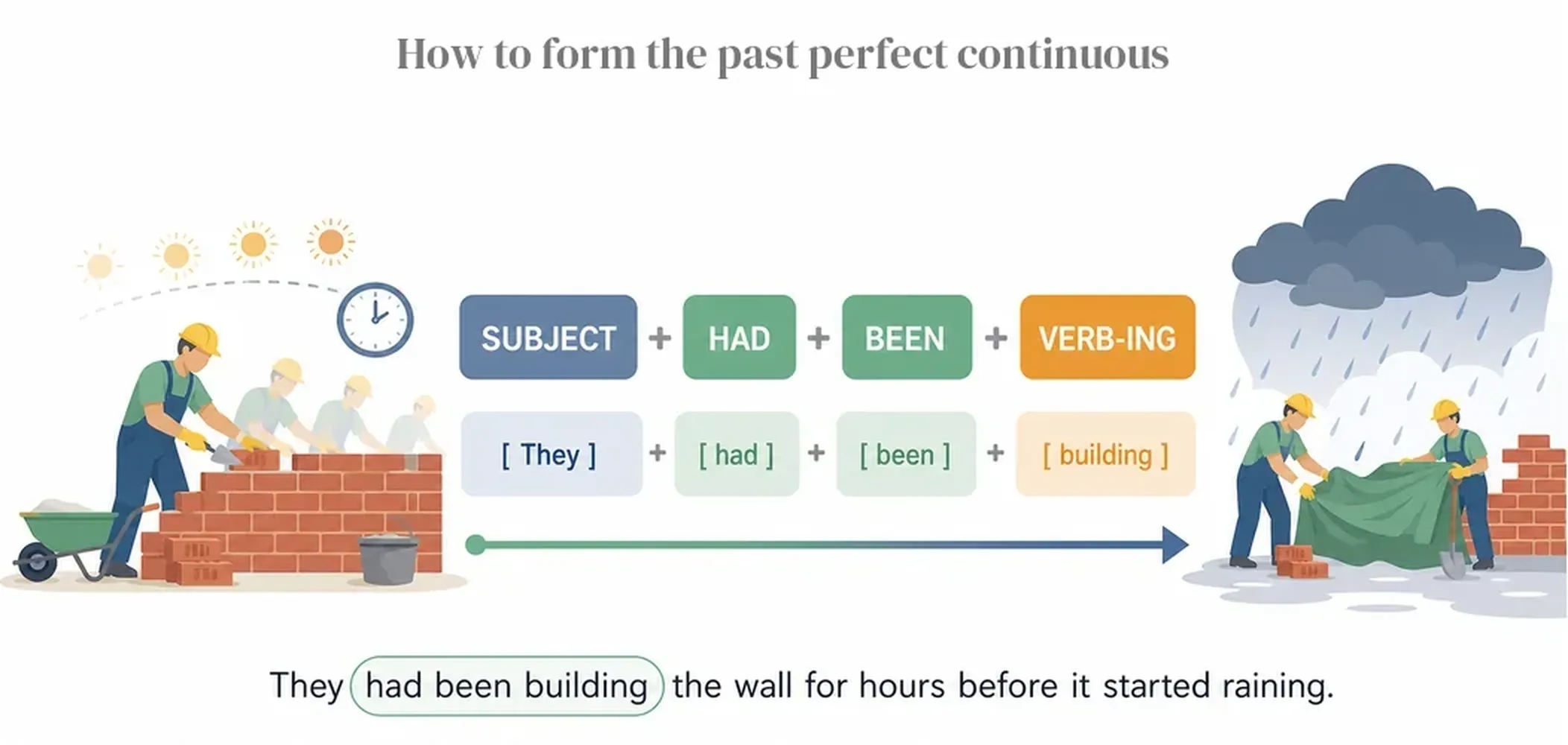
Forming the Past Perfect Continuous
The past perfect continuous expresses an action that began in the past, continued for a period of time, and was still ongoing when another past event occurred. At the C1 level, you should command this structure for sophisticated temporal narratives and retrospective analysis. The formation is straightforward: had + been + present participle (-ing form), maintaining consistency across all persons and numbers.

Past Perfect Continuous Conjugation Table
| Pronoun | Affirmative | Negative | Question |
|---|---|---|---|
| I | I had been working | I had not been working I hadn't been working | Had I been working? |
| you (singular) | you had been working | you had not been working you hadn't been working | Had you been working? |
| he / she / it | he had been working she had been working it had been working | he had not been working she hadn't been working it hadn't been working | Had he been working? Had she been working? Had it been working? |
| we | we had been working | we had not been working we hadn't been working | Had we been working? |
| you (plural) | you had been working | you had not been working you hadn't been working | Had you been working? |
| they | they had been working | they had not been working they hadn't been working | Had they been working? |
Notes:
|
|||
Formula
✔ Positive
Subject
+
had
+
been
+
verb + -ing
+
(+ object/adjunct)
They had been negotiating the contract for three months before the agreement was finalised.
✖ Negative
Subject
+
had not (hadn't)
+
been
+
verb + -ing
+
(+ object/adjunct)
She hadn't been attending seminars regularly until the department restructured its schedule.
? Question
Had
+
subject
+
been
+
verb + -ing
+
(+ object/adjunct)?
Had you been working in that sector before you relocated to Berlin?
Examples

By the time the investigators arrived, the suspect had been fleeing for nearly two weeks.
Retrospective narrative · Indicating duration preceding another past event
①suspect started fleeing
→
②investigators arrived

The machinery hadn't been functioning properly since the technician's last inspection.
Negative statement · Explaining a prolonged problem in the past
①technician's last inspection
→
②machinery stopped functioning properly

Had the committee been deliberating on the proposal when the new evidence surfaced?
Question form · Establishing temporal overlap of past events
①committee deliberating on the proposal
→
②new evidence surfaced
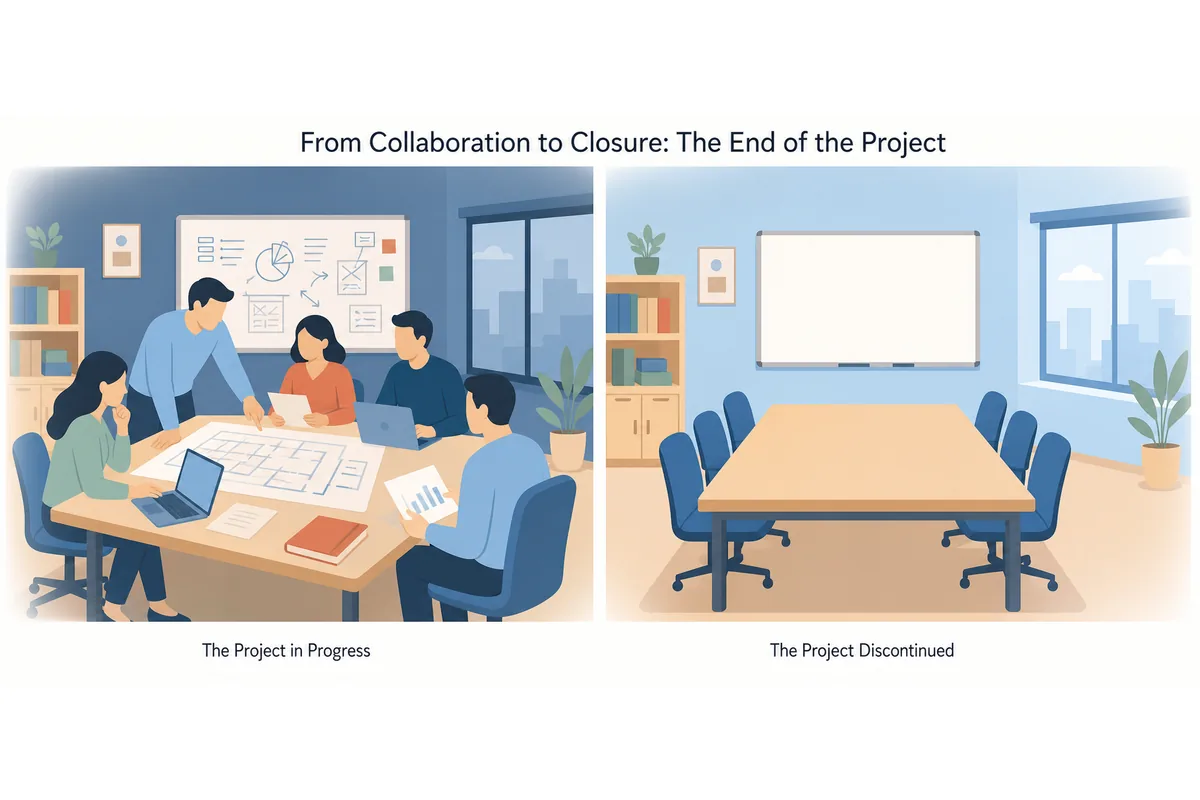
We had been collaborating with external consultants for six months before the project was discontinued.
Professional context · Defining a period preceding a past conclusion
①collaborating with external consultants for six months
→
②project was discontinued

They hadn't been communicating effectively, which explained the departmental tensions.
Analytical usage · Providing causal explanation for a past situation
①They stopped communicating effectively
→
②The departmental tensions existed
When to use it
Literary Narrative
Describe background actions or prolonged situations that set the scene for a key past event. Creates temporal depth in storytelling.
"The village had been suffering from drought for three years when the monsoon finally arrived."
Professional Analysis
Explain circumstances or conditions leading up to a business decision or outcome. Establishes causal context.
"The budget had been declining steadily, so the restructuring was inevitable."
Academic Writing
Present background research or methodological processes that preceded conclusions. Maintains academic precision.
"The researchers had been collecting data for eighteen months before publishing their findings."
Retrospective Explanation
Clarify why someone felt a certain way or acted a particular way based on prior circumstances. Adds nuance to characterisation.
"She had been anticipating his departure, so his announcement came as no surprise."
Signal words
for (+ time period)
since (+ point in time)
until
when
before
by the time
throughout
all morning/day/week
Common Mistakes
✕
Wrong
They had been worked on the project for months.
✓
Correct
They had been working on the project for months.
The past participle 'worked' is incorrect; use the present participle 'working' after 'been'.
✕
Wrong
Had been she studying when you called?
✓
Correct
Had she been studying when you called?
In questions, invert 'had' and the subject; 'been' follows the subject, not precedes it.
✕
Wrong
She had being worked there since 2015.
✓
Correct
She had been working there since 2015.
Use 'been' (past participle of 'be'), not 'being' (present participle), after the auxiliary 'had'.
KEY TAKEAWAYS
What to Remember
- Use had + been + present participle (-ing form) for all persons and numbers without variation.
- The past perfect continuous describes an ongoing action that started before another past event occurred.
- Maintain the -ing form consistently; never use past participle or base verb forms instead.
- Use this structure to emphasize duration and continuous nature, distinguishing it from simple past perfect.
- Common mistake: confusing past perfect continuous with past perfect simple regarding emphasis on duration versus completion.