Grammar C1 Past Perfect Continuous

Past perfect continuous vs past perfect simple

Past perfect continuous vs past perfect simple

The Core Distinction

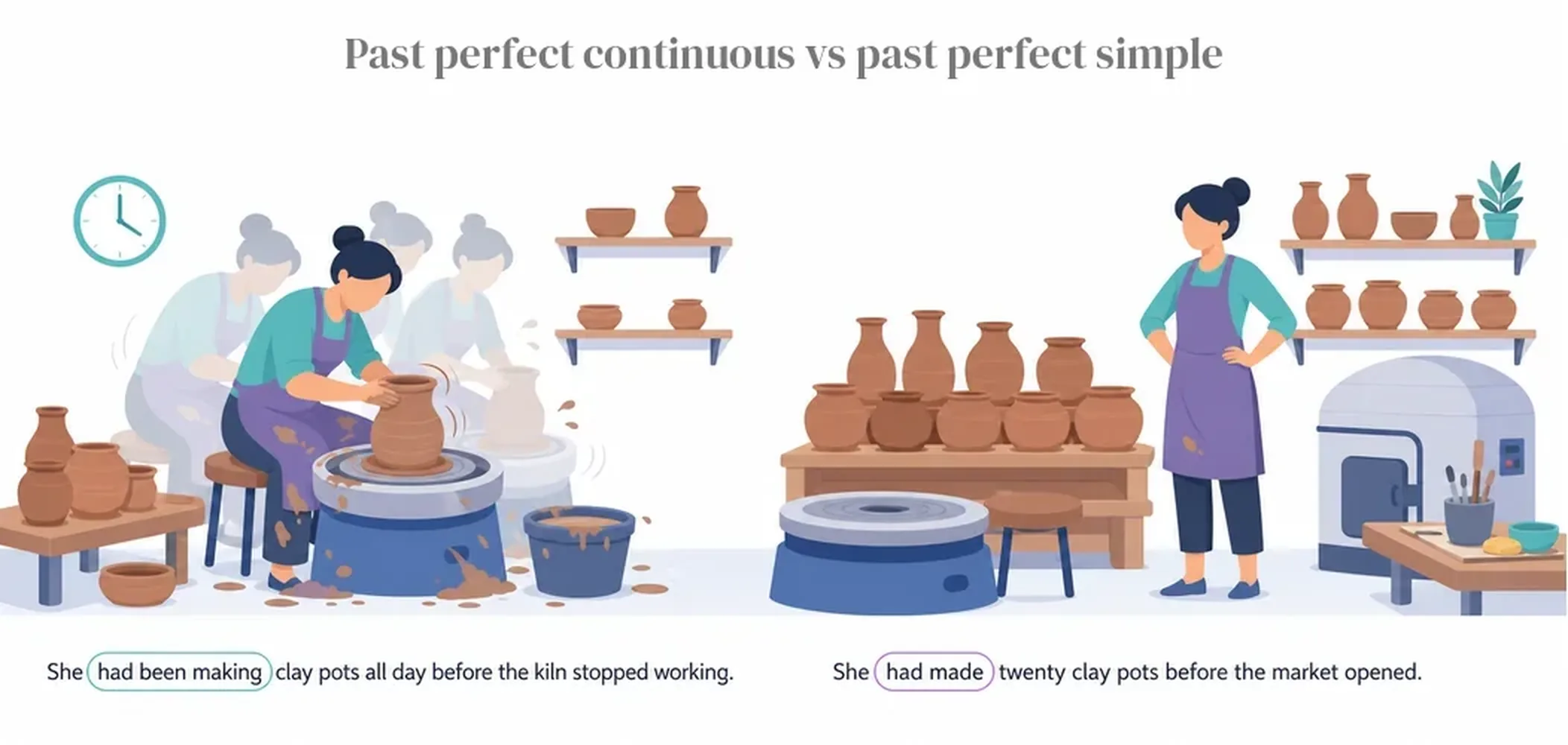
Both past perfect continuous and past perfect simple refer to actions completed before another past event, but they emphasize different aspects. The past perfect simple (had + past participle) presents an action as a discrete, completed event with focus on completion or result. The past perfect continuous (had been + present participle) emphasizes the duration, process, or ongoing nature of an action up to a point in the past. Choosing between them depends on whether you want to highlight what happened or how long it was happening.

Where the Past Perfect Continuous sits on the English tense timeline

Where the Past Perfect Continuous sits on the English tense timeline

Past Perfect Simple Examples

Use the simple form when the focus is on the completion of an action, its result, or multiple distinct actions in sequence before another past event.

Past Perfect Continuous Examples

Use the continuous form when emphasizing duration, effort, repetition, or the ongoing nature of an activity leading up to another past moment.

Side-by-Side Comparison

Past perfect simple isolates an event and treats it as complete before another past moment: She had written the report before the meeting. Here, writing was finished; the action itself is the focus. Past perfect continuous shows activity in progress or ongoing up to that point: She had been writing the report all morning when the meeting started. The emphasis is on duration and effort. In essence: simple = what was done, continuous = what was going on.

Pro Tip for C1 Writers

Ask yourself: Am I explaining what happened, or am I explaining what was happening for a period of time? If the duration, effort, or ongoing process matters to your meaning, use continuous. If you're simply stating a completed action before another past event, use simple. Native speakers often use continuous when narrative tension or causality is implied by the duration.

Form & Structure

Past Perfect Simple: Form & Structure

Subject + had + past participle
Type Structure Example
Affirmative Subject + had + past participle She had finished the report before the meeting started.
Negative Subject + had + not + past participle He had not arrived when we left.
Question Had + subject + past participle? Had they eaten dinner before we arrived?

Past Perfect Continuous: Form & Structure

Subject + had + been + present participle (-ing)
Type Structure Example
Affirmative Subject + had + been + present participle She had been working on the project for three hours.
Negative Subject + had + not + been + present participle They had not been waiting long when he finally arrived.
Question Had + subject + been + present participle? Had you been studying when I called?

Examples

By the time the director arrived, the cast had learned all their lines.
Formal narrative · Past Perfect Simple · Focus on completion
cast learned all their lines director arrived
She had lived in Berlin for three years before she moved to London.
Biographical · Past Perfect Simple · Completed period
She lived in Berlin for three years She moved to London
The negotiations had failed because neither side was willing to compromise.
Business context · Past Perfect Simple · Finished event with result
Neither side was unwilling to compromise Negotiations failed
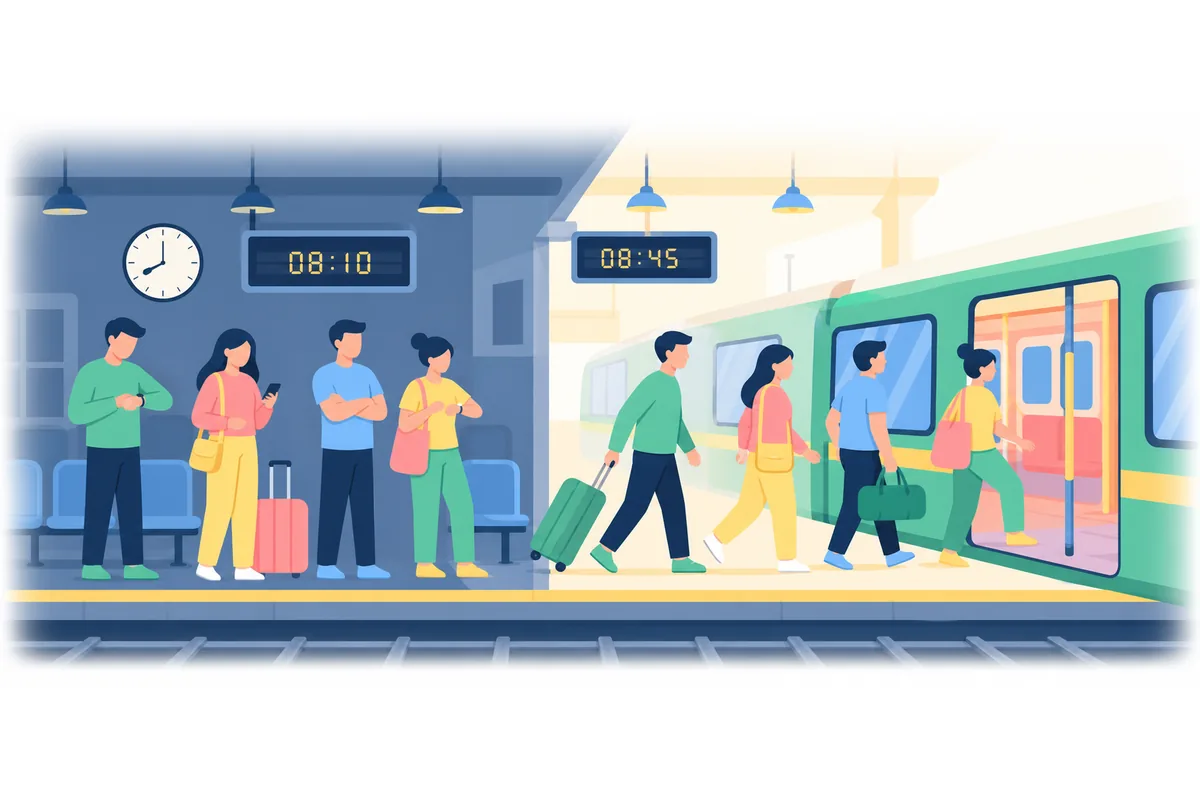
We had been waiting for two hours when the train finally arrived.
Everyday narrative · Past Perfect Continuous · Duration matters
started waiting for the train train finally arrived
The researchers had been studying climate patterns for decades before publishing their groundbreaking findings.
Academic · Past Perfect Continuous · Long-term effort
researchers studying climate patterns for decades publishing their groundbreaking findings
He had been working on that manuscript for five years when his publisher rejected it.
Creative context · Past Perfect Continuous · Sustained activity
he started working on the manuscript his publisher rejected it
When to use it
Narrative Backstory
Establish what characters had been doing or experiencing over time before a key event. Continuous form builds atmosphere and context.
"They had been living under oppressive rule for generations when the revolution finally began."
Process & Duration
Explain how long an activity lasted before it was interrupted or completed. Emphasize the work or effort involved.
"The engineers had been testing the prototype for months when they discovered the flaw."
Completed Actions
State what was finished or accomplished before another past event. Use simple form when the action itself is the key point.
"She had submitted her application weeks before the deadline closed."
Causality & Explanation
Show how prolonged activity led to a result or consequence. Continuous links duration to outcome.
"Because they had been neglecting maintenance, the machinery had broken down."
Signal words
for (duration with continuous) since (often with continuous, showing start point) by the time before after for years / months / weeks / hours all morning / afternoon / week how long throughout up to that point
Common Mistakes
Wrong
She had been written three novels before she became famous.
Correct
She had written three novels before she became famous.
Discrete completed actions don't need continuous form; simple is correct for multiple finished works.
Wrong
By 9 AM, they had been completed the project.
Correct
By 9 AM, they had completed the project.
If the focus is completion by a time, simple form is appropriate; continuous suggests ongoing activity.
Wrong
The team had argued about the strategy for months, and finally they had agreed on a solution.
Correct
The team had been arguing about the strategy for months before they finally agreed on a solution.
Duration and ongoing debate should use continuous; the shift to agreement makes this a temporal sequence where continuous better captures the protracted nature.
KEY TAKEAWAYS

What to Remember

  • Use past perfect continuous to emphasize duration or process leading up to a past event.
  • Use past perfect simple to focus on completion or result of a past action.
  • Both tenses describe actions completed before another past event; choice depends on emphasis.
  • Past perfect continuous uses "had been" plus present participle; past perfect simple uses "had" plus past participle.
  • Avoid mixing tenses within the same sentence when comparing two completed past actions.
← Previous
Past perfect continuous — examples
Next →
Past perfect continuous — uses and context