Grammar B2 Present Perfect Continuous

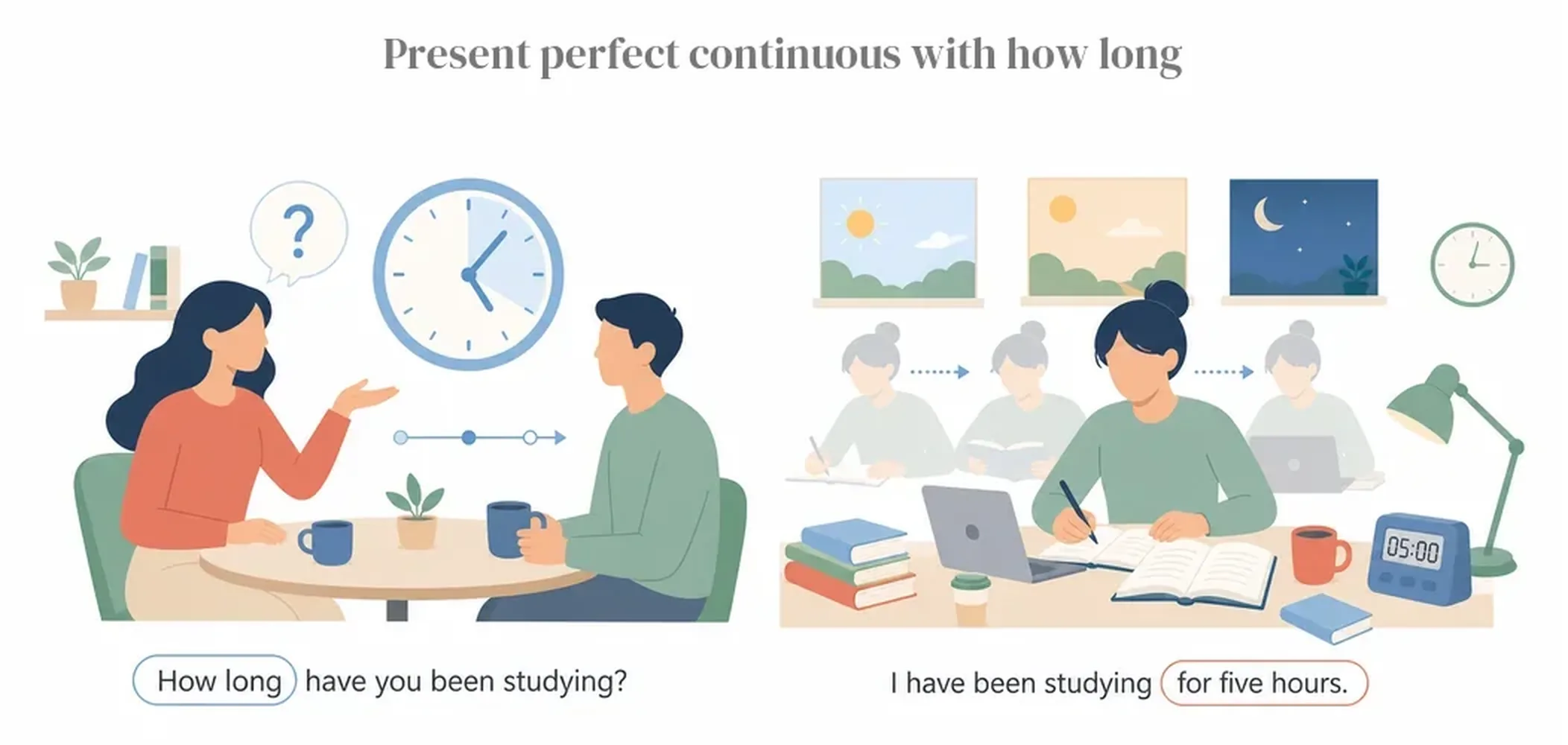
Present perfect continuous with how long

Present perfect continuous with how long

What is the Present Perfect Continuous?

The present perfect continuous describes an action that began in the past and continues up to the present moment. It emphasizes the duration or ongoing nature of the activity. Unlike the simple present perfect, which focuses on the result or completion of an action, the present perfect continuous highlights how long the action has been happening. This tense is particularly useful when you want to explain the time period during which something has been occurring.

Where the Present Perfect Continuous sits on the English tense timeline

Where the Present Perfect Continuous sits on the English tense timeline

Using 'How Long' with Present Perfect Continuous

The phrase 'how long' is one of the most common ways to ask about the duration of an ongoing action. When combined with the present perfect continuous, it creates natural questions and answers about the length of time something has been happening. The pattern is straightforward: 'How long + have/has + subject + been + verb-ing?' This structure allows you to ask specific questions about duration and receive clear answers about time periods.

Time Expressions with Present Perfect Continuous

Common time expressions used with present perfect continuous and 'how long' include: for + time period (for two hours, for six months), since + specific point in time (since Monday, since 2015), and occasionally 'all day' or 'all week'. The word 'for' describes a duration or length of time, while 'since' marks the starting point. Understanding the difference between these two is essential for accurate communication about how long something has been happening.

How Long: Question & Answer Patterns

Subject How Long Question Answer with for Answer with since Note
I How long have I been waiting? You have been waiting for two hours. You have been waiting since 9 a.m. for = duration (period of time)
You How long have you been studying? I have been studying for three years. I have been studying since 2021. since = start point (specific time/date)
He / She How long has she been working there? She has been working there for six months. She has been working there since January. Use has (not have) with he/she/it
They How long have they been living here? They have been living here for ten years. They have been living here since 2014. Action started in the past and is still continuing
Form Question: How long + have/has + subject + been + verb(-ing)?
Answer: Subject + have/has + been + verb(-ing) + for [period] / since [point in time].
Formula
? Question
How long + have/has + subject + been + verb-ing
How long have you been studying English?
✔ Positive
Subject + have/has + been + verb-ing + for/since + time
I have been working here for three years.
✖ Negative
Subject + have/has + not + been + verb-ing + for/since + time
She hasn't been feeling well since yesterday.

Examples

How long have you been learning French?
Question about duration · Asking for time period
you started learning French now (at the moment of asking)
I have been working on this project for two weeks.
Positive statement · Duration with 'for'
started working on the project two weeks have passed until now
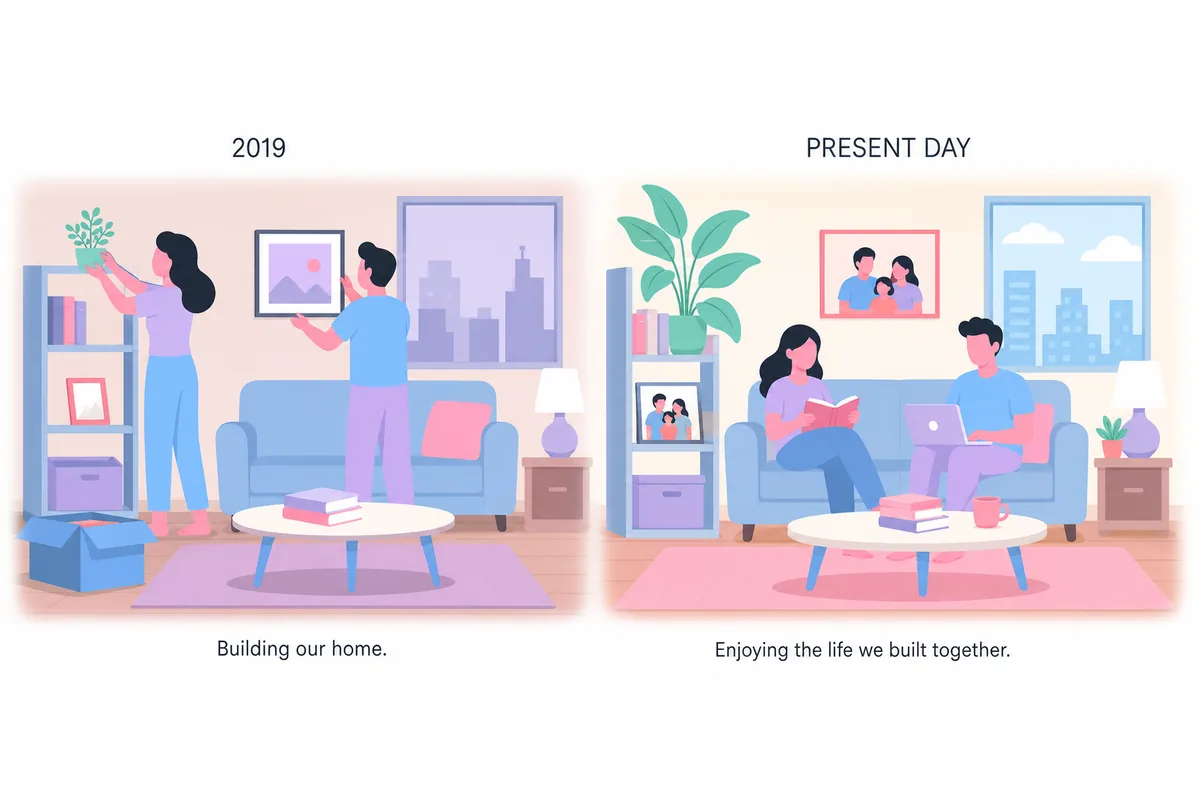
They have been living in the same apartment since 2019.
Positive statement · Starting point with 'since'
They started living in the apartment in 2019 They still live there now
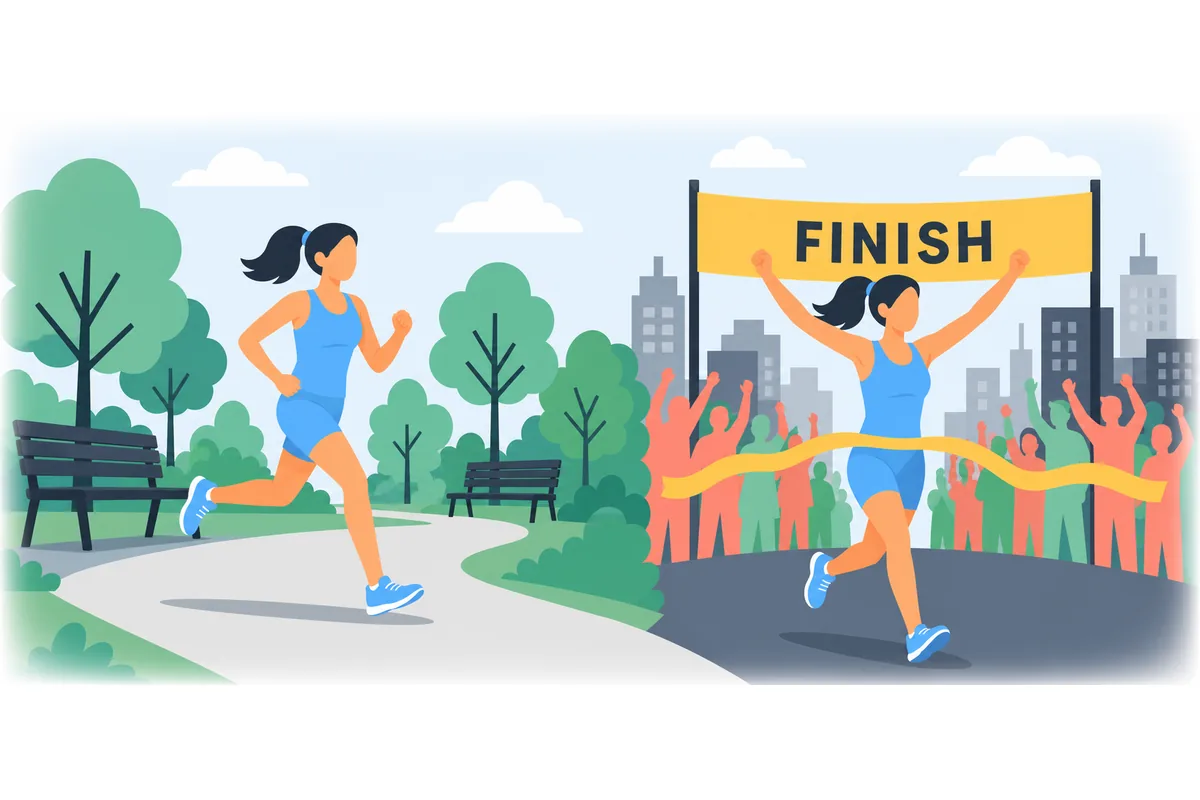
How long has she been training for the marathon?
Question · Third person singular
she started training for the marathon now (still training)
We haven't been seeing each other for months.
Negative statement · Duration
stop seeing each other now (months later)
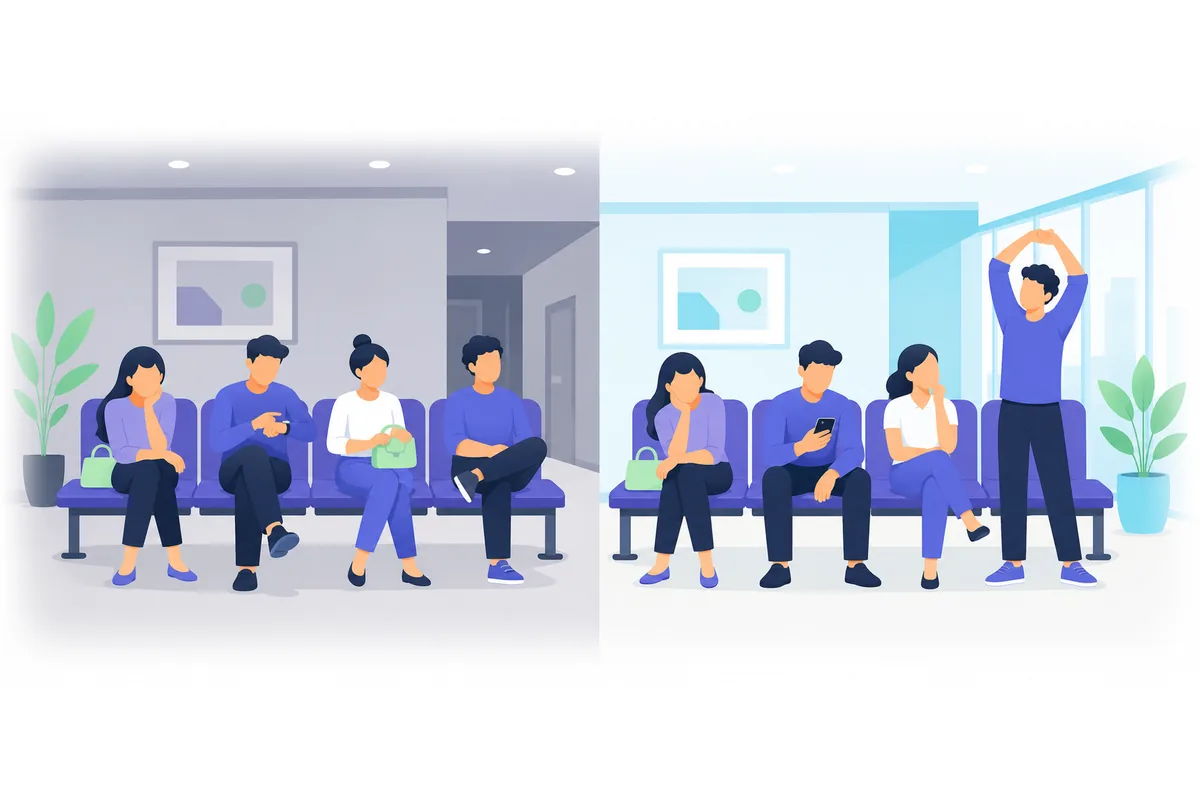
How long have they been waiting? They've been waiting for over an hour.
Question and answer · Extended duration
they started waiting now, after over an hour
When to use it
Asking about duration
Use this structure when you want to know how much time has passed since something began.
How long have you been working on your thesis?
Professional context
Discuss work experience, project timelines, or employment duration.
I have been managing this team for eighteen months.
Learning and skills
Talk about studying, practicing, or developing abilities over time.
How long have you been practicing the piano? I've been playing since I was seven.
Activities and hobbies
Describe activities, sports, or pastimes that have been happening recently.
We have been training for the competition for six weeks.
Location and residence
Explain how long someone has been living or staying in a place.
How long has your family been living abroad? Since 2018.
Signal words
how long for since all day all week all month all year recently lately these days
Common Mistakes
Wrong
How long are you studying English?
Correct
How long have you been studying English?
Present simple doesn't show duration from past to now. Present perfect continuous is needed.
Wrong
I have been working here for three years ago.
Correct
I have been working here for three years.
'For' shows duration; 'ago' is unnecessary and incorrect with present perfect continuous.
Wrong
She has been living there since five years.
Correct
She has been living there for five years.
'Since' requires a specific point in time, not a duration. Use 'for' with durations.
Wrong
How long you have been working?
Correct
How long have you been working?
In questions, the auxiliary 'have' must come before the subject.
Wrong
They been waiting for an hour.
Correct
They have been waiting for an hour.
The auxiliary 'have' cannot be omitted in present perfect continuous.
KEY TAKEAWAYS

What to Remember

  • Use present perfect continuous to describe actions that started in the past and continue to now.
  • The structure is have/has + been + verb-ing with no time limit for when the action started.
  • Use 'how long' to ask about the duration of an ongoing action in present perfect continuous.
  • Present perfect continuous emphasizes duration and ongoing activity, unlike simple present perfect which focuses on results.
  • Don't use present perfect continuous for completed actions or permanent states; use simple present perfect instead.
← Previous
Present perfect continuous vs present perfect simple
Next →
Present perfect continuous — negative and questions