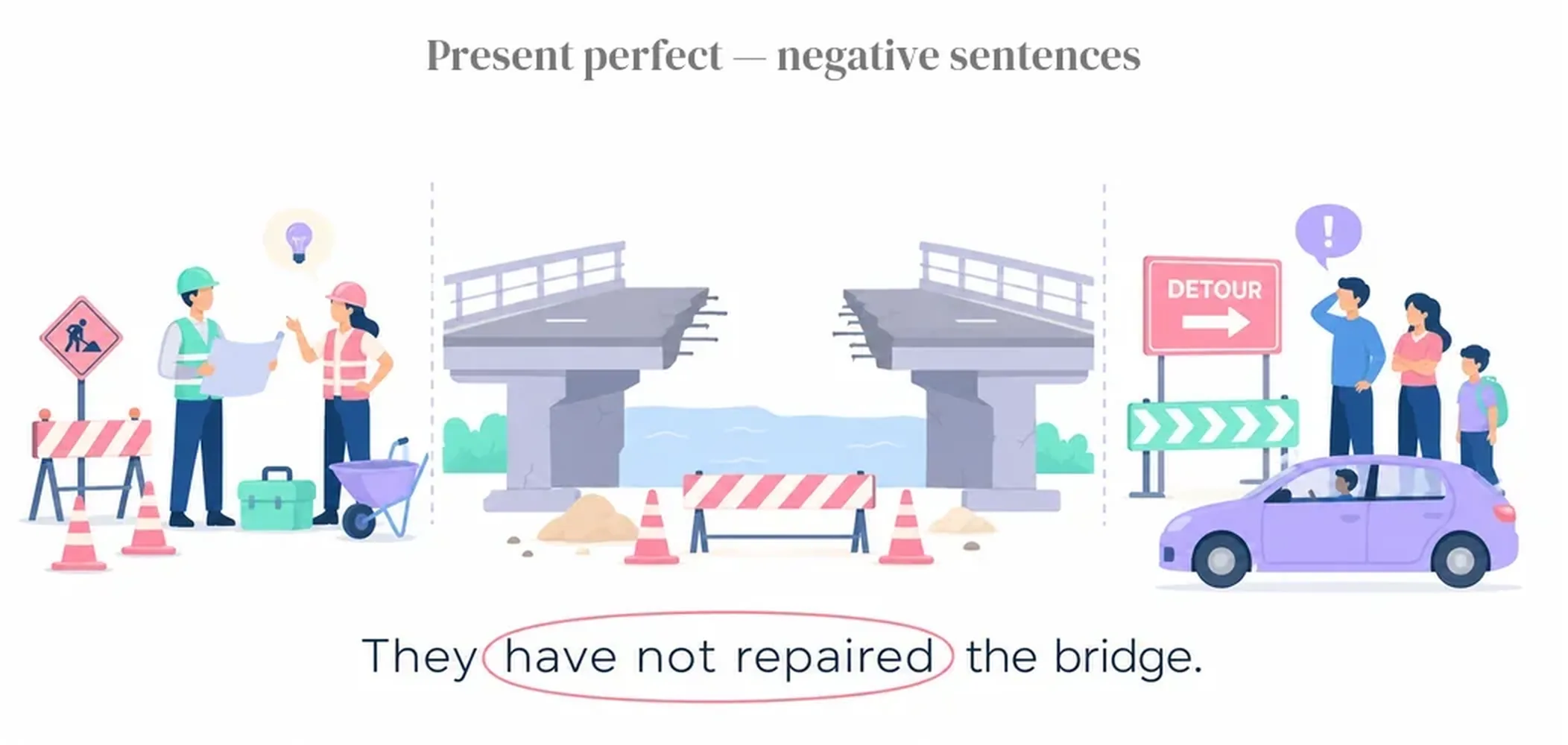
Forming Negative Present Perfect Sentences
The present perfect negative is used to talk about something that has not happened up to now, or to deny an action that occurred at an unspecified time in the past. To form negative present perfect sentences, you add 'not' after the auxiliary verb 'have' or 'has'. The structure is simple and regular across all subjects, making it one of the more predictable grammar forms at B1 level.

Negative Present Perfect by Subject
| Pronoun | Positive | Negative | Question |
|---|---|---|---|
| I | I have worked / I have gone | I have not worked / I haven't worked I have not gone / I haven't gone |
Have I worked? / Have I gone? |
| you (singular) | you have worked / you have gone | you have not worked / you haven't worked you have not gone / you haven't gone |
Have you worked? / Have you gone? |
| he | he has worked / he has gone | he has not worked / he hasn't worked he has not gone / he hasn't gone |
Has he worked? / Has he gone? |
| she | she has worked / she has gone | she has not worked / she hasn't worked she has not gone / she hasn't gone |
Has she worked? / Has she gone? |
| it | it has worked / it has been | it has not worked / it hasn't worked it has not been / it hasn't been |
Has it worked? / Has it been? |
| we | we have worked / we have gone | we have not worked / we haven't worked we have not gone / we haven't gone |
Have we worked? / Have we gone? |
| you (plural) | you have worked / you have gone | you have not worked / you haven't worked you have not gone / you haven't gone |
Have you worked? / Have you gone? |
| they | they have worked / they have gone | they have not worked / they haven't worked they have not gone / they haven't gone |
Have they worked? / Have they gone? |
Notes:
|
|||
Formula
✖ Negative
Subject
+
have/has
+
not
+
past participle
I have not finished my homework yet.
Examples

I have not seen that film yet.
Formal usage · Stating something hasn't happened
①film was released/existed
→
②now (still haven't seen it)

They haven't arrived at the airport.
Informal · Current situation
①They were expected to arrive at the airport
→
②Now (they still haven't arrived)

She has not completed the project.
Formal · Third person singular
①project started (at some past point)
→
②now (project still not finished)

We haven't decided where to go on holiday.
Everyday usage · Plural subject
①time when we needed to decide
→
②now (still no decision made)
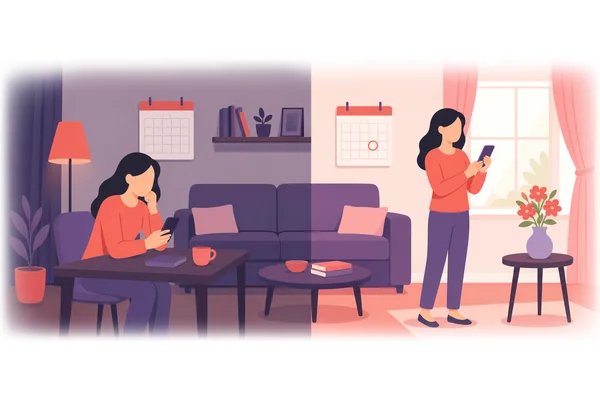
He hasn't called me all week.
Spoken English · Recent timeframe
①the week started
→
②now (he still hasn't called)

You have not answered my question.
Formal · Direct statement
①I asked you a question
→
②now, up to this moment
When to use it
Unfinished actions
Use negative present perfect to show something started in the past and is still not complete.
"I haven't finished reading that book yet."
Life experiences
Talk about experiences you have never had or things you haven't done in your lifetime.
"He hasn't tried sushi before."
Current relevance
Describe past actions that are relevant to the present moment or have current consequences.
"We haven't solved the problem, so we're still working on it."
Signal words
yet
never
not
still
so far
up to now
hasn't
haven't
Common Mistakes
✕
Wrong
I have not went to Paris.
✓
Correct
I have not gone to Paris.
Use the past participle 'gone', not the past tense 'went'.
✕
Wrong
She hasn't not finished the work.
✓
Correct
She hasn't finished the work.
Don't use 'not' twice; 'hasn't' already contains the negation.
KEY TAKEAWAYS
What to Remember
- Use 'have not' or 'has not' to form the negative present perfect with all subjects.
- The auxiliary verb comes before 'not': subject + have/has + not + past participle.
- Use 'haven't' or 'hasn't' as contractions in informal speech and casual writing.
- Present perfect negative talks about actions that haven't happened up to the present moment.
- Don't place 'not' before 'have' or 'has'—this creates incorrect sentence structure.