How to Use This Tense Timeline
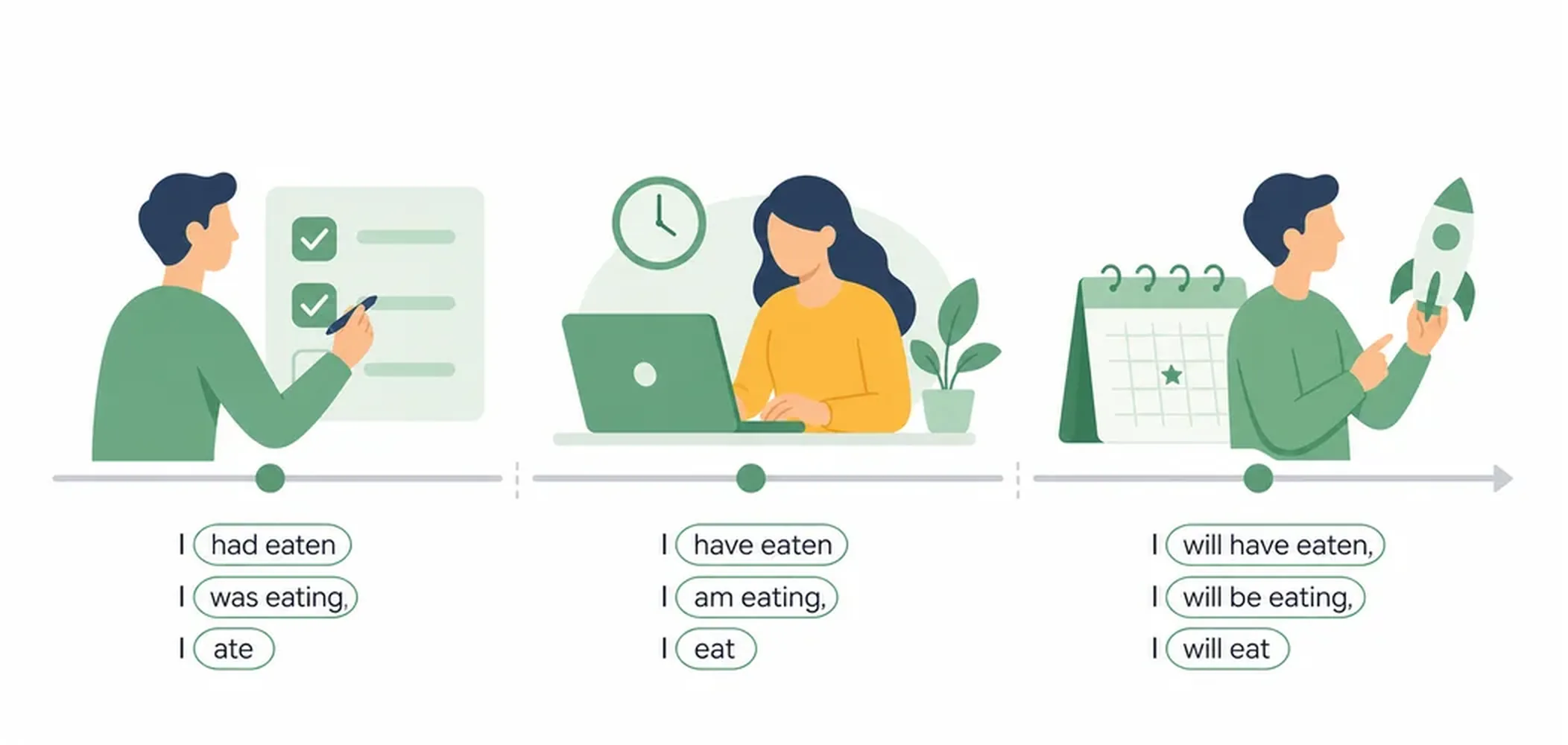
This visual reference chart organizes all English tenses along a timeline from past to future. Each tense occupies a specific position based on when the action occurs and how it relates to the present moment. The timeline helps you understand not just when to use each tense, but also how different tenses relate to each other. Use this as a quick reference when you're unsure which tense to choose.

The Three Main Time Zones
English tenses are divided into three primary zones: the PAST (actions before now), the PRESENT (actions happening now or general facts), and the FUTURE (actions that will happen). Within each zone, you'll find multiple tenses that express different aspects—whether an action is complete, ongoing, habitual, or about to begin. The further left or right a tense appears on the timeline, the further back or forward in time it typically refers.
Aspect Layers: Simple, Progressive, and Perfect
For each time zone, you'll notice tenses are grouped by aspect. Simple forms show actions as facts or completed events. Progressive forms emphasize duration and ongoing action. Perfect forms emphasize the connection between past and present or the completion before a specific moment. This layering system appears consistently across past, present, and future, making it easier to recognize patterns and choose accurately.
English Tenses Reference Chart
| Aspect | Past | Present | Future |
|---|---|---|---|
| Simple |
Past Simple
Form: V2 / Ved
Example: She walked home.
Use: Completed action at a specific past time
|
Present Simple
Form: V1 / V1s
Example: She walks home.
Use: Habits, routines, general truths
|
Future Simple
Form: will + V1
Example: She will walk home.
Use: Decisions, predictions, promises
|
| Progressive (Continuous) |
Past Progressive
Form: was/were + V-ing
Example: She was walking home.
Use: Ongoing action interrupted in the past
|
Present Progressive
Form: am/is/are + V-ing
Example: She is walking home.
Use: Action happening now or around now
|
Future Progressive
Form: will be + V-ing
Example: She will be walking home.
Use: Ongoing action at a future point in time
|
| Perfect |
Past Perfect
Form: had + V3/Ved
Example: She had walked home.
Use: Action completed before another past event
|
Present Perfect
Form: have/has + V3/Ved
Example: She has walked home.
Use: Past action with present relevance or result
|
Future Perfect
Form: will have + V3/Ved
Example: She will have walked home.
Use: Action completed before a future deadline
|
| Perfect Progressive |
Past Perfect Progressive
Form: had been + V-ing
Example: She had been walking for an hour.
Use: Ongoing action up to a point in the past
|
Present Perfect Progressive
Form: have/has been + V-ing
Example: She has been walking for an hour.
Use: Action ongoing from past up to now; emphasises duration
|
Future Perfect Progressive
Form: will have been + V-ing
Example: She will have been walking for an hour.
Use: Duration of an action continuing up to a future point
|
Examples





What to Remember
- Use the timeline to identify which tense describes actions before now, at present, or in future.
- Each English tense occupies a specific temporal position based on when the action actually occurs.
- Understand how tenses relate to each other by visualizing their positions relative to "now."
- Simple tenses mark completed or habitual actions; perfect tenses emphasize connections between time periods.
- Consult the visual chart when uncertain about tense choice rather than relying on intuition alone.