What are irregular verbs?
Irregular verbs are verbs that do not follow the normal pattern for past tense. Most English verbs are regular — you add -ed to make the past tense (play → played, work → worked). But irregular verbs change in different ways. Some change the vowel sound (sing → sang), some change completely (go → went), and some do not change at all (cut → cut). These verbs are very common, so it's important to learn them.
Why irregular verbs are important
You use irregular verbs every day in English. Verbs like be, have, do, go, and make are very common and appear in almost every conversation. Because they are used so often, native speakers notice mistakes with these verbs immediately. Learning the top 50 irregular verbs will help you speak and write more naturally, and you will understand English much better.
How to learn irregular verbs
The best way to learn irregular verbs is to practice them in context, not just in lists. Try to use them in sentences every day. Group similar verbs together — for example, verbs that change vowels like sing/sang/sung, ring/rang/rung. Read English stories, watch videos, and listen to conversations. Each time you see or hear an irregular verb, you remember it better.
Top 50 Irregular Verbs List
| # | Base Form | Past Simple | Past Participle |
|---|---|---|---|
| 1 | be | was / were | been |
| 2 | have | had | had |
| 3 | do | did | done |
| 4 | say | said | said |
| 5 | go | went | gone |
| 6 | get | got | got / gotten |
| 7 | make | made | made |
| 8 | know | knew | known |
| 9 | think | thought | thought |
| 10 | take | took | taken |
| 11 | see | saw | seen |
| 12 | come | came | come |
| 13 | give | gave | given |
| 14 | find | found | found |
| 15 | tell | told | told |
| 16 | become | became | become |
| 17 | show | showed | shown / showed |
| 18 | leave | left | left |
| 19 | feel | felt | felt |
| 20 | put | put | put |
| 21 | mean | meant | meant |
| 22 | keep | kept | kept |
| 23 | let | let | let |
| 24 | begin | began | begun |
| 25 | seem | seemed | seemed |
| 26 | help | helped | helped |
| 27 | talk | talked | talked |
| 28 | turn | turned | turned |
| 29 | start | started | started |
| 30 | show | showed | shown |
| 31 | hear | heard | heard |
| 32 | let | let | let |
| 33 | write | wrote | written |
| 34 | provide | provided | provided |
| 35 | sit | sat | sat |
| 36 | stand | stood | stood |
| 37 | lose | lost | lost |
| 38 | pay | paid | paid |
| 39 | meet | met | met |
| 40 | include | included | included |
| 41 | continue | continued | continued |
| 42 | set | set | set |
| 43 | learn | learnt / learned | learnt / learned |
| 44 | change | changed | changed |
| 45 | lead | led | led |
| 46 | understand | understood | understood |
| 47 | watch | watched | watched |
| 48 | follow | followed | followed |
| 49 | stop | stopped | stopped |
| 50 | create | created | created |
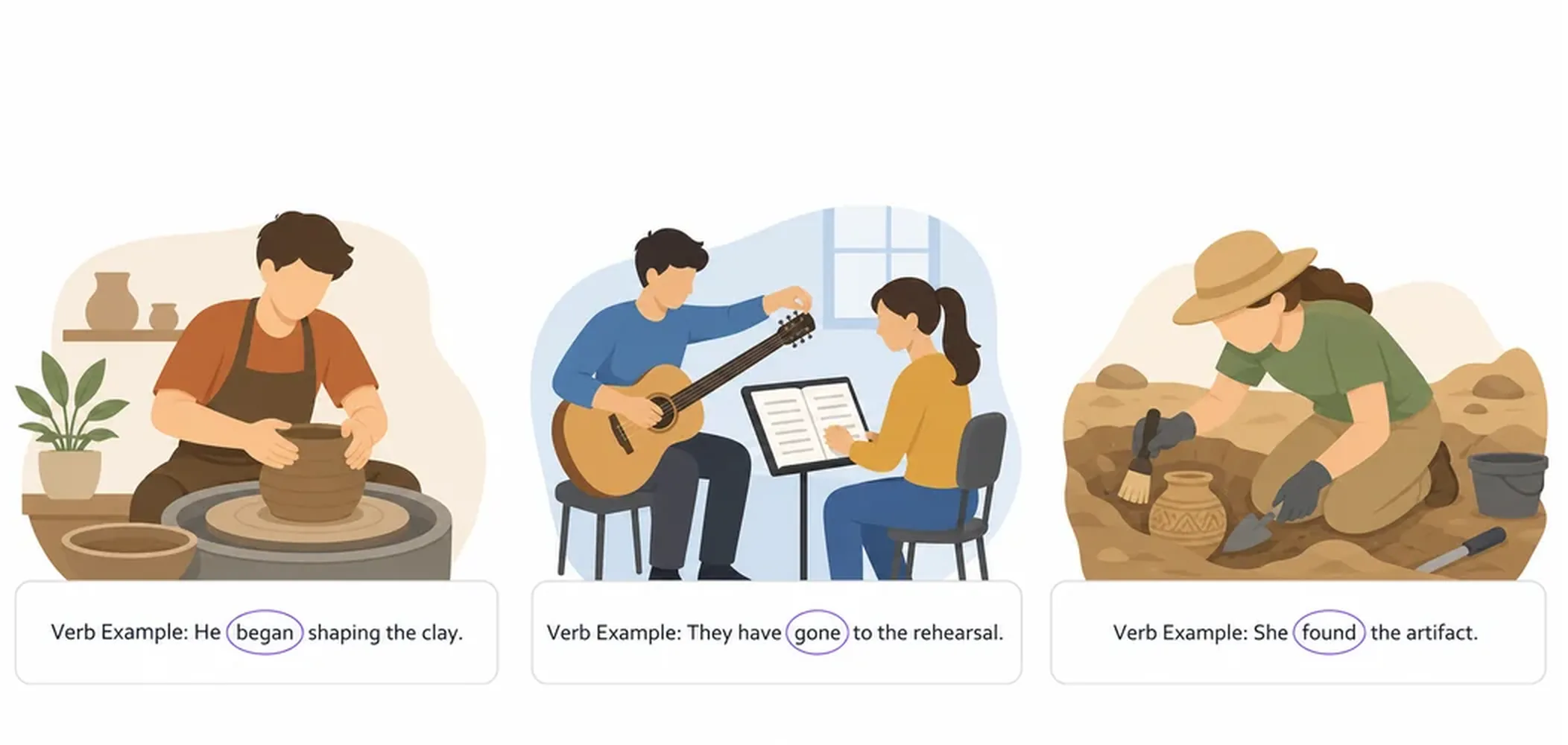
Examples






What to Remember
- Regular verbs add -ed to form the past tense, but irregular verbs follow different patterns.
- Irregular verbs may change their vowel sound, change completely, or stay the same in past tense.
- Common irregular verbs like be, have, do, go, and make must be memorized individually.
- You cannot predict how irregular verbs change, so learning them through practice and repetition is essential.
- Irregular verbs appear frequently in everyday English, making them crucial to learn at beginner level.