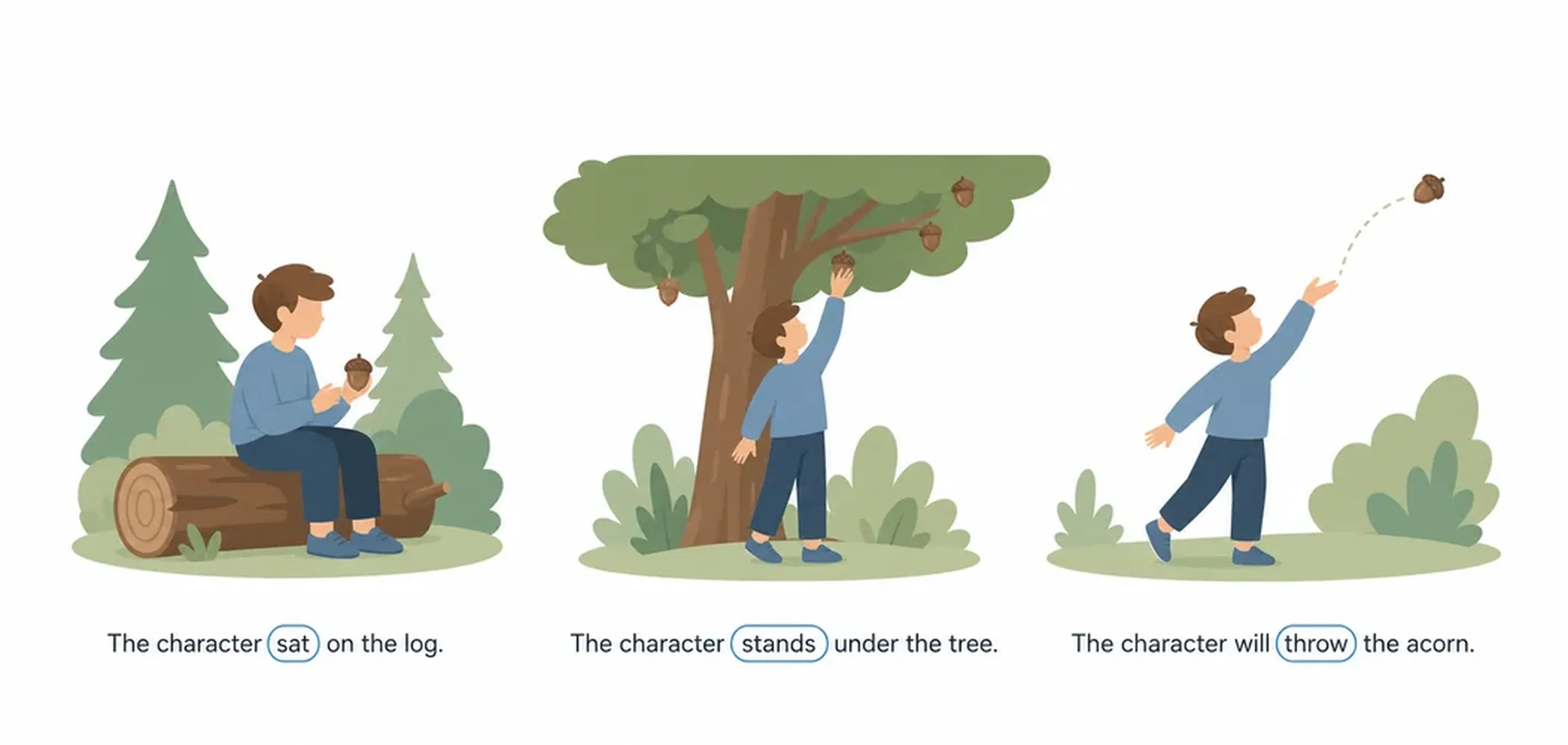
What Are Irregular Verbs?
Irregular verbs are verbs that do not follow the normal rules for changing their form. Most English verbs are regular—you add -ed to make the past tense (walk → walked). But irregular verbs change in different ways. For example, go becomes went in the past tense, not goed. These verbs are very common in English, so it is important to learn them.
Regular vs. Irregular Verbs
Regular verbs follow a pattern: you add -ed to the base form to make the past tense. Examples: play → played, work → worked. Irregular verbs do not follow this pattern. They change the vowels inside the word, or they change completely. Some irregular verbs look the same in present and past (cut → cut), while others change completely (be → was/were). Because there are no rules to follow, you must memorize irregular verbs.
Why Are Irregular Verbs Important?
The most common verbs in English are irregular. Verbs like be, have, do, go, see, and make are irregular and appear in almost every conversation. This means you will use them every day, so learning them is essential for speaking and writing English well.
List of Common Irregular Verbs
| Base Form | Simple Past | Past Participle | Note |
|---|---|---|---|
| be | was / were | been | Two past tense forms (I was / they were) |
| become | became | become | Base and participle are identical |
| begin | began | begun | Vowel changes in each form |
| break | broke | broken | Participle adds -en suffix |
| bring | brought | brought | Past and participle are identical |
| build | built | built | Past and participle are identical |
| buy | bought | bought | Past and participle are identical |
| catch | caught | caught | Past and participle are identical |
| choose | chose | chosen | Participle adds -en suffix |
| come | came | come | Base and participle are identical |
| cost | cost | cost | All three forms are identical |
| cut | cut | cut | All three forms are identical |
| do | did | done | Also an auxiliary verb |
| draw | drew | drawn | Participle adds -n suffix |
| drink | drank | drunk | Vowel changes in each form |
| drive | drove | driven | Participle adds -n suffix |
| eat | ate | eaten | Participle adds -en suffix |
| fall | fell | fallen | Participle adds -en suffix |
| feel | felt | felt | Past and participle are identical |
| find | found | found | Past and participle are identical |
| fly | flew | flown | Participle adds -n suffix |
| forget | forgot | forgotten | Participle adds -en suffix |
| get | got | gotten | Participle adds -en suffix |
| give | gave | given | Vowel changes in each form |
| go | went | gone | All three forms are completely different |
| grow | grew | grown | Participle adds -n suffix |
| have | had | had | Also an auxiliary verb |
| hear | heard | heard | Past and participle are identical |
| hide | hid | hidden | Participle adds -en suffix |
| hit | hit | hit | All three forms are identical |
| hold | held | held | Past and participle are identical |
| keep | kept | kept | Past and participle are identical |
| know | knew | known | All three forms are different |
| lead | led | led | Past and participle are identical |
| leave | left | left | Past and participle are identical |
| lend | lent | lent | Past and participle are identical |
| let | let | let | All three forms are identical |
| lie | lay | lain | Often confused with lay |
| lose | lost | lost | Past and participle are identical |
| make | made | made | Past and participle are identical |
| meet | met | met | Past and participle are identical |
| pay | paid | paid | Past and participle are identical |
| put | put | put | All three forms are identical |
| read | read | read | Pronunciation changes (present rhymes with "need"; past rhymes with "bed") |
| ride | rode | ridden | Participle adds -en suffix |
| ring | rang | rung | Vowel changes in each form |
| rise | rose | risen | Vowel changes; do not confuse with raise |
| run | ran | run | Base and participle are identical |
| say | said | said | Past and participle are identical |
| see | saw | seen | Vowel changes in each form |
| seek | sought | sought | Past and participle are identical |
| sell | sold | sold | Past and participle are identical |
| send | sent | sent | Past and participle are identical |
| set | set | set | All three forms are identical |
| shake | shook | shaken | Participle adds -en suffix |
| shine | shone | shone | Past and participle are identical |
| shoot | shot | shot | Past and participle are identical |
| show | showed | shown | Participle adds -n suffix |
| shut | shut | shut | All three forms are identical |
| sing | sang | sung | Vowel changes in each form |
| sink | sank | sunk | Vowel changes in each form |
| sit | sat | sat | Past and participle are identical |
| sleep | slept | slept | Past and participle are identical |
| speak | spoke | spoken | Participle adds -en suffix |
| spend | spent | spent | Past and participle are identical |
| spin | spun | spun | Past and participle are identical |
| split | split | split | All three forms are identical |
| spread | spread | spread | All three forms are identical |
| stand | stood | stood | Past and participle are identical |
| steal | stole | stolen |
Examples






What to Remember
- Most English verbs are regular—add -ed to the base form for past tense.
- Irregular verbs do not follow the -ed pattern and must be memorized individually.
- Common irregular verbs include go (went), eat (ate), and see (saw).
- Irregular verbs are very common in English, so learning them is essential.
- Do not add -ed to irregular verbs; they change in unpredictable ways.