What Are Dynamic Verbs?
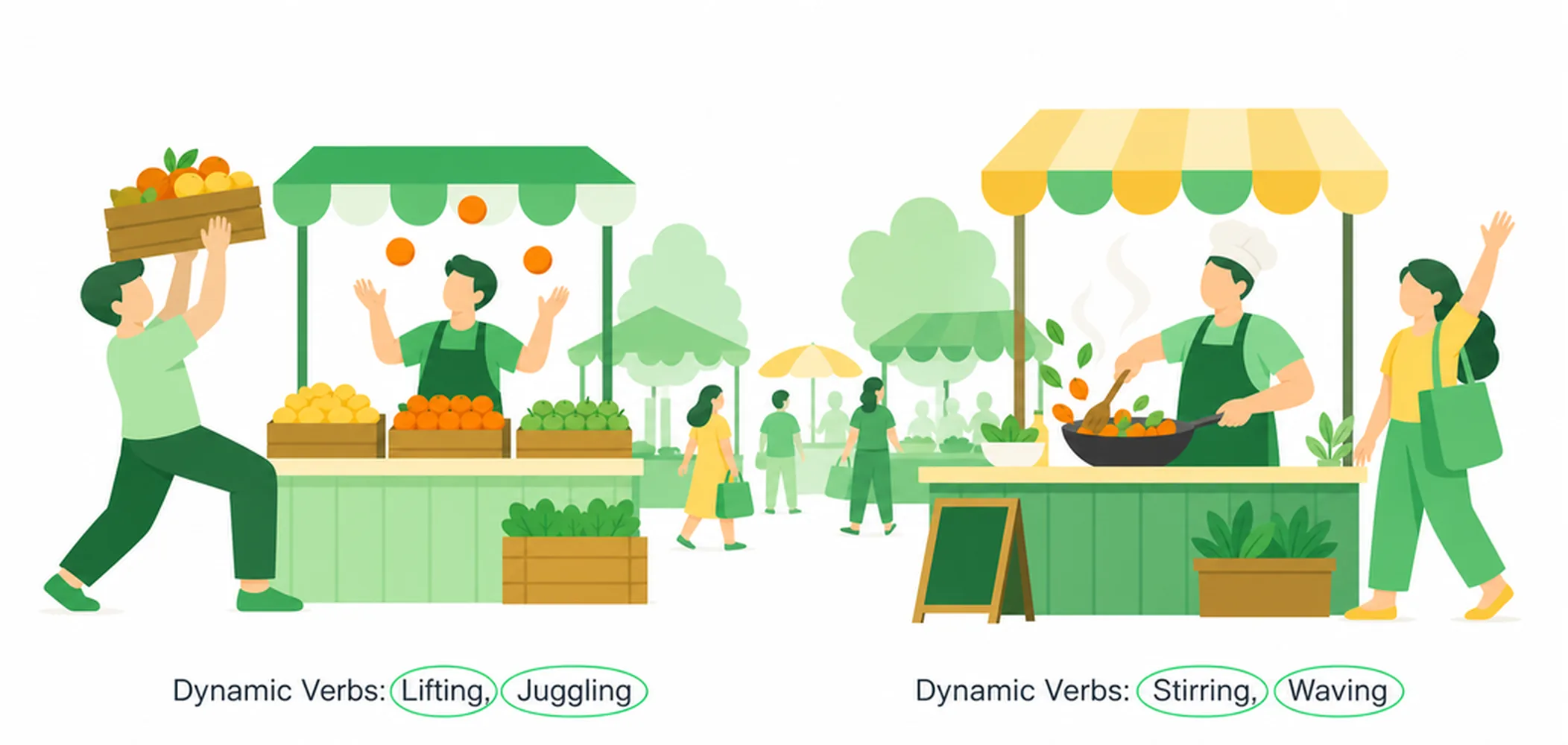
Dynamic verbs, also called action verbs, describe actions or activities that someone or something does. These are verbs that show movement, change, or process. You can see or imagine the action happening. Dynamic verbs are different from stative verbs, which describe states or conditions that do not change. Most verbs in English are dynamic verbs.
Characteristics of Dynamic Verbs
Dynamic verbs have several important features. First, they describe active processes: someone is doing something. Second, they can often be used in continuous tenses (present continuous, past continuous). For example: 'I am writing' or 'She was running.' Third, they express change or movement from one state to another. Finally, you can usually answer 'What is the person doing?' with a dynamic verb.
Dynamic vs. Stative Verbs
The main difference is that dynamic verbs show action, while stative verbs show a state or condition. For example, 'run' is dynamic (you are actively running), but 'like' is stative (you are not actively liking something—it is a feeling or opinion). Stative verbs usually cannot be used in continuous tenses. You would not say 'I am liking pizza' or 'She is knowing the answer.' Instead, you say 'I like pizza' and 'She knows the answer.'
Examples of Dynamic Verbs by Category
| Category | Common Verbs | Example Sentence | Note |
|---|---|---|---|
| Movement | run, walk, jump, fly, swim, climb, crawl, travel, go, come | She is running to the bus stop. | Can be used in all tenses, including continuous |
| Communication | speak, talk, say, tell, ask, answer, shout, whisper, explain, argue | He was explaining the rules to the team. | Describes active, deliberate communication acts |
| Creation | build, make, write, draw, cook, paint, design, create, develop, compose | They are building a new library downtown. | Involves producing or making something tangible |
| Change | grow, change, improve, break, melt, freeze, expand, shrink, develop, evolve | The ice is melting quickly in the sun. | Describes a process or transformation over time |
| Physical Action | eat, drink, hit, kick, push, pull, lift, throw, catch, wash | The children are eating their lunch. | Visible, bodily actions with a clear start and end |
| Mental Activity | think (actively), consider, decide, choose, plan, solve, calculate, guess | She is thinking about which option to choose. | Used in continuous when referring to an active process, not a state |
| Work / Achievement | work, study, practice, train, teach, learn, research, complete, achieve | He has been studying all morning. | Emphasises effort or ongoing activity; suits perfect continuous forms |
| Social Interaction | meet, help, greet, visit, invite, join, celebrate, compete, cooperate | We are meeting the new team members today. | Involves interaction between two or more people |
Examples





What to Remember
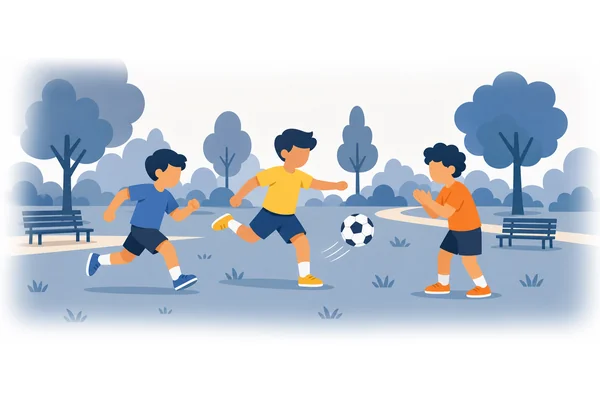
- Dynamic verbs describe actions or activities that someone or something actively does.
- Dynamic verbs show movement, change, or process that you can see or imagine.
- Most verbs in English are dynamic verbs, not stative verbs.
- Dynamic verbs can be used in continuous tenses; stative verbs usually cannot.
- Do not confuse dynamic verbs with stative verbs, which describe unchanging conditions.