What Are Stative Verbs?
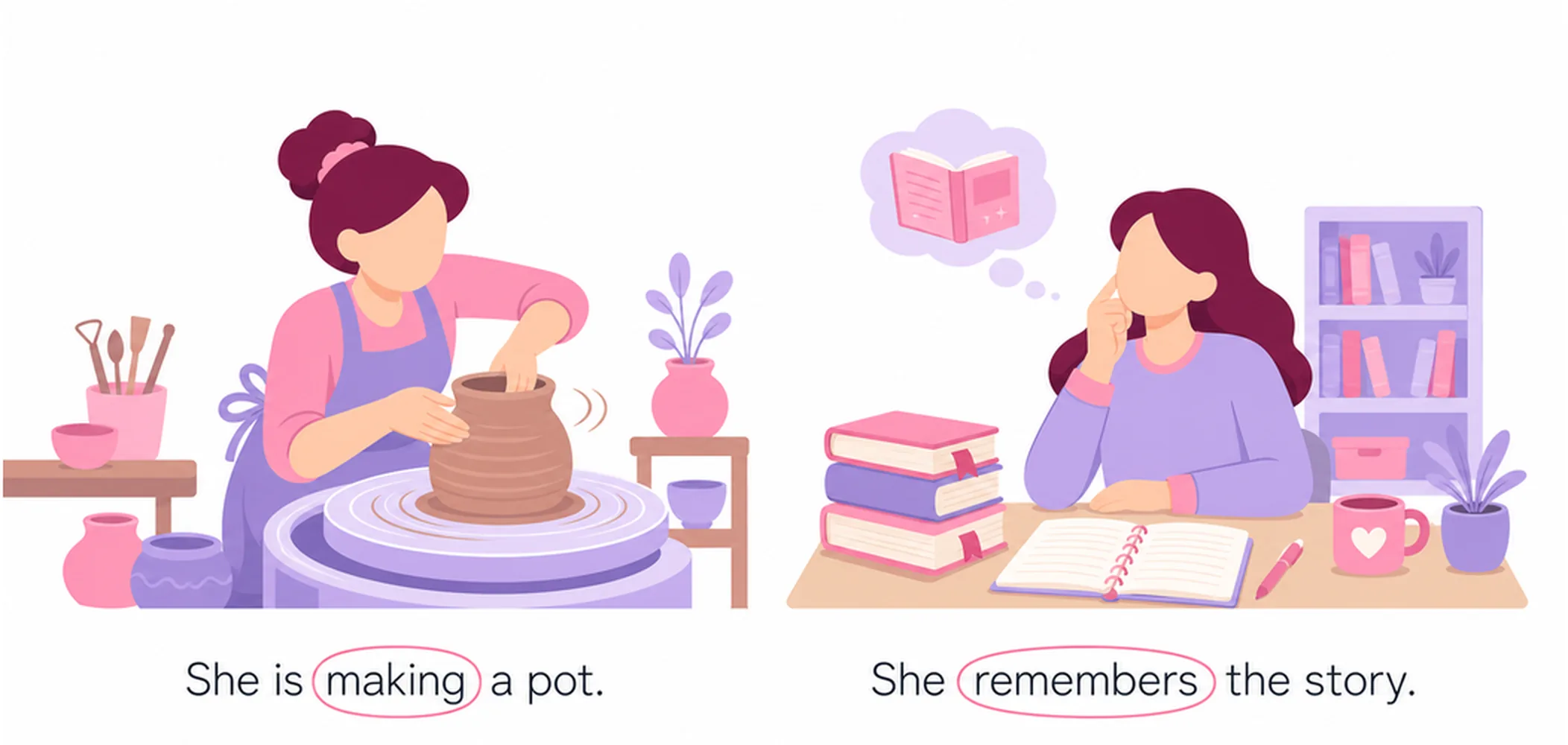
Stative verbs describe states, feelings, thoughts, or conditions that do not change or happen over time. They show a situation that is static (not moving or changing). Unlike action verbs, stative verbs do not describe something you actively do. For example, 'I like pizza' shows a preference that stays the same, not an action you are doing right now. Common stative verbs include: be, have, like, love, hate, want, need, know, understand, believe, see, hear, and belong.
Why No Continuous Tense?
Stative verbs cannot use the continuous tense (is/are + -ing) because they do not describe temporary or ongoing actions. The continuous tense is used for actions happening at a specific moment in time. Since stative verbs show permanent or unchanging conditions, using the continuous form does not make sense. For example, you cannot say 'I am liking pizza' because liking is not an action in progress—it is a state you are in. Instead, you use the simple present: 'I like pizza.'
Stative vs Dynamic Verbs
Dynamic verbs (action verbs) describe things you actively do and can use continuous tenses. For example: 'I am eating pizza' (action happening now) is correct. But with stative verbs, you must use simple tenses: 'I like pizza' (permanent preference). The key difference is: stative verbs = fixed states, dynamic verbs = active actions. Understanding this difference is important for using the correct tense in English.
How to Decide: Simple or Continuous?
Note: Use Present Continuous for timetables and schedules (train leaves); use going to for planned intentions.
Examples





What to Remember
- Stative verbs describe states, feelings, or conditions that don't change or happen actively.
- Common stative verbs include be, have, like, love, hate, want, know, understand, and believe.
- Stative verbs cannot use continuous tenses because they don't describe ongoing actions or processes.
- Use simple tenses with stative verbs: "I like pizza" not "I am liking pizza."
- Some verbs are stative in one meaning but dynamic in another, like "have" or "see."